
2026 Gaudy Boy Poetry Book Prize (Closed)
Deadline: June 1, 2026
Award: USD1,500 + Publication in US and SG
Entry Fee: USD10
The Gaudy Boy Poetry Book Prize is awarded annually to an unpublished manuscript of original Anglophone poetry by an author of Asian heritage residing anywhere in the world. The winner receives book publication and USD1,500.00.
Past winners were The Experiment of The Tropics by Lawrence Lacambra Ypil and Autobiography of Horse by Jenifer Sang Eun Park, selected by Wong May; Play for Time by Paula Mendoza, selected by Vijay Seshadri; Object Permanence by Nica Bengzon, selected by Cyril Wong; Time Regime by Jhani Randhawa, selected by Dorothy Wang; Waking Up to the Pattern Left by a Snail Overnight by Jim Pascual Agustin, selected by Yeow Kai Chai; Interrogation Records, by Jeddie Sophronius, selected by Divya Victor; FABLEMAKER, by Mandy Moe Pwint Tu, selected by Ng Yi-Sheng, and Minor Destructions, by Mark Kungsoo Bias, selected by Eric Gamalinda.
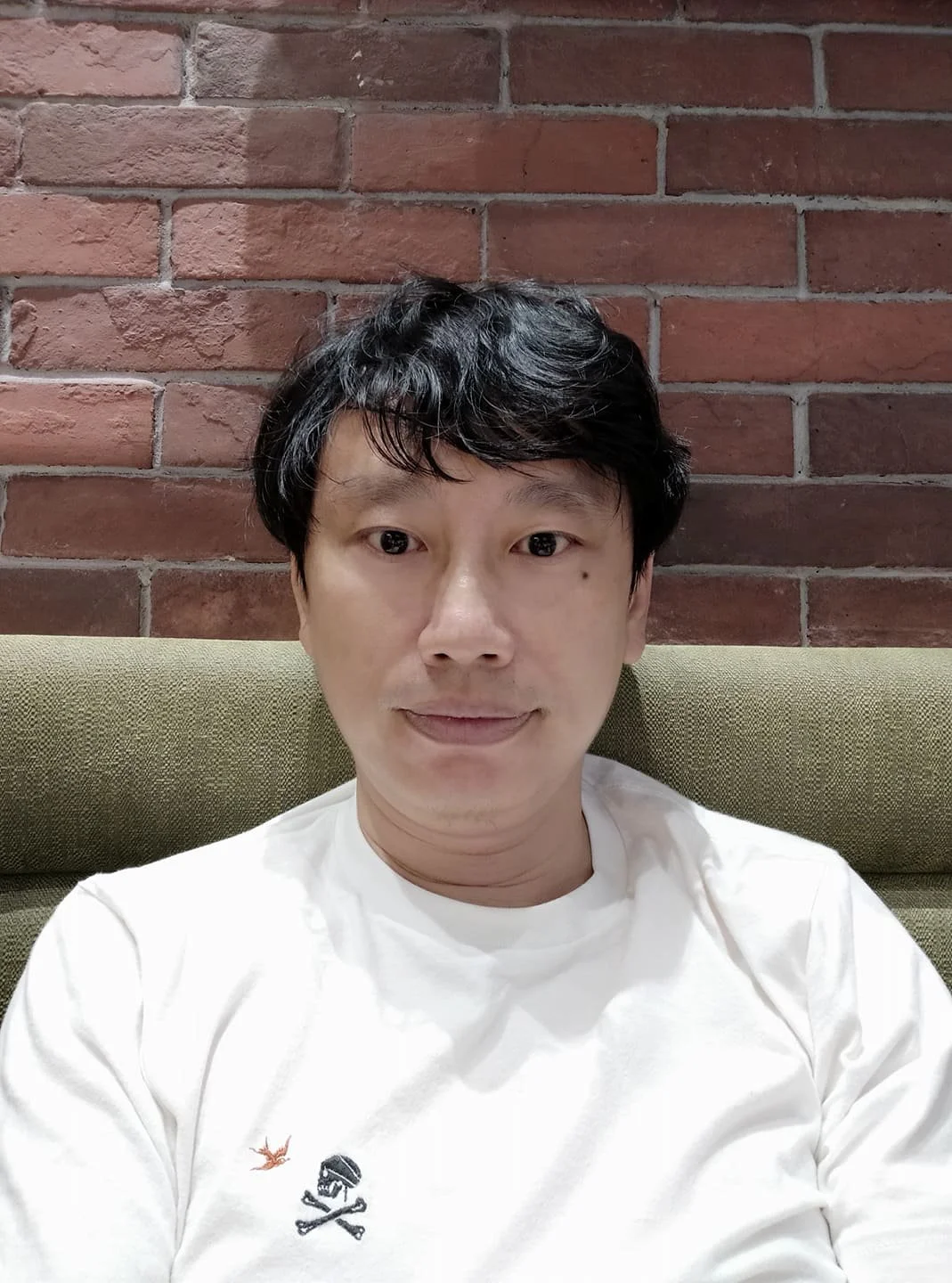
This year we’re honored to have GWEE Li Sui to be our judge. Gwee is a poet, an artist, a critic, and a translator. He has eight volumes of verse to date, the latest being Look How We’ve Already Forgotten. He wrote and illustrated Singapore’s first long-form English graphic novel Myth of the Stone back in 1993. His bestselling non-fiction titles include a poetry guide FEAR NO POETRY! and a language companion Spiaking Singlish. He has also translated classic works by Antoine de Saint-Exupéry, Beatrix Potter, the Brothers Grimm, A. A. Milne, and George Orwell into Singlish. A familiar name in Singapore’s cultural scene, Gwee has both written and lectured on a wide range of literary subjects.
Five finalists will be announced in August 2026, and they will be invited to read their work at a finalists’ reading in September 2026, at which the prize winner will be announced. The winning manuscript will be published in Fall 2027 by Gaudy Boy, an imprint of the NYC-based literary nonprofit Singapore Unbound.
Established in 2017, Gaudy Boy publishes poetry, fiction, and literary nonfiction of extraordinary merit by Asian voices. Our name is taken from the poem “Gaudy Turnout” by Singaporean poet Arthur Yap about his time abroad in 1970s Leeds, UK. From the Latin “gaudium,” meaning joy, Gaudy Boy seeks to delight our readers with the various powers of art.
Guidelines
1. The contest is open to emerging and established poets.
2. No proof of Asian heritage is required. As writers ourselves, we go by honor between writers.
3. Submit a 70–120-page unpublished manuscript of original poetry in English. Please number the pages of your manuscript. Include a title page, table of contents, and an acknowledgments page for any previously published poems.
4. Email Jee Leong Koh at jkoh@singaporeunbound.org with a brief cover letter in the body of your email and the poetry manuscript attached in PDF or MSWord format.
5. Your name, mailing address, and email address should not appear anywhere in the manuscript. Instead, they should be given in your cover letter in the body of your email.
6. Please also include in the body of your email a clear statement of not having used GenAI at any stage of the manuscript’s creation; and in the very few instances where GenAI is allowed (please refer to our full GenAI policy), to transparently declare its usage. We will not consider any submissions without such a statement.
7. Submit your entry fee USD10.00 at PayPal to Jee Leong Koh (jkoh@singaporeunbound.org). We cannot consider your manuscript until we receive your entry fee. Your entry fee helps us defray some, but not all, of the editorial costs. We have set the entry fee low so that it will not be too much of a barrier for most people. If the fee is a barrier, please write to Jee at jkoh@singaporeunbound.org for a waiver. Entry fees are nonrefundable.
8. You may submit more than one manuscript, but a separate entry fee must accompany each manuscript.
9. You may submit the manuscript elsewhere simultaneously, but you must notify Gaudy Boy immediately if your manuscript is accepted by another publisher.