
Upsetting the Order of Things: An Interview with Xu Xi
At the NYC launch of Xu Xi’s selected stories Horizon Hong Kong on Saturday, June 27, 2026, at Accent Sisters, Gaudy Boy’s Publisher and Editor-in-Chief Jee Leong Koh engaged Xu Xi in a wide-ranging and stimulating conversation about her life and writing. Below is reproduced the conversation, with the addition of a few questions that were skipped because of time constraint. The conversation is lightly edited for clarity and concision.
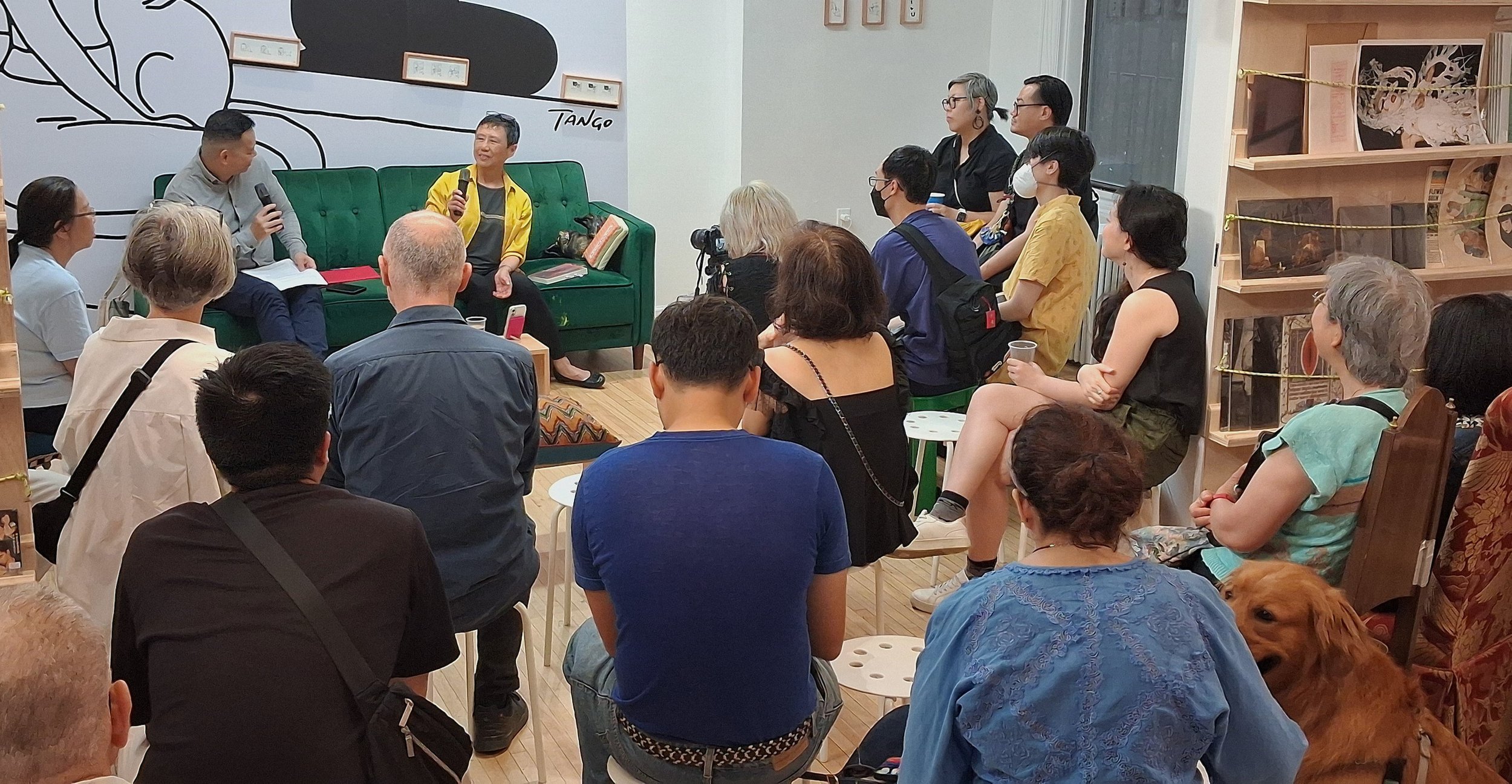
Jee: You were a transnational writer before the term “transnational” was invented. Could you share with us something of your international background: where you were born, where did you grow up, and where did you live as an adult? When and where did you start thinking of yourself as a writer?
Xu: I grew up in a Hong Kong-intra-Asian family, with parents from Indonesia and an extended family who spoke multiple languages from Indonesia, China, and elsewhere. Plus, my father worked with Japanese, Indonesian, English, Portuguese, Filipino people, and many showed up in my childhood home. So my world was always transnational. My undergrad college was in the US, after which I returned home and in my early 20’s ended up working for Cathay Pacific Airways, which meant a lot of both business and personal travel.
At 26, I left my secure & highly prized corporate career to bum around Europe for a year to write (mostly in Greece, but also Paris & London) while applying for my MFA, which brought me to the U.S. in the 80’s, to Massachusetts and Ohio, because I had met and married my 2nd husband who was American. By the mid-80’s I was in NYC, then moved to Hong Kong & later Singapore in the late 90’s with my then-husband, got divorced, and finally left corporate life in 1998 to live with my then-boyfriend-now-3rd-&-final husband from late 90’s through most of the 00’s, primarily in New York (city & state).
But due to my family situation (father died unexpectedly, mother got Alzheimer’s) I wound up living and working between Hong Kong and New York for some 20 years. I also had a home in New Zealand (my writer’s retreat) for 6 years, and I also spent quite a lot of time in Norway for research. In 2018, after my mother’s demise, we sold the family Hong Kong flat where I lived, and I now live only in the USA.
At 26 I finally seriously thought of myself as a writer. That year I left the corporate world for the 1st time to try to become a real writer, and I actually printed a business card with my name and “writer” on it! Prior to that, since around age 9 or so, I just always wrote and assumed I would always write, but I didn’t necessarily think of myself as “a writer.”
“At 26… I left the corporate world for the 1st time to try to become a real writer, and I actually printed a business card with my name and “writer” on it!”
J: In your story “Rubato,” the female protagonist returns to America to start grad school at the age of 28 instead of the more usual 22 or 23, after undergrad studies. “Rubato” is, of course, a musical term for the expressive speeding up and slowing down of the tempo. How does your own writing and publication timeline not fit the more conventional schedule? Did you ever feel you started late as a writer? In what ways has that different timing affected your writing?
X: I loved the term “rubato,” which does literally mean “robbed time,” ever since I first learned it as a classical piano student. I was not good at keeping strict time so the idea was appealing to me not to have to always play the exact beat with the metronome.
I started my MFA at 27 and didn’t publish my first book till I was 40, and most of my books that followed were with indie presses overseas (beginning from 1994). Back then, there was no Amazon, so distribution was much more of a problem; today that’s changed hugely. So the main effect of this late and international start as a published author was that I didn’t get as widely read in the Anglophone world where you can make money as a writer, namely New York and London.
I’ve never really made a living from my actual writing, and I chose to return to the business world after my MFA. My MFA peers, all younger, wanted that first book to get their MFA teaching job (which is where the literary industry is most active, especially for poetry), but I didn’t want to teach in MFA’s, not till much later. One classmate told me he was offered a job in Alabama for $15,000 a year and had a 5-5 teaching load; for me that was an unacceptable way to live, because I could make double that by going back into marketing, which I did until 1998, after my third book was published.
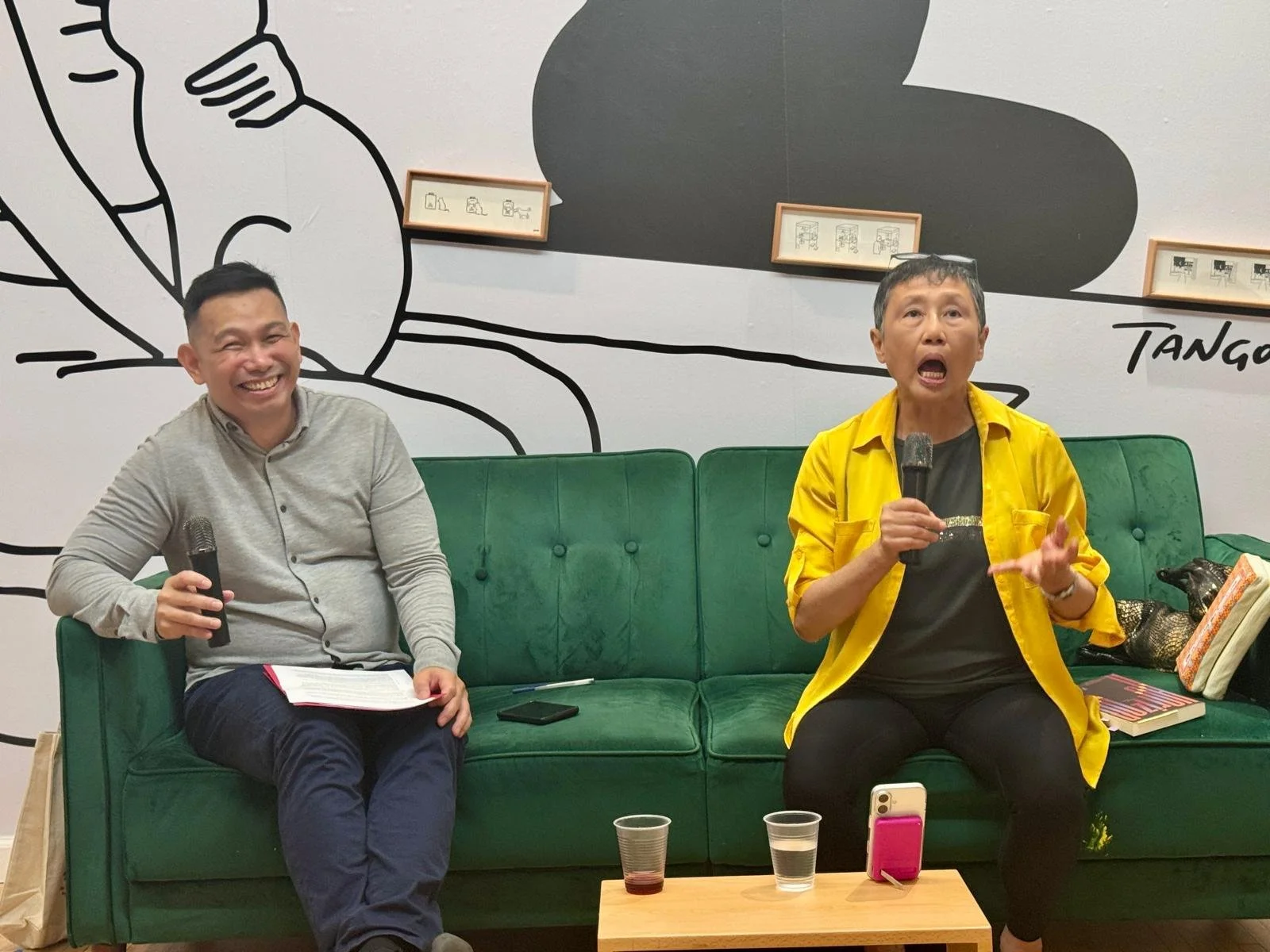
J: In the story intriguing titled “The Fourth Copy or Dancing with Skeletons and Other Romances,” the return of a story manuscript reminds the protagonist Grace Hsu of her former ambition to be a writer. Grace had wanted to write about a virginal girl making love to the school lab skeleton called Jimmy and about her fear of dogs. She felt unable to speak of such crazy romances in Hong Kong, but thought it was possible in the US. Did you feel similarly, that certain stories are easier to write in the US than in HK? Did certain fears dog you, so to speak, in HK?
X: It wasn’t fears per se but too much intimacy with a place makes it difficult to be objective or critical. In Hong Kong I want too much to be a local and think local but in NYC being a Hongkong-er is much less relevant. One example, I wrote what I consider my most Hong Kong novel, The Unwalled City in NYC after living through the 90’s in Hong Kong, through the handover, and the novel tracks those years through the lives of the four main characters who all are there during that time. It was definitely easier to write from a distance, and after some time had passed, because you no longer had to “hear” foreign journalists who helicoptered in for the 1997 handover asking stupid questions about so what does it mean to be a part of China??? If you grew up there, you always knew you were a part of China, taken over by Britain! And I wanted to write about this huge historical moment from the inside, and all the ways different lives (& loves) were lived then.
“If you grew up there [in Hong Kong], you always knew you were a part of China, taken over by Britain!”
J: The differences between Asia and America are also a prominent theme in the story “Before.” The protagonist, a Hongkonger and her husband Bing, a Chinese American, lived and raised a family in first New York, and then Hong Kong. Having experienced Hong Kong’s social and economic elitism, and the country’s preference for White expatriates, Bing accused it of suffering from a “lopsided postcolonial legacy.” His wife disagreed with him, but late in her life, after her husband died, she admitted that he was right, that “Hong Kong misshaped me.” With the benefit of hindsight, how has Hong King shaped or misshaped you, and how has your writing helped in bring such shapings to awareness?
X: I think Hong Kong was mostly shaped & misshaped by what has been termed its laissez-faire capitalism. The culture is obsessed with making money, and entrepreneurship, but that minimizes the importance of the arts & other non-money-making pursuits in its educational system. All Hong Kong parents wanted (and still want) their children to study the sciences (or business) to secure a financially strong future. Which doesn’t leave much room for the less money-making pursuits of the arts or human & social services, what we might call the “hearts” side of that minds & hearts equation. My own mother insisted I take science, even though I was so obviously more suited to the arts and literature, and I barely passed my public exams in science & math! It also made for an overly competitive and stressful culture.
Of course, Hong Kong was poor when I was a child, and such a striving culture eventually provided the prosperity that helps develop an artistic and more holistic world—younger Hong Kong writers are less misshapen— and today the city has performing arts, music, art museums, a literary world which the younger generations have more space to engage with, as their parents set them free to explore more creative paths. So maybe it was necessary to misshape in order to reshape?
J: You have chosen to write your short stories, novels, and essays in English, or perhaps English has chosen you. Why English? In the story “Chung King Mansion,” the mother used to speak to her daughter in Mandarin and Indonesian, but she was told by her husband to speak to her daughter only in English so that the daughter would grow up proficient in English. Living in Hong Kong, the mother has picked up Cantonese but she speaks with an accent because the family is originally from Fukien, not Canton, before they moved to Indonesia. In another story “To Body to Chicken,” the young female masseur is taking an English class so that she can speak to her Western clients and earn bigger tips. She is puzzled that the Cantonese term for working as a sex worker cannot be translated directly into “to chicken” in English. There is a strong sense in your stories of the welter of languages in Hong Kong, not just Cantonese, and of the speakers’ multiple linguistic adaptations. How did you come to write in English with that strong sense that it is only one of many languages, one of many possibilities?
X: English definitely chose me! Since my parents didn’t really have Cantonese as a native language, they made English my first language and sent us all to English-medium schools. I had a very multilingual home upbringing, and heard more languages than I could speak growing up. I hated studying Chinese because as a child, it wasn’t natural to my upbringing, and I flunked out in Primary 4. But later I wished I’d been a better Chinese student because I love Hong Kong Cantonese, it’s rich and slangy and layered. I did French instead, and in grad school studied Mandarin so I gained some literacy, but I can never claim to be fluent in either Chinese or French, especially not in terms of literacy, although I do sound fluent in Cantonese. In later years I discovered the linguistics discipline, World Englishes, and in my travels, I do encounter many Englishes—English is the global language right now—and I love the idea of each culture “owning” English and molding it into its own language.
“In my travels, I do encounter many Englishes—English is the global language right now—and I love the idea of each culture “owning” English and molding it into its own language.”
J: Unlike many contemporary writers, you worked extensively in the private sector before becoming a full-time writer and teacher of writing. In fact, you had an 18-year career in marketing and management, working in companies such as The Asian Wall Street Journal, Leo Burnett Advertising, Federal Express, and, of course, Cathay Pacific Airways. One of my favorite stories in your collection is “Iron Light,” in which the female protagonist remembers her past change of career, from advertising to graphic design, explaining the change in this way: “If you could tap into the unspoken need and meet it with a promise, your ad campaign would influence people and even win awards. False promises creating need, where none previously existed. It was why she finally packed up her art supplies and left, choosing the simplicity of design over the larger fiction of desire.” Has your corporate career influenced your writing in any way? More specifically, how is fiction writing different or not so different from advertising, “the larger fiction of desire,” as you call it?
X: Pulitzer winner Robert Olen Butler speaks about the importance of yearning in fiction, i.e. desire, the difference from marketing being that fiction sells a deeply felt desire that emerges from an examined life. In F Scott Fitzgerald’s words (advice to a young writer) you’ve got to sell your heart. Writing fiction is not just about creating a product for profit. That heart, that yearning, that desire can’t be concocted the way you can concoct a need for a product, especially one no one really needs, and mask what might not be so desirable about it. Think cigarettes, now vaping—while fiction can be addictive, as a literary fiction writer I’m not trying to create an addiction to my “product” (arguably, some genres do exactly that) but fiction is ART, esp. literary fiction, and measuring art in $ & ¢ runs the danger of corrupting it.
“That disorder—how we wish the world could be vs. what the world is really like—that chaos, is the heart of fiction.”
J: In “Iron Light” and many of your other stories, the characters travel constantly, often for work, but also for pleasure. During their travels, men and women pick up strangers for sex. These professional women live sexually liberated lives, but they are also acutely aware that they are working in a men’s world. The figure of the world traveler is poignantly transformed into a little boy in the story “The Yellow Line” who discovers the MTR, the subway in HK, but he also learns that travel is not only liberating but also dangerous. I won’t give away the shocking ending of the story. I’m really curious about a statement you make in “Iron Light,” that “For the constant traveler, there was a point in the journey when the idea of order became irrelevant.” Constant travel seems to mess up our ideas and memories of the proper chronology. We start to conflate people and places. How do you convey the disorder of travel in the artful order of your stories?
X: My MFA advisor, the late novelist Tamas Aczel (I always thought of him as the Hungarian Nabokov), embraced complication in fiction. What he taught me is that it’s easy to write a plausible, neat plot, but that it’s much harder to write into the underlying emotions or desires of the characters, the thing that truly matters—it’s usually the thing the writer is running away from but must run towards. Travel can be escapist, but the long solos of travel force you to confront yourself and admit things you’d never admit to anyone. That disorder—how we wish the world could be vs. what the world is really like—that chaos, is the heart of fiction.
J: Despite the constant movement in your stories, or perhaps because of it, you write beautifully about place. To go back to “Iron Light” for one last time, the story has the female protagonist wandering in Stockholm on her own, waiting for her lover to call or text her. As the day draws to an end, she finds herself in the bohemian neighborhood of Soderman. Your description of the neighborhood as a “green detour” and “a respite from the city” could apply to travel itself: travel seems to bring us out of time and place.
I want to think about the place of sex in your stories for a bit. A characteristic portrait of the theme can be found in the story “Anon.” Ginny and Paul are one couple, and the unnamed protagonist and Lenny are another couple. Paul had sex with the protagonist during his wedding weekend with Ginny. Years later, Ginny had sex with Lenny while Lenny was still married to the protagonist. But the story is not about marital fidelity, as we may expect. Instead, it’s about two kinds of lives. Ginny and Lenny achieve success in their careers, in computing and journalism, respectively, but not Paul and the protagonist, because they are capable of giving up everything for a moment’s ecstasy.
I think this story raises important questions about success. Is success a destination on a map, or a momentary convulsion? The question is important for writing stories too. Is a short story successful when it arrives at a preplanned ending or when it explodes in emotion? To put it metaphorically, is a short story a highway or a high?
X: A major part of me loves writing about sex because it’s so deliciously transgressive & this story very much leans into that. I don’t think a short story can be a high, which suggests a state of being. It’s probably more like a highway, but not necessarily to a specific destination. Short-story endings can’t really be pre-planned, at least mine can’t be. There was the occasional story that actually ended the way I originally planned but very few; most of my stories’ endings were not preplanned. If writing a story is like being on a highway, then it’s the journey on it, usually at a too-fast speed, but when you hit roadblocks on a highway (accidents, roadworks/detours), everything stops—it completely upsets the order of things. Writing a short story feels like that to me.
“If writing a story is like being on a highway, then it’s the journey on it, usually at a too-fast speed, but when you hit roadblocks on a highway (accidents, roadworks/detours), everything stops—it completely upsets the order of things."
J: I’d like to think further about the relationship between sexual desire and citizenship. We usually think about citizenship as a kind of belonging. I am a Singaporean citizen, I belong to a nation, a community, of fellow Singaporeans. What strikes me about your story “Citizenship” is that it defines citizenship not as belonging, but as desirability. The young female protagonist’s art and poetry are undesirable for commercial and pragmatic Hong Kong, her working illegally as a student is undesirable to the US, but she is desirable to Miguel, the owner of the bar where she worked, and to the incarcerated Black man she meets on the bus. She finds it hard to accept her illegal status because she thinks that she is not an “undesirable” alien. What are the strengths and drawbacks to thinking about citizenship as a kind of erotics? Or to put it more personally, you have been an American citizen since you were 33 years old. When do you feel most like a citizen?
X: I absolutely love this question! One of my fantasies was imagining what it would be like to be a citizen of many other countries—UK, Greece, Switzerland, Japan, Singapore, Malaysia, Taiwan, Macau, Canada, New Zealand were some I fantasized about, maybe even still occasionally fantasize about. From my travels, I learned the assumptions citizens could make about their lives by virtue of their nationality. A curious factoid – I’m often mistaken as a local in many cities in the world—people come up to me and ask me directions, even in cities I’m visiting only for the first time. A friend told me that must be because I always look like I know where I’m going!
As for feeling most like a citizen, I’ll address that for the three “citizenships” I have held or been entitled to—Hong Kong where I’m a permanent resident and have the right to a S.A.R. passport today, or in the past a HK British one, neither of which I ever held. Indonesia, a citizenship I had to give up when I became an American because Indonesia does not allow dual citizenship (America does in some cases). The U.S., which is the citizenship I now hold.
These are the moments that can only be true because I am a citizen and when I feel most like one. In Hong Kong, at the wet market, because it reminds me of my childhood; my mother used to take me to shop for fresh meat, fish, vegetables at the truly stinky, smelly, filthy markets and that memory is visceral, but we also would go to the fresh flower market where suddenly the fragrances were so memorably wonderful. In the U.S., at a baseball game, because it’s the ONLY sport that I really can follow through a season and root for my home team, and it’s a very, very American thing. In Indonesia, when people speak to me in Indonesian because I behave enough like one (despite my Indonesian being very limited)!
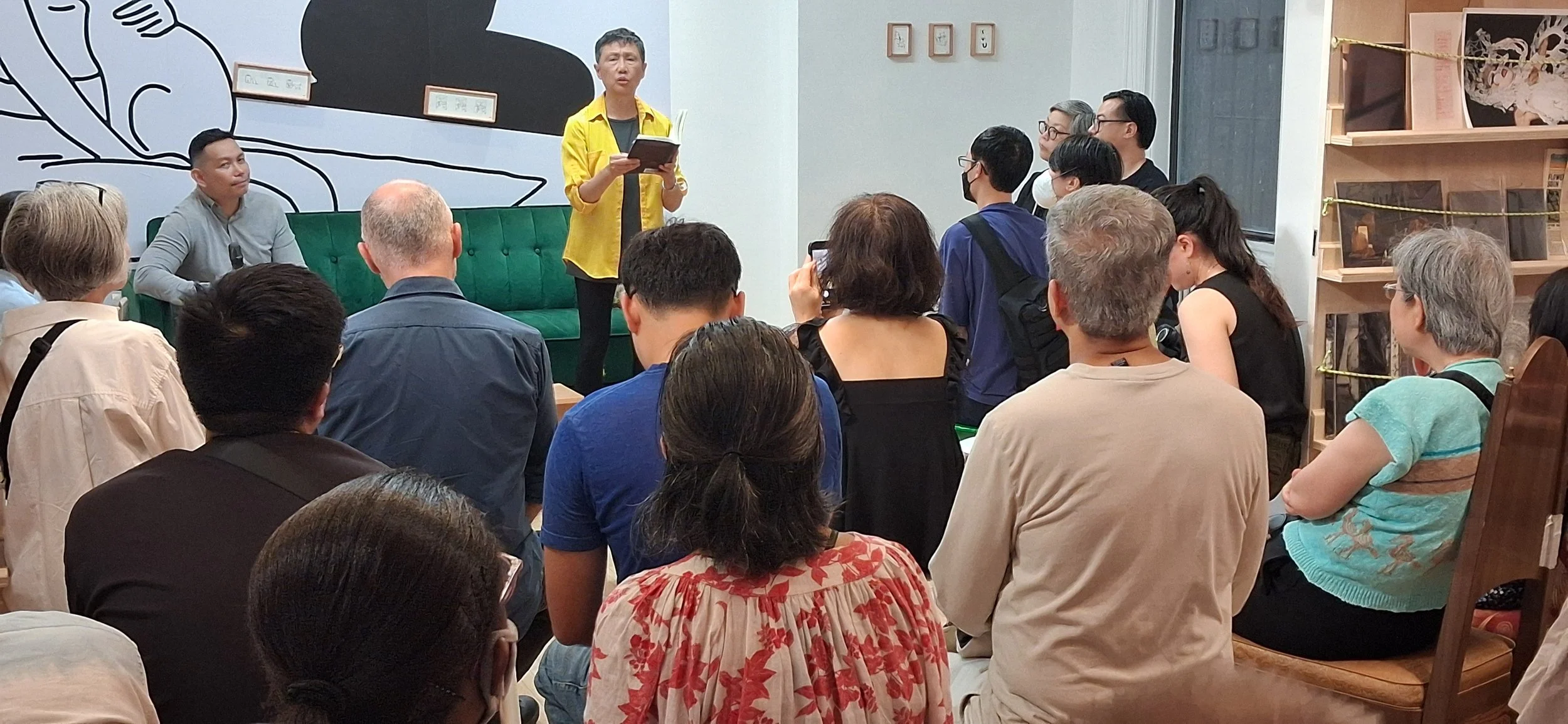
J: I want to return for a moment to the idea of the moment, but this time in relation not to sex, but to history. In the first story of this collection “Democracy,” a troop of Girl Guides learn about democracy through the first election of a Company Leader. The election winner grows up and becomes a historian who teaches a seminar called “Significant Moments in the History of Hong Kong.” A student challenges her, asking why she does not discuss broader trends and government policies, but focuses on mere moments. Another one of your stories, about the British handover of HK to China, is titled ironically “Insignificant Moments in the History of Hong Kong,” and it gives the perspectives of two ordinary Hongkongers whose lives continue as before despite the handover. Your stories deal with momentous changes in Hong Kong, but in a very individual way. How would you explain the uses of history in your short stories?
X: History is what happens while we’re going about our daily lives—that’s how history works for me in fiction, both in my short stories and novels. I occasionally include characters who are journalists in my fiction—they’re allowed to offer observations of history as it unfolds because that’s what their job is. I’m more interested in politics than history, although of course the two are very intertwined. But it’s relationships and what happens between people (families, lovers, friends) against the backdrop of history that I find most meaningful for my stories.
“It’s relationships and what happens between people (families, lovers, friends) against the backdrop of history that I find most meaningful for my stories.”
J: In “Chung King Mansion,” the nine-year-old protagonist admires a sex worker for her glamor, and one night she dreams that the sex worker has her mother’s face. In the penultimate story of the collection “Before,” the protagonist, a grandmother, dreams of dead husband, Bing, and experiences multiple orgasms. In her dreams she also followed Bing all over NYC, visiting the places they once haunted. What is the role of dreams in your fiction?
X: Dreams are supposed to be the worst no-no in fiction. I always tell my writing students, who want to make everything go away because it was a dream, that that’s NOT the role of dreams in fiction. For me they’re a way to articulate a character’s greatest fears or emotions they have avoided confronting. The dreams are also there to show what it is the characters wish to escape.
J: Many of your stories weave musical motifs into their composition, such as “Rubato” and “Interview,” which begins with a discussion of Paganini’s Concerto in D played by Michael Rabin. What is the place of music in your life and writing?
X: I write to jazz quite often. Music is the other language I know—I read music, and being formerly married to a jazz musician, I came to learn how to hear jazz so that it “talks” to me. For me, lyrics are easier than poetry to memorize—tunes stick with me.
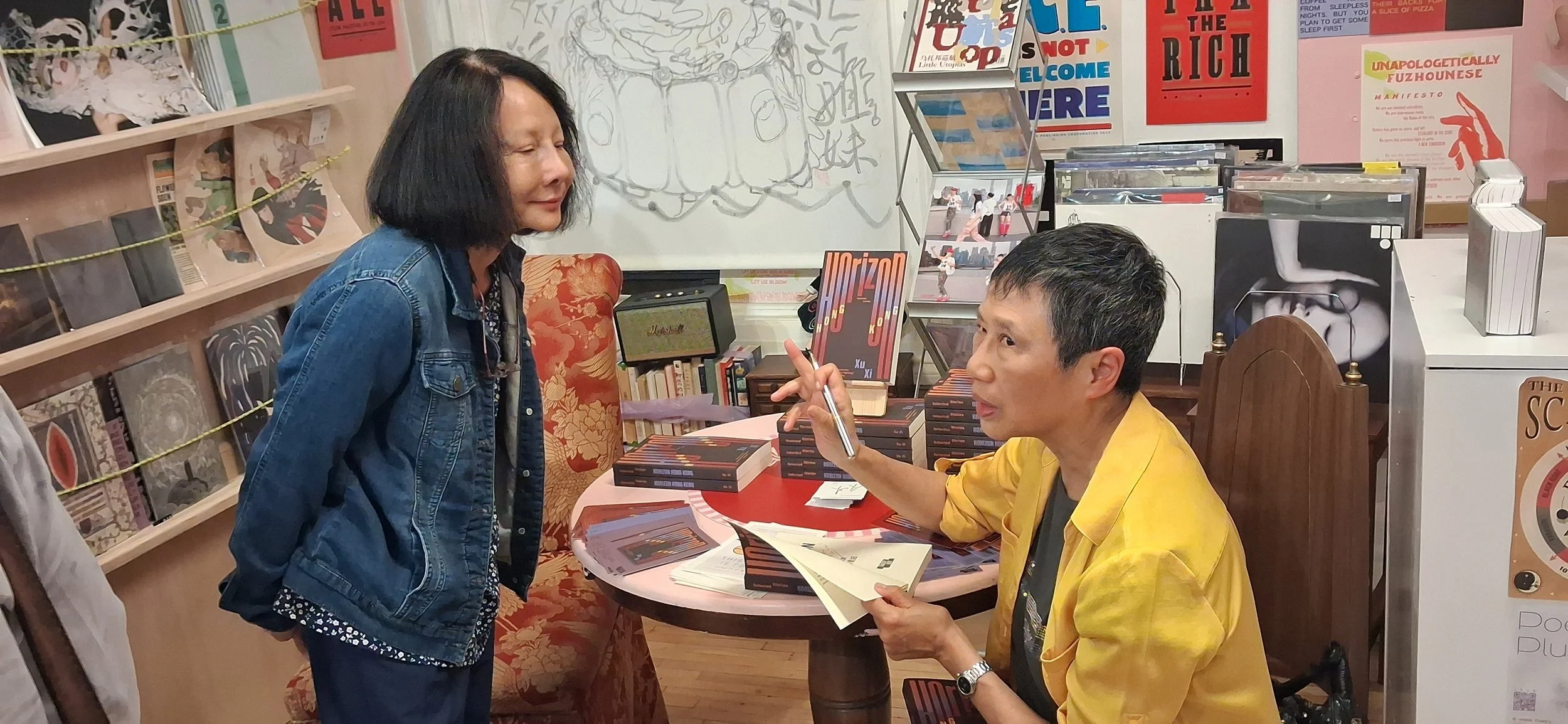
J: A final question. In the story “Off the Record,” you wrote, “Some stories you finished, others remained forever untold, while others continued, unresolved, in perpetual anticipation.” What are the stories still untold and you wish to tell?
X: About life in America! My life will most likely end in this country, so now that I live only in the U.S., I want to write stories that emerge from here. If I could write one short story that somehow captures what baseball means to me, I would die happy! But that’s very challenging and I’m not sure I can do it. But I still want to write stories about memory—of the Asia I knew that’s fast disappearing, especially Hong Kong and Southeast Asia, which I currently still visit. I also want to write about my work life, although that’ll be as memoir, not fiction.
XU XI 許素細, xuxiwriter.com, an Indonesian-Chinese-American from Hong Kong, has published sixteen books—five novels, nine prose collections, one memoir, one coauthored textbook—and edited four anthologies of English Hong Kong literature. Her recent titles include Monkey in Residence and Other Speculations (2022), This Fish is Fowl: Essays of Being (2019), Dear Hong Kong: An Elegy for a City (2017), the novel That Man in Our Lives (2016), and the textbook The Art and Craft of Asian Stories (2021). A writer-in-residence at Arizona State University, City University of Hong Kong, and University of Iowa, Xu has directed two international MFAs. She held the Jenks Chair in Contemporary Letters at the College of the Holy Cross in Massachusetts. In another life, she held management positions at The Asian Wall Street Journal, Federal Express, and Pinkerton’s. A diehard transnational, she now lives between New York and the rest of the world. @xuxiwriter FB, Instagram, LinkedIn


A wide-ranging and stimulating conversation with Xu Xi, author of the story collection Horizon Hong Kong (Gaudy Boy, July 1, 2026).