
#YISHREADS June 2026
By Ng Yi-Sheng / @yishkabob
The United States Semiquincentennial takes place in a week, marking 250 years since the signing of the Declaration of Independence on 4 July 1776. As you might’ve heard, it’s turning into something of a fiasco, with musical artists withdrawing from the Freedom 250 performance, the country struggling to close a deal with Iran to reopen the Straits of Hormuz, and the newly repainted Reflecting Pool in Washington DC choked up with algae.
The obvious thing to do here is blame President Trump. But while it’s easy to point and laugh at his tomfoolery, we’d do well to remember that the US is not a noble nation that’s been corrupted by its most recent leader. It’s an imperialist institution founded on stolen Indigenous land by slave-owners, and it’s honestly a little ludicrous that we associate the American Revolution with liberty rather than tax-dodging.
I’ve chosen to mark this occasion by reviewing books from lands that the US has invaded: Vietnam, the Philippines, Iraq, Venezuela and the Navajo/Diné nation. These aren’t, however, America-bashing works: though some of them discuss war and occupation, they’re all centred in the worlds of their own characters and nations, which means violence tends to come from within. And of course, they’re still linked to the US and its citizens through translation and publishing.
Like it or not, our cultural world still revolves around America—hell, it’s where SUSPECT is hosted! But if Trump wants a celebration, we’ll do the opposite. These are the countries who bled for the Red, White and Blue. Let’s listen to them for a change.
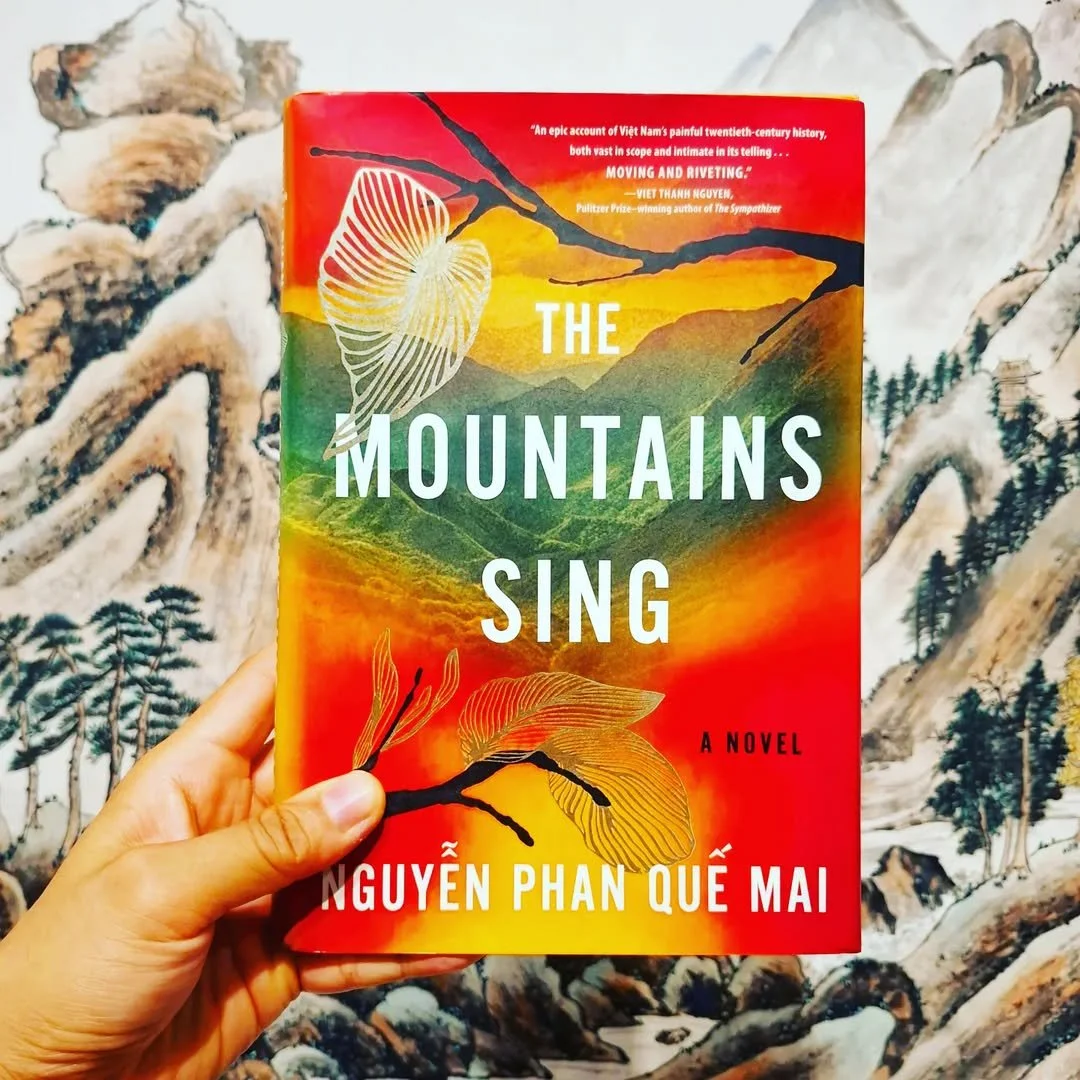
The Mountains Sing, by Nguyễn Phan Quế Mai
Algonquin Books, 2020
A mighty epic of modern Vietnam, taking us from the French colonial era in 1930 to peacetime reconciliation in 1980, as seen through the eyes of two women of the Trần family: grandmother Diệu Lan and granddaughter Hương, shuttling between generations as secrets and horrors unfold.
There's something a little formulaic about historical novels like this, reminiscent of Min Jin Lee’s Pachinko and F. Sionil José’s Po-On—this dogged intention of educating the reader about the pageant of national historical trauma, intimately humanising those who would otherwise be the nameless villains and victims in a Hollywood film about how invading your country made American G.I.s sad. But, as the author explains in a postscript, this is necessary in a Vietnamese context, where the story is almost compulsorily told from the perspective of a white dude—and there's actually the reverse of the aforementioned scene here, where a veteran laments his shock at seeing a bevy of Black and blond soldiers bathing in a river, gunned down a split-second later. All of which is why the author chose to write the novel in English, taking back ownership of the historical narrative.
Yet this isn't a blindly patriotic take on history. We see the cruelty of Japanese soldiers and the shocking birth defects caused by American use of Agent Orange, yet the characters treasure the beauty of haiku and Balzac and Little House on the Prairie, reflecting on the irony of how nations who practise such destructive imperialism can also create such moving literature. Moreover, most of the cruelty and chaos is perpetrated by the Vietnamese themselves, and Quế Mai is unflinching at her portrayals of the infighting of the Communist Party, the irrational violence of Land Reform, the scapegoating of black market merchants, and the fact that most battles in the war were between North and South Vietnamese, many of whom might have been from the same families—and indeed, the final episodes are about acts of reconciliation, as feuds dissolve and forgiveness reigns.
Come to think of it, most Vietnamese stories I've heard are told from Saigon/Ho Chi Minh City, often by emigrants. This is rare as a narrative unfolding principally from the Northern capital of Hanoi, with the scars on the South acknowledged only in passing. I’ve heard the author delves more into the South in her follow-up novel, Dust Child.
I feel like I'm not giving enough weight to the style of Quế Mai’s prose, which at first sounded stilted, but eventually charmed me with its sense of foreignness—this has the aura of a translated work, with Vietnamese idioms literally translated into English, with the difference that the author made decisions about the exact level of authenticity/exotica she wanted. A real pleasure to read.
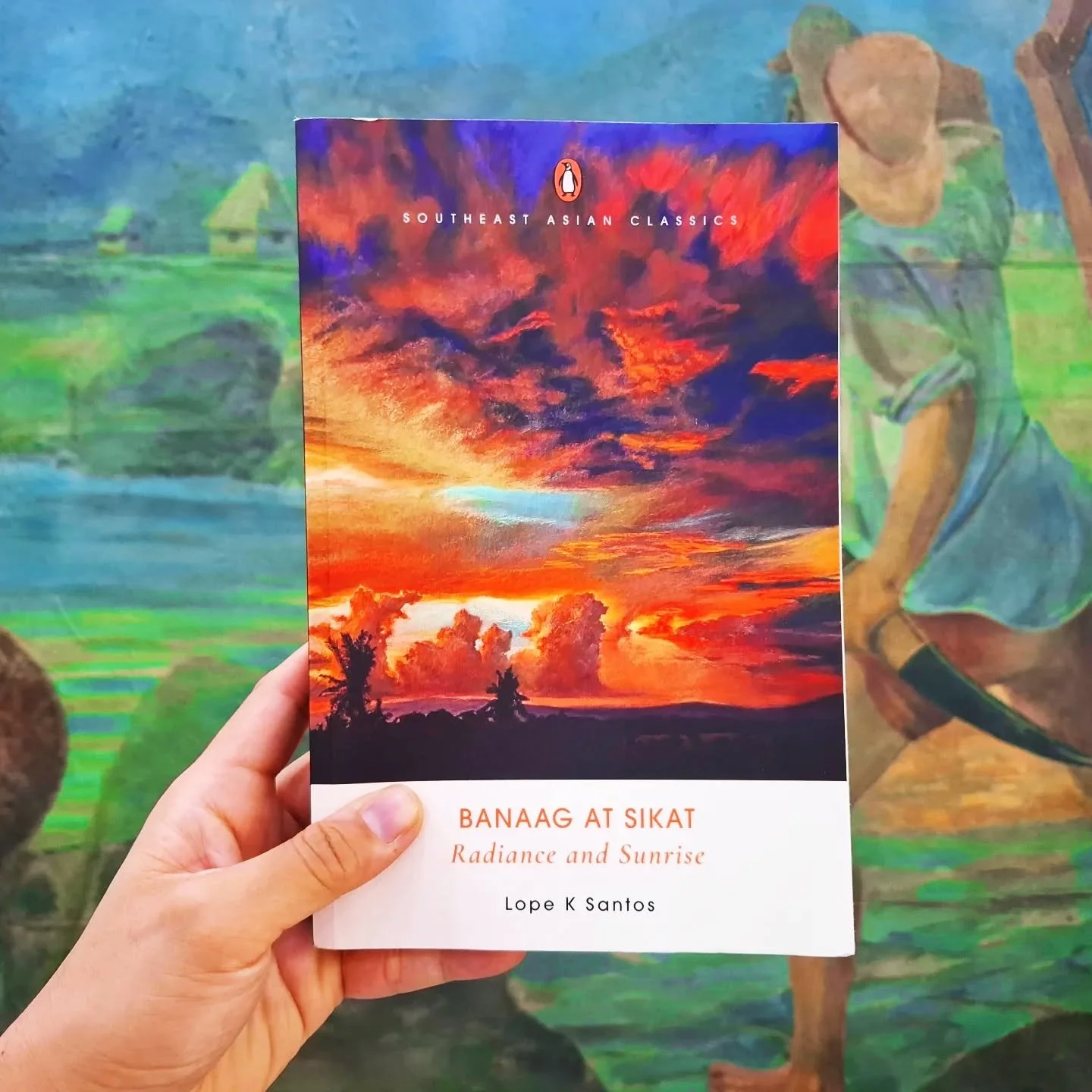
Banaag at Sikat (Radiance and Sunrise), by Lope K Santos
Translated by Danton Remoto
Penguin Southeast Asia, 2021
First serialised during the American colonial period of the Philippines, from 1903 to 1906, this work’s been hailed as the greatest exemplar of the Golden Age of the Tagalog novel, as well as the first proletariat novel in all of Asia, directly influencing the foundation of later socialist groups!
Still, I've gotta be honest: this isn’t a must-read. It’s basically a saga of high melodrama, focussed on two young idealists—the lowborn socialist journalist Delfin and the disowned rich boy anarchist printer Felipe—as they engage in long political debates with each other and have tumultuous romances with their respective girlfriends, long-suffering rich girl Meni and weirdly passive-aggressive poor girl Tentay. Add to this an evil tobacco factory capitalist patriarch, Don Ramon (Meni’s dad), and you’ve got enough explosive scandals and fistfights and weddings and garden parties for a whole telenovela season. (Curiously, I can’t find evidence that anyone's made one!)
Despite the slight ridiculousness of the style and characters, there are a bunch of things that make this worth reading, e.g. how it captures the era of modernity that accompanied American colonialism—it genuinely feels familiar, how characters discuss studying English, give their sons Christian or Tagalog names, marvel at the lucky few who work overseas (Ruperto, a sailor trained by an Argentinean, actually mentions a stopover in Singapore!). And it’s rather gripping to read the details of Tentay’s family’s poverty (they try to make money by sewing two dresses for a woman who's gonna be married to an American, but she absconds with one and never pays for either), the machinations of lawyer Madlang-Layon, the histrionics of spurned mistresses Julita and Señora Loleng, the villagers’ collective punishment of sex pest Juan Karugdog, the revelation that Don Ramon's servant Tikong has been abused for years, and one day while in the U.S. just decides to beat his master to death.
And yet... it’s strange that this is advertised as a proletariat novel, cos most of our POV characters are either wellborn or highly educated. Aside from Tentay, we’re not getting tales of the common man who rises up in rebellion; there are unions and strikes being organised, but that’s background noise to the love affairs of our heroes.
Also, there’s so much faith that these young men are gonna change the world. (Gawd, it's been 120 years since this book was finished, and socialism’s still in the toilet.)
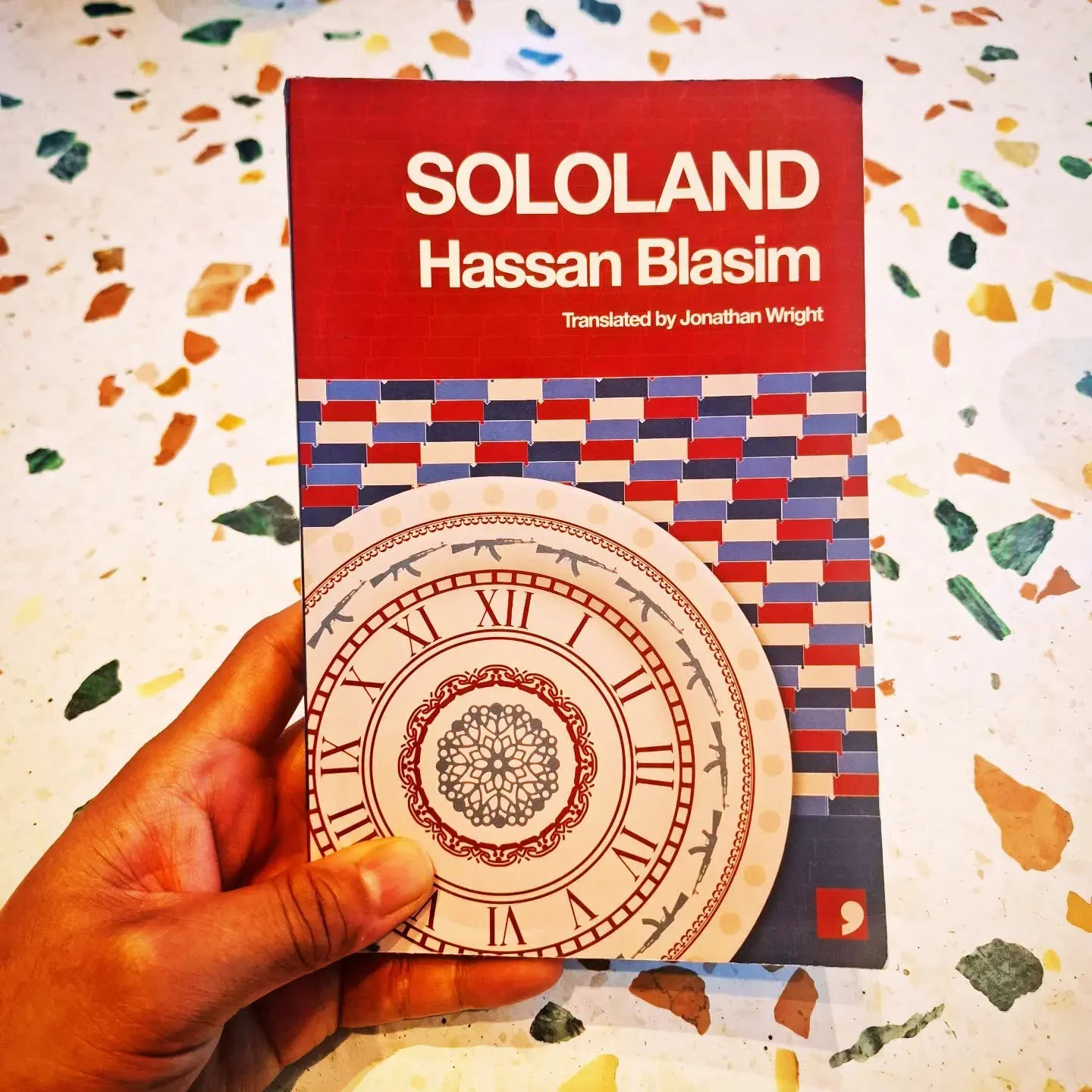
Sololand, by Hassan Blasim
Translated by Jonathan Wright
Comma Press, 2025
This here’s a compilation of three novellas by a major Iraqi author and filmmaker, and they’re pretty brilliant—testaments of national suffering and pride, but also fantastic literary experiments in form and language.
The first's my favourite: Elias in the Land of ISIS, an exploration of the devastating cruelties of the Islamic State through an exploration of the lives of staff and captives in a Dominican church in occupied Mosul. Our main POV character is a 14-year-old Yezidi assistant cook, Elias, who collects the secrets of everyone around him, which is how the narrative drifts from one to another: Sara, the imprisoned pharmacist and writer who emulates the Akkadian poetess Enheduanna; Ansari, the village mayor who ended up becoming an ISIS commander just to protect his people; the Couscous brothers, malicious French jihadis who’re eventually revealed to possibly be a gay couple; Abu Qatada, a secret Catholic trying to rescue manuscripts; Antonio, a Spanish journalist imprisoned in a black box. All endowed with humanity and eccentricities, trapped together in a mad situation, a testament to the strange cosmopolitanism of the city as well as its horrors.
The second leaves me more conflicted: The Law of Sololand is informed by the author’s history as a European refugee (this is referenced in all three stories) and resident of Finland. It takes place entirely in an unnamed country only referred to as the North, where Iraqi refugees are able to make half-decent lives for themselves—they work in restaurants, date local women, learn the language—but instead of finding relief, feel unbearable irritation at the racism directed towards them, the pressure to feel only gratitude instead of the pain of exile. The unnamed POV character, an entomologist, gives us fascinating portraits of the people around him, refugees of different political opinions and generations, plus their liberal aid workers. But the plot centres on a friendship dinner that turns out to be a Neo-Nazi trap... and honestly, the sheer irrationality of that confrontation (and of the narrator’s response) results in a breakdown of the predominant narrative of subtle violence. I kind of get that this is the point of the piece, but I also don’t get why it is.
The final tale, Bulbul, comes with a note from the translator explaining that it’s unusual for being written in Iraqi Arabic rather than Modern Standard Arabic—i.e. it’s an act of vernacularisation so unusual that the author chose to publish it through a free online upload. The story reads well even without that knowledge: it’s kind of a picaresque tale of Bulbul, a muddle-headed millennial Shi’ite Iraqi living in the wake of the American invasion (he’s told he looks a lot like Saddam Hussein), embarking on various careers: a religious leader’s digital assistant, a radio presenter, a drone operator in the war against ISIS, a compensation officer for martyrs of the war, an Arab Spring reporter, a steriliser during Covid... and finally, a refugee and writer. Kudos to the translator, cos we do get a sense of his amateur voice and his innocently off-centre POV on the absurdities of his nation... all while acknowledging the wasted potential of his people, ruined by abusive governance, even while infidel nations live in paradise.
I’m kind of struck by how many characters here are described as going back and forth between Iraq and Europe, for reasons of diplomacy or homesickness or heroism. One thinks of refugeedom as just a one or two-way journey, but in the 21st century, you often can and do go home again, only to find that everything’s changed, including you. And that North and South really aren’t that far apart, the lives of its people intimately entangled.
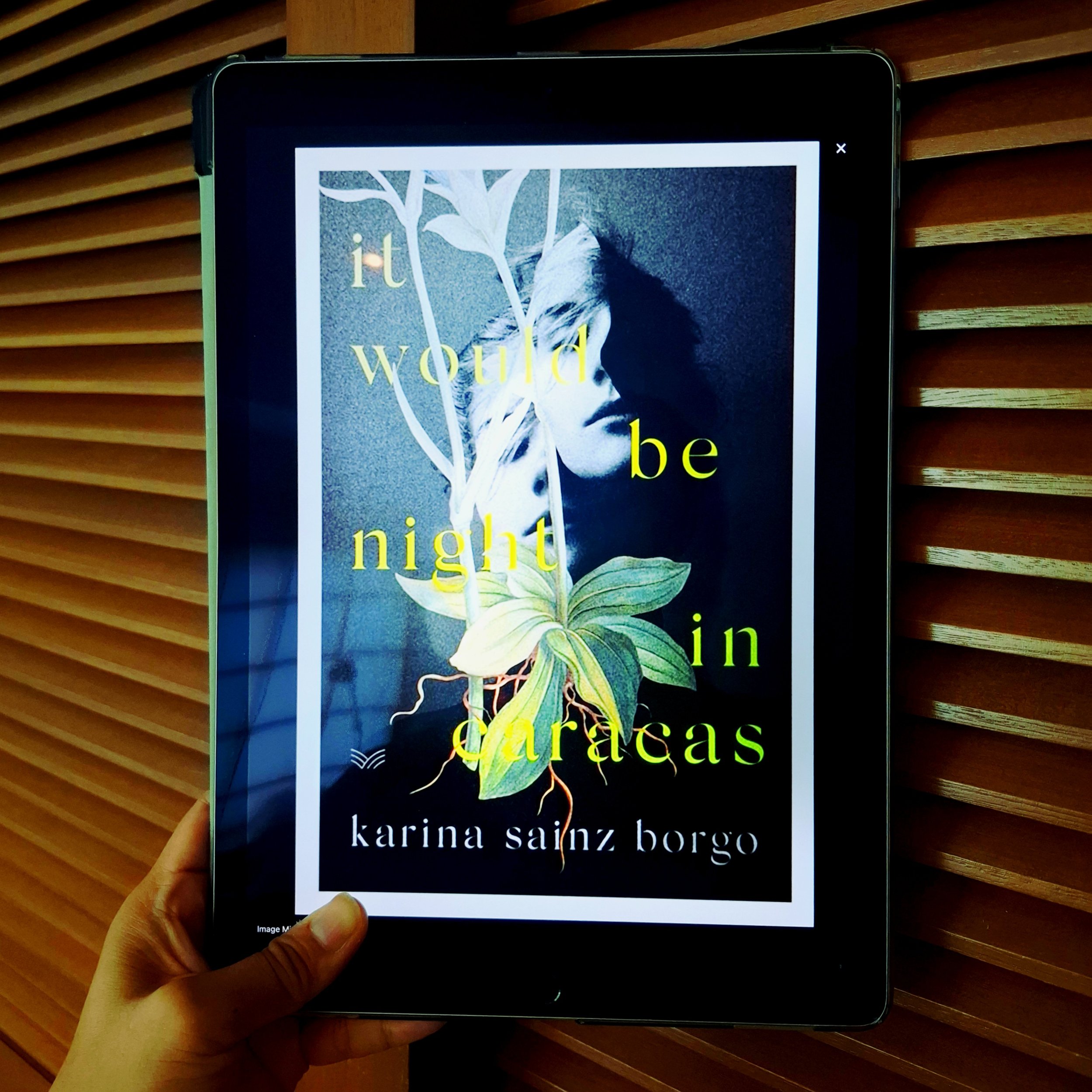
It Would Be Night in Caracas, by Karina Sainz Borgo
Translated by Elizabeth Bryer
HarperVia, 2019
Another novel of civil war and trauma, but all the more harrowing because it’s portraying a single, recent event—the 2017 Venezuelan protests—and thereby paints a picture of how rapidly a civilised country can collapse into chaos.
The story focuses on Adelaida, an editor in mourning for her recently deceased mother. Dreamlike flashbacks portray their intimate relationship—protectors of each other, after her father left—as well as the textures of a middle-class childhood, pounding maize flour and going to the ballet, and the harrowing experience of managing her mum’s cancer as both hospitals and supermarkets fall into utter dysfunction, the national currency turned useless in the matter of weeks.
The turning point takes place when the Sons of the Revolution—the government-backed militia who’s been marching through the streets, kidnapping activists, beating up anyone who dares to challenge them—takes over her apartment. Adding to the horror, it’s a female division of the group that’s doing this, and they’re monstrously cruel, smashing her plates and using her books for toilet paper when she dares to challenge them. (Echoes of The Mountains Sing, which also featured a woman leading a mob to take over the narrator’s house.)
After this, Adelaida becomes not only a witness but an agent of her own survival, seizing upon a highly morally dubious strategy to impersonate a dead neighbour with a Spanish citizenship—because, as we’re told in the flashbacks, Venezuela once was a desirable destination for European immigrants. From there on it’s a nail-biter all the way to Madrid, but told with such beauty and sorrow that it feels polluting to use bestseller language to describe it. Even sorrow isn’t the right word—the author writes about her country with a sense of despair, seeing no way forward for a nation that’s become a meat mincer, that suddenly decided to commit suicide.
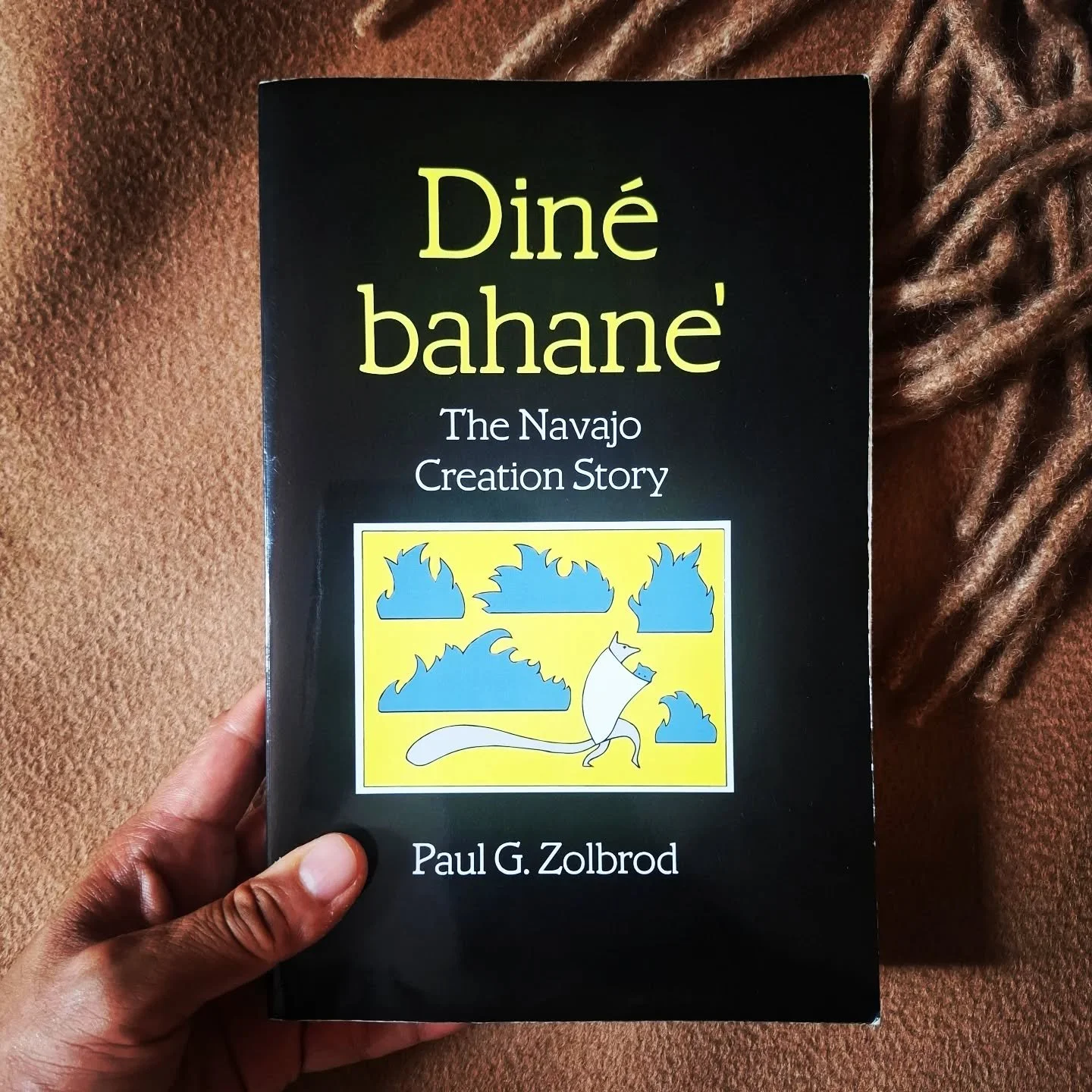
Diné bahane': The Navajo Creation Story, by Paul G Zolbrod
University of New Mexico Press, 1984
This wouldn’t be a decent recap of US invasions if we didn’t acknowledge the Indigenous Peoples of the land it occupies. Still, I’ve ended up picking a slightly hybrid work to honour this history: a synoptic compilation of multiple oral accounts of Diné/Navajo myth, edited/transcreated by a white American anthropologist who felt that earlier documentations hadn’t captured the poetry of the storytellers.
The contents are pretty damn fascinating, of course. We go from the appearance of the Air-Spirit People, who appear to be bugs (no single moment of creation, nor do we have an individual creator god), who commit sexual sins and end up fleeing through three worlds after they’re flooded, flying through a hole in the sky into the next, with the First Man and First Woman created from corn in the Fourth World and later escaping into the Fifth, our own. We witness various shenanigans of Mą’ii, the Coyote, who’s tricked as much as he is a trickster, with emphasis on his very ethically problematic courtship of a skilled and virtuous woman who ends up turning into a she-bear and murdering eleven of her twelve brothers. Also the exploits of the monster slayer Naayéé' neizghání, son of Jóhonaa'éí the Sun and Yoołgai asdzą́ą́ the White Shell Woman and twin brother of Na'ídígishí (at first his partner in murder, but he quit early)—he even gets to the brink of slaying Hunger and Poverty, but they manage to smooth-talk their way out of it. And finally the Gathering of the Clans, which describes the origins of the various tribes of the Diné nation, and actually mentions contact with Apache and Pueblo and colonial Mexicans, alongside the adventures of Shash the Fearless Bear—that overlap of the miraculous and the historical that’s commonplace in non-Western archives of the past.
What’s really fun is the explicit depictions of sex and carnal desire in the story—though it’s not exactly celebrated: men and women are periodically punished for adultery and masturbation (there’s a wonderful sequence where an owl keeps cockblocking a hunter from pleasuring himself with a deer liver he’s been warming in the fire). Oh, and there’s nonbinary folks too: some of the earliest people to be born are “hermaphrodite” twins, nádleeh, who invent technology like grinding stones, cups, bowls and baskets. Shades of the bissu in the Bugis creation myth!
However, I’ll admit that it’s a little hard to follow this text, which is nowhere as lyrical as I expected—it’s paratactic, with flat characters, a bit like the Old Testament, and of course the names are pretty damn hard to get my head around. Plus, the ethics of the work are contentious. While some Diné endorsed his project as a way of preserving the culture, others that the author/editor interviewed were opposed to it, believing that if their culture was dying, the memories associated with it should have a chance to disappear as well. Turns out I can’t escape history: every time I try and search out the indigenous heritage of a place, it turns out it’s coming to me through a filter of violent coloniality.
Ng Yi-Sheng (he/him) is a Singaporean writer, researcher and LGBT+ activist. His books include the short story collection Lion City and the poetry collection last boy (both winners of the Singapore Literature Prize), the non-fiction work SQ21: Singapore Queers in the 21st Century, the spoken word collection Loud Poems for a Very Obliging Audience, and the performance lecture compilation Black Waters, Pink Sands. He recently edited A Mosque in the Jungle: Classic Ghost Stories by Othman Wok and EXHALE: an Anthology of Queer Singapore Voices. Check out his website at ngyisheng.com.
‘The truest, most vivid sketch of non-performative unconditional love’—Ashley Marilynne Wong reviews Susanna Kwan’s Awake in the Floating City (New York: Pantheon, 2025).