
#YISHREADS April 2026
By Ng Yi-Sheng / @yishkabob
April is National Poetry Month, so I thought I’d dedicate this month’s column to poetry collections, just like I did three years ago.[1] Then I thought again. And I decided that in these genocidal times, when the US-Israel-Iran War brings us to the brink of nuclear apocalypse every fortnight, that wouldn’t quite cut it.
As Noor Hindi says, “fuck your lecture on craft, my people are dying.”[2] However great the power of poetry may be, it sure didn’t stop institutions like the Poetry Foundation and PEN America from both-sidesing Israel and Palestine.[3] Even celebrating protest poetry feels like a weaksauce liberal band-aid over the gaping wound of the world under Western imperialism.
Furthermore, as Omar El Akkad says, “to watch the leader of the most powerful nation on earth endorse and finance a genocide prompts not a passing kind of disgust or anger, but a severance.”[4] So much of poetry as we know it today is shaped by European colonialism and American hegemony—hell, it was the American Academy of Poets who consecrated this month only in 1994—that it makes me yearn for something older, wilder, untainted by the contemporary world order.
So the theme of the month is epics. These are gargantuan works, originally composed as poetry, telling tales of love and war and empire, hailing from the global South—Thailand, South Africa, the Philippines, Indonesia, and most crucially, Iran—regarded as great classics in their nations of origin. Notably, the West isn’t utterly absent in them: white colonists often feature as background characters and one set of works uses the European chivalric tradition as inspiration—not to mention all the entanglements of translation and global publishing.
Nevertheless, these works feel different from the toxic now, when epic poetry’s regarded as an antique form, superseded by the novel. And—though this might be just another band-aid—I’d like to imagine that they might form the basis of a future planetary canon, when our current kings are toppled, when poets must write differently because another world has come into existence.
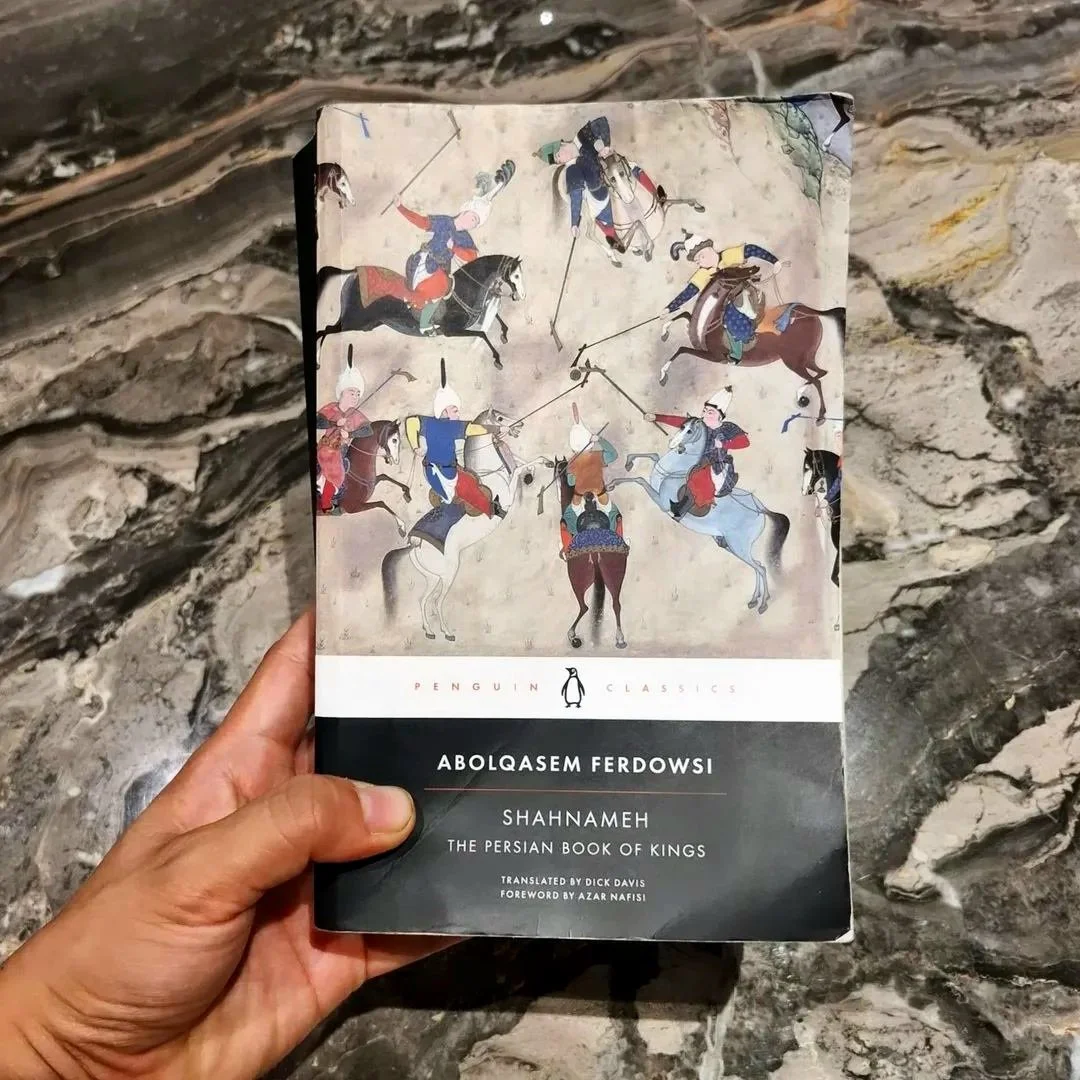
Shahnameh: The Persian Book of Kings, by Abolqasem Ferdowsi
Translated by Dick Davis
Penguin Books, 2016
This is the national epic of Iran, and it’s kind of jaw-dropping in its scope. It begins in prehistoric times, with the first king Kayumars, dressed in a leopard-skin, and describes encounters with the angel Sorush, demons sent by Ahriman, the literal discovery of fire and the establishment of the festival of Nowruz… then goes through endless generations, the feats of the hero Rostam, the conquest of Sekander (Alexander the Great) and the rise of the Sassanians, ending with the Arab conquest, with the last king of true blood Yazdegerd slain by a miller after fleeing battle.
As the intro explains, Ferdowsi’s creation of this work in the 10th century (it’s the longest epic poem by a single author!) effectively ensured that Persia’s pre-Islamic heritage would be preserved in the Muslim era—though, as the intro points out, a lot of the actual history, e.g. the Achaemenid emperors, is absent, replaced with figures of pure legend, borrowed either from oral tradition or wholly conjured up in the author’s brain. But it’s remarkable how little sympathy Ferdowsi has for the conquering civilisation: Arabs are portrayed as inferior neighbours, like the Turanians and Indians and Chinese; there’s not only copious wine-drinking but even a sequence where Bahram Gur bans alcohol (cos someone gets drunk and gets his eyes pecked out by birds) and then promptly unbans it out of amusement (cos a shoemaker gets drunk so he can consummate his marriage, then gets so wasted he goes out and rides a bear).
Throughout it all, it’s Persian pride that reigns utmost, with heroic warriors like Zal and cunning advisors like Bozorjmehr kicking so much ass—and readers should know this is a bloody story, with endless cycles of war and graphic depictions of violence. One surprise, however, is that while the most kings splendidly radiate the royal farr (basically the charisma of the divine right to rule), there are also kings who are deeply flawed or just plain awful, and while it’s advised not to rebel, people do occasionally successfully rebel, leaving kings like Hormozd with their eyes gouged out. Fascinating given how much Persian poetry influenced the Malay epic tradition, wherein treason is a major no-no!
Impossible to speak about all the riches herein in a quick review—my mind will be haunted for ages to come by the demon king Zahhak with his brain-eating serpent locks and the heartbreaking martyrdom of Seyavash and the immolation of queen Shirin (though women kind of get a bum deal in this story, being mostly princesses who’ll betray their dads cos they’re in love or temptresses or mothers, with perhaps only the glowing exception of Gordyeh, sister of the traitor Bahram Chubineh and a warrior woman in her own right who ends up manoeuvring politics enough to marry the king).
Final praise should go to the translator, who’s released several editions of this book (this 1,000-page version is the most complete so far, though there are still chunks he has to give in summary!), consisting of glorious prose that occasionally breaks into rhyming couplets, with chapters, sub-chapters and indexes of names at the back for the perplexed… and fair warning: if you read all of this at one go, you will be perplexed.
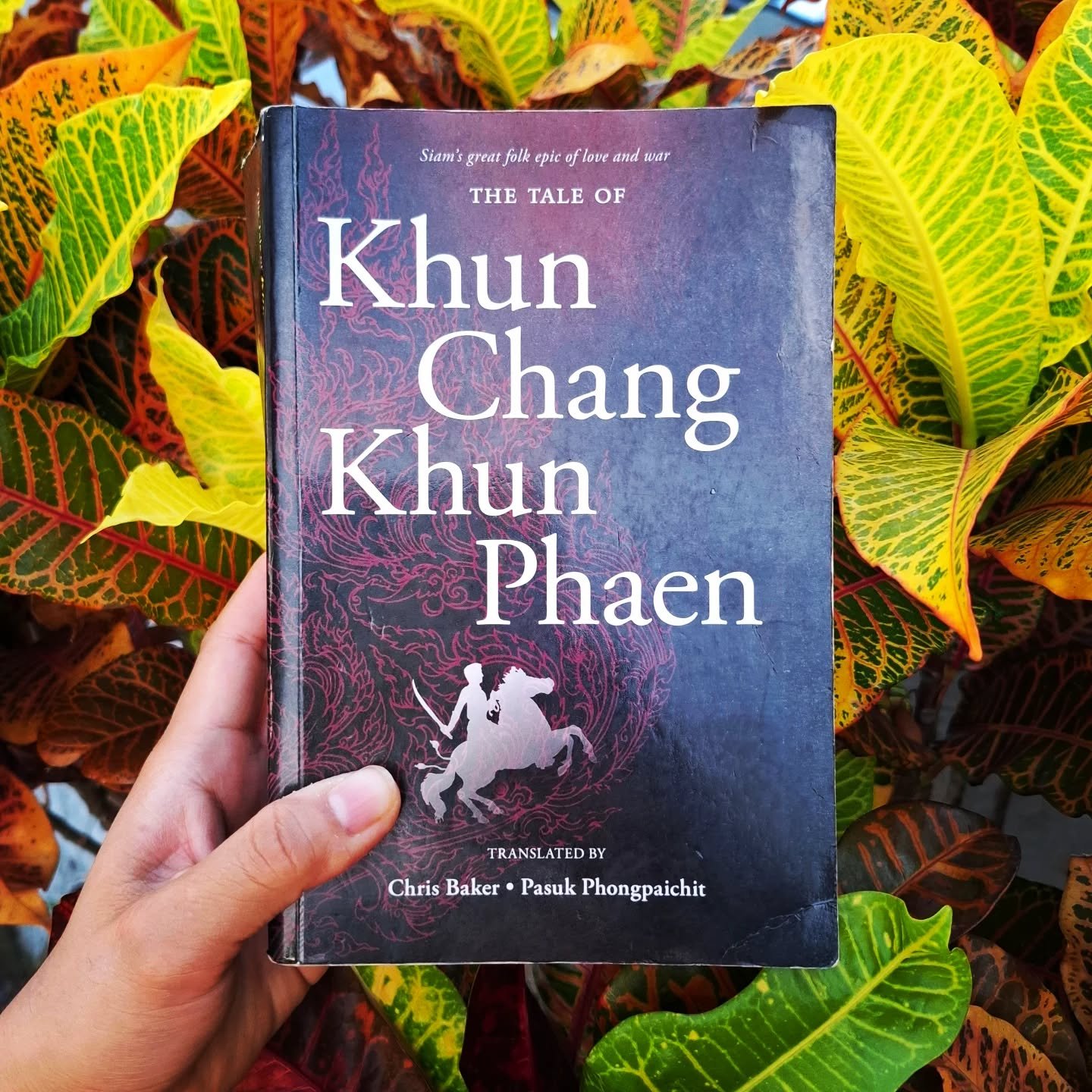
The Tale of Khun Chang Khun Phaen
Translated and edited by Chris Baker and Pasuk Phongpaichit
Silkworm Books, 2010
Here’s another 1,000-page doorstopper, this time from Thailand. However, I assure you, it’s immensely readable, far less broad in its historical scope, and kind of jaw-dropping in its outrageousness.
The whole thing’s based on a tale from the Ayutthaya period—probably 1600s, Baker and Phongpaichit say in their afterword: the story of the beautiful Wanthong, forced to choose between the handsome but poor hero Khun Phaen and the ugly but rich Khun Chang, ultimately executed under royal orders for being unable to decide between the two men. Since then, it’s been expanded and embroidered, first through oral storytelling, then through a rigorous editorial process by Prince Damrong in the 1800s, which resulted in it becoming a print bestseller in ten volumes, though with the dirtiest bits expurgated!
And though this translation’s turned the khlon metre largely into prose, it’s still incredibly immersive and musical, detailing the worlds of the town and forest, the market and the temple, the palace and the battlefield, filled with monks and slaves and concubines and rascals galore, Thai and Mon and Lao and Chinese and Khaek (i.e. Indian/Malay/Arab). It reads like an encyclopaedia of a culture, with lists of flora and fauna and food, elaborate rituals for weddings and blessings and black magic (we get directions for how to make a kumanthong, basically a Thai bottle imp), sage advice for wives to please their husbands and admonitions on how to bear suffering brought on by bad karma—complete with annotations and illustrations on almost every page.
Then there are the characters! Khun Phaen, praised with the epithets “great romancer”, “great conjuror” and “great warrior”, is imagined as this ideal man, not just drop-dead gorgeous but also so skilled with magic that he can make cities fall asleep before invading, summon spirits to form an army to dispel his enemies, and loosen all locks with a whisper. Khun Chang, on the other hand, has almost no redeeming qualities: he’s ugly and bald and stupid and villainous, forcing Wanthong to marry him while Khun Phaen is away at war, lying to the king to get his romantic rival thrown in jail for over a decade, trying to murder their son Phlai Ngam (don’t worry, he survives and grows up to be just as handsome and skilled as his dad). Wonderfully cathartic when Khun Phaen casts a spell that makes him poop himself in the middle of court! (Tonnes of scatology in this book!)
As for Wanthong—well, I’d heard of her as a symbol of women’s fickleness, but she’s drawn with surprising complexity. She exercises real agency in going after Khun Phaen when she can, but ends up mercilessly pushed around by her two husbands and even her son, and her refusal to abandon Khun Chang is framed less as cupidity than wifely duty. The men aren’t models of devotion either, each taking on multiple wives themselves, sometimes involving sequences which are just straight up rape. But this isn’t the kind of patriarchy that insists on women’s submission: multiple sequences show women just as horny as men, and the poetic metaphors surrounding congress are about mutual sexual pleasure.
What’s paradoxical, though, is how this story ends up being named after the two men. I’m not that surprised that Wanthong gets sidelined, given how much war and monkhood there is here, but why give the horrible Khun Chang top billing over Khun Phaen? Maybe because it's just plain funny to see him being so consistently awful and disgusting, making him more memorable than the two paragons of manhood and womanhood. As they say of Disney films, villains get the best songs.
(By the way, this isn’t a complete translation. The missing chapters, available in a companion volume, are—according to the editors—mediocre attempts to continue the saga beyond the death of Wanthong. I don’t feel super-guilty for skipping them!)
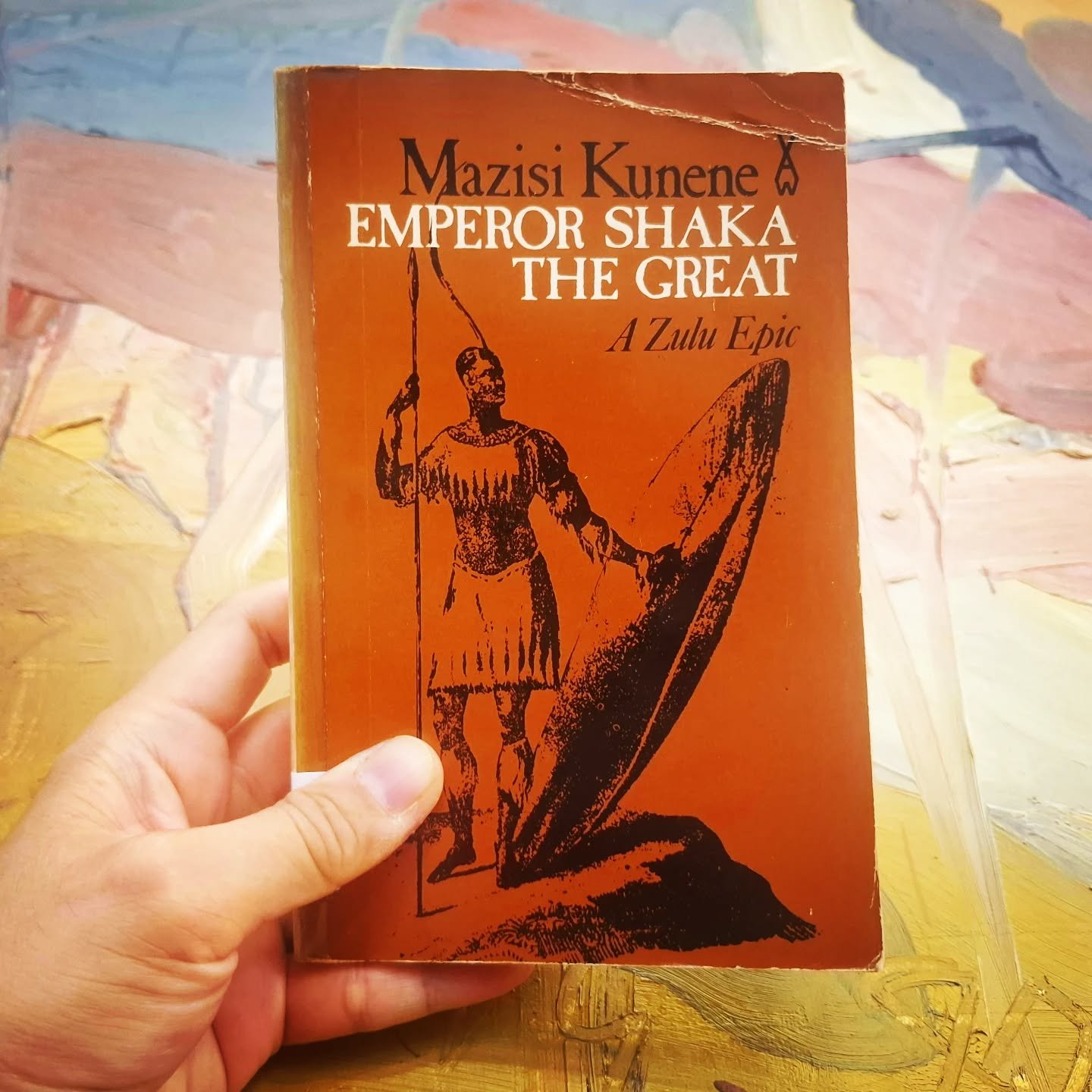
Emperor Shaka the Great: A Zulu Epic, by Mazisi Kunene
Heinemann, 1979
A poetic chronicle of the life of that great warrior king of the Zulu, Shaka (c. 1787-1828), aka the token sub-Saharan African dude who appears in all editions of Sid Meier’s Civilization. Originally performed by oral storytellers in Zulu, this was collated and translated into English by Kunene in 1979, but given the beauty of the poetry, his admission to editorialising and the fact that this marks the first full publication of the epic in any language, I can’t really object to the fact that most sources regard him as the author.
Again, I’d say it’s a pretty solid read, thanks in part to Kunene’s awareness that he’s writing for a global audience. Each of the sixteen chapters comes with a brief summary, and a dramatis personae in front helps us to keep track of the various royal characters of the narrative. Plus, there’s a real sense of novelistic unity: the story begins with Shaka’s conception, when princess Nandi becomes pregnant with the child of Zulu prince Senzangakhona, despite the fact that they’re unwed. Ostracised by her tribe, she and Shaka spend the next years struggling and fleeing for survival, but as Shaka grows towards maturity as an outstanding warrior and strategist, he’s able to claim the throne of his father and immediately plunges into his wars of conquest—innovations like close-range assegai fighting and going sandal-less for speed are specifically mentioned—and after a few wars, eventually defeats his arch-rival Zwide of the Nxumalo nation.
But these laurels come paired with the stench of death, cos his loved ones start to die off, one by one, and his worry and grief for his ailing mum Nandi cloak so much of the tale in melancholy (here, as in historical fact, we hear of how he brought his kingdom close to ruin with the severity of mourning at her funeral), and there's such prolonged plotting by his brothers and the rest of his family to assassinate him that when they finally succeed, there’s almost a sense of relief and release.
Basically, there’s an air of doom surrounding this tale of glory, almost certainly cos it’s recalling golden years before a nation’s decline—encounters with the White Strangers, emissaries of King George to the Men of Palm, are recorded with all the suspicion and foreboding of their eventual conquest of the Zulus, and of the era of apartheid when Kunene was writing. (A moment of bitter humour as Shaka demands of them medicines to cure his mother of old age, and all they can offer is hair dye to turn her white curls black, whereupon the king demands more so they can turn her whole body young again.) There’s a shocking moment where the great poet Nomnxamama, upon learning of Shaka’s death, weeps and curses the murderers, recites the king’s epic repeatedly, then slits his own throat. With grief so great, can this be paradigmatic behaviour for the guardians of the story?
Also fascinating: the place of women and gender in the epic. Shaka’s been called a proto-fascist, so masculinist that he never married (i.e. no legitimate kids, which led to a mess after he died)—there’s even a famous episode, depicted here, where he punishes a pregnant woman by having her belly sliced open, then regards the organs of reproduction laid bare with cold interest. Yet there are powerful women aplenty in the epic: not just Nandi but also scheming powers behind the throne like Mkabayi and Ntombazi, the rival warrior queen Mantantisi, even the concubine and failed assassin called daughter of Magiya.
And another curiosity—there’s no magic here. People get prophetic dreams, and palace women have suspicious herbs they’re using in concoctions, but we don’t have any of the sorcery or miracles or gods or ghosts you'd expect in the tale of a culture hero. Maybe Kunene edited those out, or maybe it’s cos these events took place just 200 years ago, in an age of modernity. (Fancy that: with a bit of itinerary-bending, Shaka could’ve met Stamford Raffles.)
By the way, though the copy in the pic is from the National Library's Edwin Thumboo Collection, I read most of this work via this Google Drive featuring the out-of-print Heinemann African Writers series! Alas, turns out it’s missing some pages. Had to find them on the Internet Archive![5]
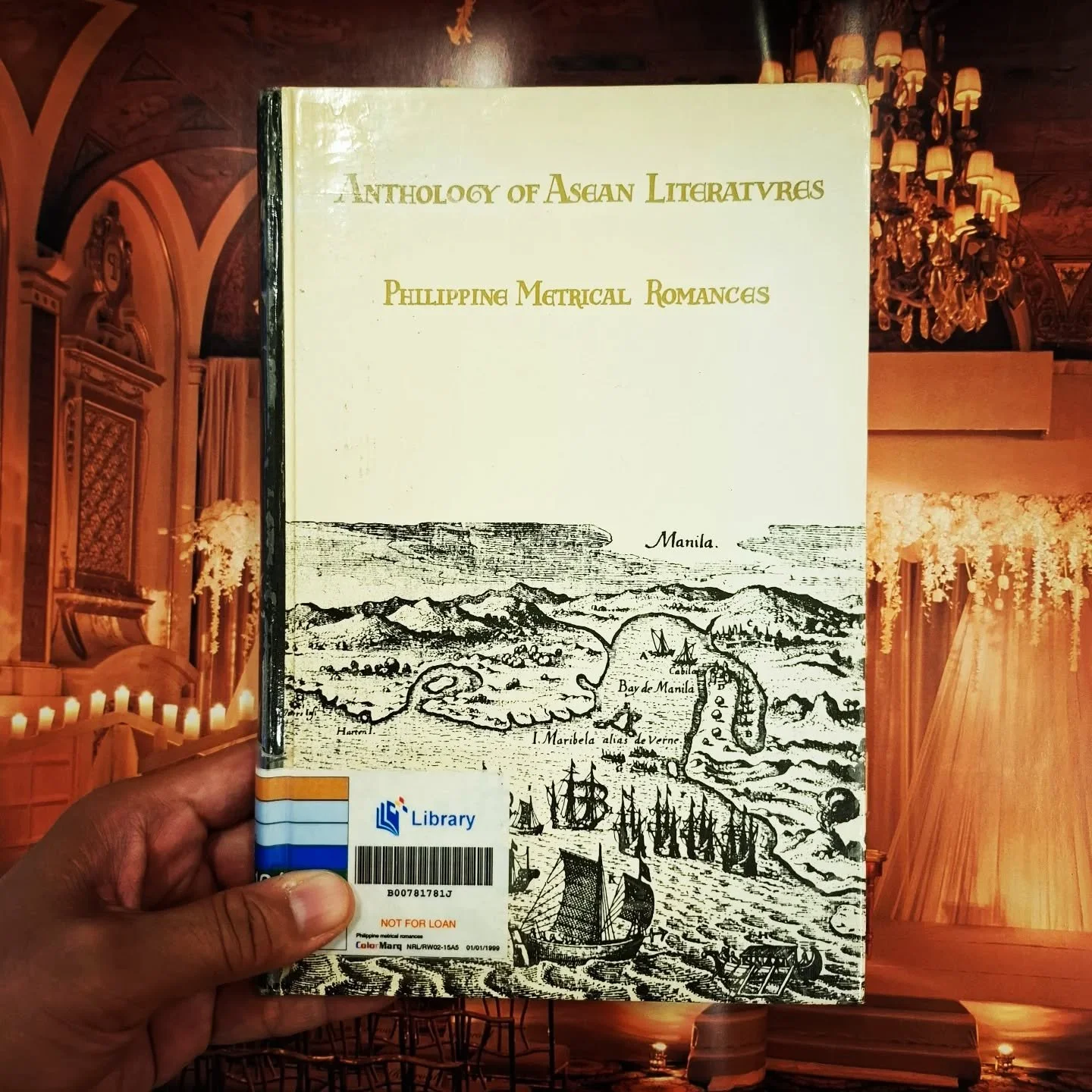
Anthology of ASEAN Literatures: Philippine Metrical Romances, eds. Jovita Ventura Castro, Antolina T. Antonio, Patricia Melendrez-Cruz, Josefina T. Mariano and Rosella Jean Makasiar-Puno
ASEAN Committee on Culture and Information, 1985
Golly gee whiz; I’ve been bellyaching for years that I can’t find a translation of the famed Tagalog epic poem Ibong Adarna—only to discover, a month ago, via a Hungarian folklore blogger,[6] that one was published back in 1985! Even better: there’s five narrative poems in this volume, mostly exemplars of the Tagalog awit form based on Spanish courtly romances (the settings of these tales are a mythical medieval Europe, with skins white as milk) with uncertain authors and dates of composition, but written at least as far back as the 19th century. Yet their contents are wild, to the extent that I feel I’ve gotta recap each one individually.
Bernardo Carpio (trans. Castro) tells the tale of a boy born to a forbidden liaison between Don Sancho and Jimena, sister of the King. Turns out he’s got super strength, to the extent that he keeps accidentally killing animals and people, so the King tries to get rid of him by sending him off on a quest to conquer nineteen Moorish castles, but surprise, surprise, he’s triumphant, breaks into the prison to rescue his dad (who’s had his eyes gouged out), and has a lavish wedding ceremony for his parents, even though his dad’s suddenly died and his mum’s in a convent. Then, while questing, he ends up trapped in a rock guarded by lions—this bit isn’t in the original Spanish version—and now Philippine folklore holds that he’ll come and rescue the people from their oppressors, never mind his history of Christofascist murder.
Juan Teñoso (trans. Antonio) is about a soft-hearted prince of Valencia who frees a shackled giant, is banished by his dad, but uses the giant’s gift of an enchanted kerchief to become the king of the jungle, living in a cave, where lions and tigers obey him. He falls in love with the princess Florecerfida of Hungary and so naturally woos her by disguising himself as an old man with ulcers all over his body (she spies him in his true form bathing naked in the well, so she’s into it), and then manages to defeat a bunch of other suitors for her hand, even at one point branding their buttocks “like Aetas” (i.e. referencing enslavement of indigenous peoples, yikes).
The Adarna Bird (aka Ibong Adarna, trans. Mariano) starts off with the youngest of three princes, Don Juan, who seeks the titular magical bird to cure his dad, King Fernando of Berbania, after his brothers have failed. Turns out they’ve fallen asleep to the birdsong and then turned to stone when it pooped on them (no, really!), but since Juan is kind to a leper, he learns the secret of how to keep awake by stabbing his hand and dripping lemon juice into his wounds… but when he rescues his brothers, they beat him up and try to bring the bird back themselves, which leads to a whole sequence of fairytale tropes involving him rescuing two princesses from a well by fighting off giants and talking serpents, getting thrown back into the well by his asshole brothers, riding a unicorn and eagle to the Kingdom of Los Cristal and wooing a third princess, Doña Maria, who gives him the cheat codes to her dad’s crazy demands (e.g. she gets Chinamen to harvest a field of magically grown wheat, and summons twelve Negritos to squeeze into a magic flask. So much weird stuff with race!), ending with a whole confrontation in the palace when two princesses vie for the right to marry him.
Then our outlier: Abdulla and Putli Isara, a short Tausug oral work compiled by Mohammad Daud Abdul (trans. Makasiar-Puno), which actually records a real-life historical event: a fair maiden, Isara, is molested by a Spanish soldier, so she and her fiancé and her mother end up going on a murder spree among the Spaniards, hacking them with kalis and barung until they’re shot dead. No magic in this: just bloodlust!
And finally, Florante and Laura (trans. Tarrosa Subido), which I oughta appreciate more cos we know who wrote it—Francisco Baltazar in 1838—but which ends up being so stylised and emo that I just wasn’t that into it. After a lengthy dedication to his beloved Celia, we’re plunged into the forest where two princes, Florante and Aladin, are moaning about how they’ve been cheated by usurpers and separated from their lovers, but it’s honestly so convoluted and compressed that I struggled to follow what was going on before the happy conclusion.
Among these, my faves are Ibong Adarna (which deserves all its fame) and Juan Teñoso, both of which are equally spellbinding and filled with WTF moments, which is exactly what you want from a classic: an antique alien beauty. But as one of those creative writing instructors who’s constantly urged Singaporeans to write about their own country, it’s jarring to realise there’s a venerable Southeast Asian tradition of exoticising the West—reverse Orientalism, even—possibly more beloved than purely indigenous epics like Lam-Ang. What do I tell the kids now?
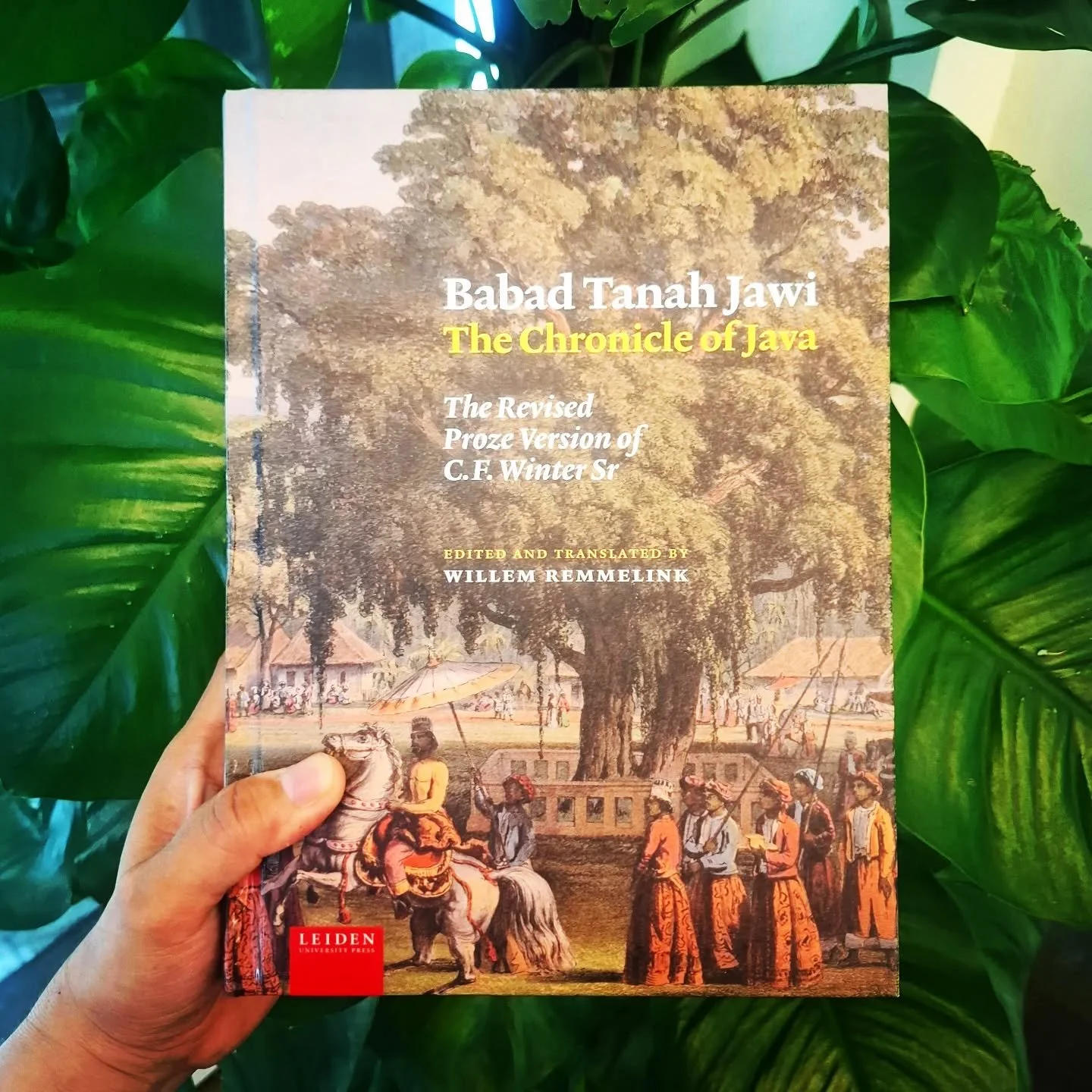
Babad Tanah Jawi: The Chronicle of Java
Translated and edited by Willem Remelink
Leiden University Press, 2022
Damn, this is heavy reading, quite literally—it’s yet another 1000-page monster, a hardcover court history, surveying the royal houses of Java from the time of Adam and Vishnu (they're related, doncha know?) to around the year 1770! Fortunately, I only had to read about 450 of those pages, cos the rest was the original Javanese text. Didn't even have to lug it around, since the whole thing’s available for free download.[7]
Some of the contents are genuinely fantastic, especially the early stuff about the rise of the Sultanate of Mataram, including the bit where the founder Senapati meets the sea goddess Ratu Kidul, who has sex with him for three days and three nights in her underwater palace, thus legitimising him as the progenitor of kings. In fact, there’s a lot of sex here, with frank anecdotes about alluring princesses and doomed love affairs—even a declaration that “for a Javanese king only two things counted: women and land”—as well as loads of death and magic. E.g. the fabulous story of the handsome fuccboi Raden Pabelan, whose dad tells him to seduce the princess Ratu Sekarkadhaton with the help of enchanted chempaka flowers and a spell that makes the palace walls fall down when he rubs them, which gives them a night of bliss, but alas he can’t get out of them so he goes, “Welp, guess I'll die,” so they keep schtupping for another seven days and seven nights till he’s arrested and stabbed full of wounds, thicker than the spaces in a woven basket. One downer: women aren’t presented quite as equal in nobility to men. The only real heroine seems to be Ratu Kalinyamat, whose tomb I visited in Jepara. Interestingly, it doesn’t mention her attacks on the Portuguese, instead dwelling on her meditating naked on a mountain and enticing her brother to take up arms by offering him a beautiful woman, who already had a husband!)
Something unexpected is how much of this narrative looks at the colonial period, specifically the 1600s and 1700s when the Dutch are hanging out and having altercations with the Javanese kingdoms but not actually completely in control yet—there’s even transitional figures, e.g. Untung, a slave who’s raised by a Dutchman who ends up sleeping with his daughter (I toldja there's a lot of sex—but the real problem is that they’re stealing from his master!) and leading the Javanese in rebellion. But the real antagonists seem to be the Chinese, whose revolt and war with the Javanese seem to take up the entire last hundred pages. Some consternation for me of course, but it's honestly fascinating to understand that the Chinese community in Java was seen kind of as a nation unto itself, with an army and everything, and also its sheer hybridity, with mentions of mixed folk working on both sides of the war.
Another strange thing: the reality of magic is sustained well into an age we’d have thought of as modern. One of the last things that happens in the narrative is Sunan Pakubuwana II, the last Sultan of Mataram, meeting the ghost of the mystic Sunan Lawu, who accepts his daughter in marriage in exchange for giving him an army of spirits which he uses to found Surakarta in 1745.
Alas, as much as I’d like to recommend this, I must reveal that it’s way too intense a read for the casual history buff—the translator includes no chapter divisions or guide to historical personages, which means I got thoroughly lost at times, even though I've read enough to recognise a few names of nobles and the Walisongo. Still, I’m grateful the book's out there, and I’m definitely gonna go back to it for story ideas, because—like so many of its sister epics—it's chock full of miracles and murder.
Endnotes
[1] Ng Yi-Sheng. “#YISHREADS April 2023.” Suspect. 28 April 2023. https://singaporeunbound.org/suspect-journal/2023/4/28/yishreads-april-2023
[2] Noor Hindi. “Fuck Your Lecture on Craft, My People Are Dying.” Poetry Foundation. https://www.poetryfoundation.org/poetrymagazine/poems/154658/fuck-your-lecture-on-craft-my-people-are-dying
[3] For more on this, see James Folta. “The boycott of PEN America led by Writers Against the War on Gaza was a success.” Literary Hub. 6 January 2026.
https://lithub.com/the-boycott-of-pen-america-led-by-writers-against-the-war-on-gaza-was-a-success/ Also Dan Sheehan. “Over 2000 poets and writers are boycotting the Poetry Foundation.” Literary Hub. 13 November 2023. https://lithub.com/over-2000-poets-and-writers-are-boycotting-the-poetry-foundation/
[4] Omar El Akkad. One Day, Everyone Will Always Have Been Against This. Alfred A. Knopf, 2025.
[5] Here’s the link to the African writers list on Google drive: https://drive.google.com/drive/u/0/folders/1dnrgcBy9-45_8lHfYM4ncowVdoUzaOKz?fbclid=IwY2xjawRV0gVleHRuA2FlbQIxMABicmlkETE2Skc3NUE5TjNLdFg4cHc0c3J0YwZhcHBfaWQQMjIyMDM5MTc4ODIwMDg5MgABHsWekorA9dpiFO4cb5f_QBrELtvmQhGJXJywfyTuUQ2i6NiqLqjToWHii6Z__aem_vZ7oRN90ih_CdQb086WSiw Also, a link to the copy on the Internet Archive: https://archive.org/details/emperorshakagrea00kune/mode/2up
[6] Zalka Csenge Virág. “I is for the Ibong Adarna (Epics from A to Z).” The Multicolored Diary. 10 April 2015. https://multicoloreddiary.blogspot.com/2015/04/i-is-for-ibong-adarna-epics-from-to-z.html
[7] The work is freely accessible at OAPEN: https://library.oapen.org/handle/20.500.12657/52935
Ng Yi-Sheng (he/him) is a Singaporean writer, researcher and LGBT+ activist. His books include the short story collection Lion City and the poetry collection last boy (both winners of the Singapore Literature Prize), the non-fiction work SQ21: Singapore Queers in the 21st Century, the spoken word collection Loud Poems for a Very Obliging Audience, and the performance lecture compilation Black Waters, Pink Sands. He recently edited A Mosque in the Jungle: Classic Ghost Stories by Othman Wok and EXHALE: an Anthology of Queer Singapore Voices. Check out his website at ngyisheng.com.
‘The truest, most vivid sketch of non-performative unconditional love’—Ashley Marilynne Wong reviews Susanna Kwan’s Awake in the Floating City (New York: Pantheon, 2025).