
#YISHREADS May 2026
By Ng Yi-Sheng / @yishkabob
This month, SUSPECT’s bringing together the literatures of Southeast Asia and the Caribbean: regions of the world fathoms apart, yet nourished by the same tropical rainforest climate, enduring parallel histories of Indigenous displacement, European colonisation and drastically uneven postcolonial development.
I’ve decided to devote this column to science fiction from both our regions—specifically, works from island nations and territories, just to be faithful to our official theme of “Archipelagic Engagements”. What futures do we imagine for ourselves, when we’ve been on the margins of global civilisation for so long? Will we rise to the stars, or be washed away by the coming monsoons?
As it turns out, the dreams of these Jamaican, Singaporean, Puerto Rican, Filipino and Barbadian authors have much in common. They envision meldings of utopia and dystopia; they declare their faith in the survival of our hybrid cultures, even in the face of climate change and runaway capitalism; rather than blaming the global North for everything, they acknowledge that we too can be oppressors.
Also, aside from the first book, they’re all pretty new, published within the last three years. Rather than disparate works, we can think of them as part of a planetary wave of spec fic, interrogating the old centres of world literature, daring readers to conceive of a tomorrow that includes us all.
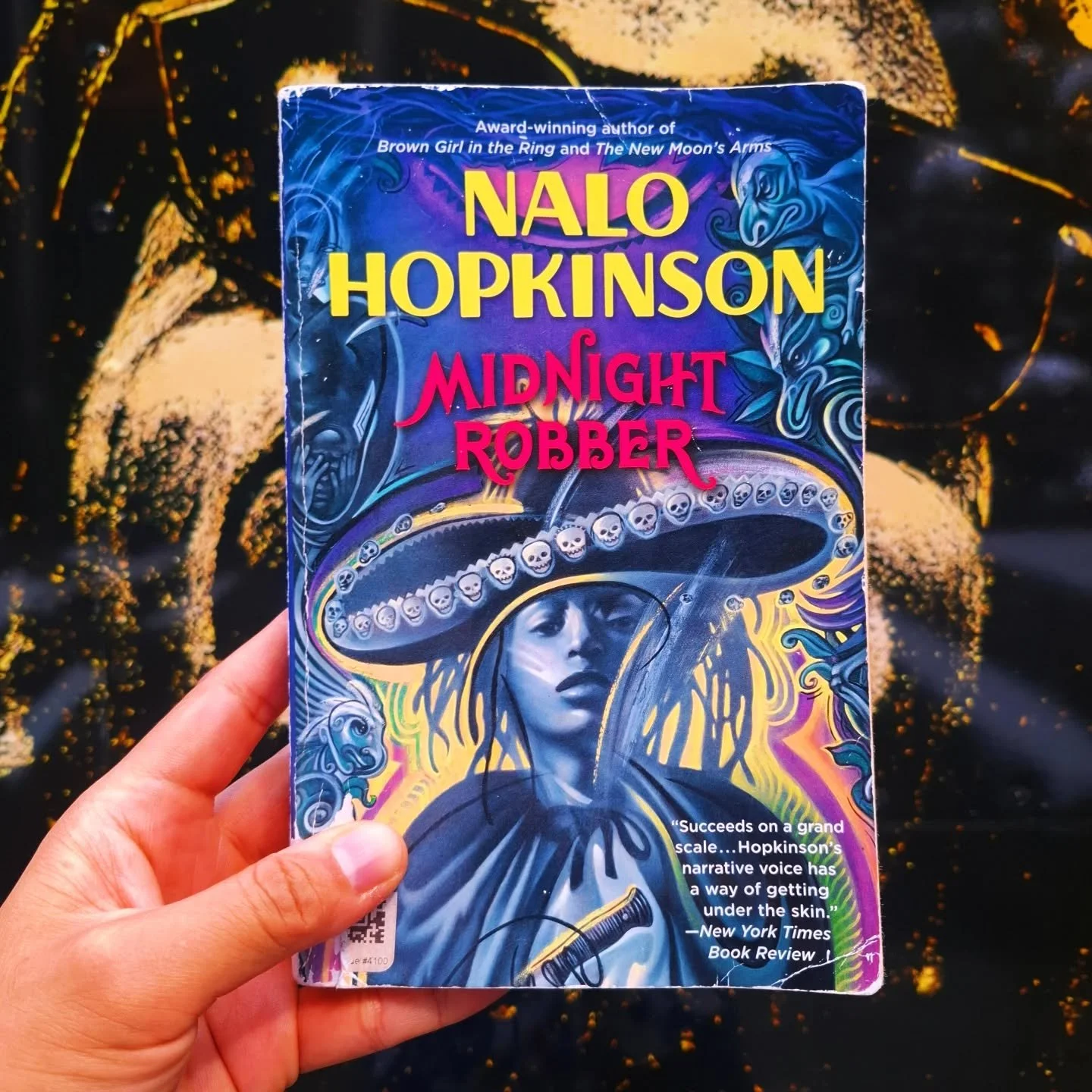
Midnight Robber, by Nalo Hopkinson
Grand Central Publishing, 2000
This one’s a classic, and a way darker novel than the author’s better-known urban fantasy masterpiece, Brown Girl in the Ring, which I reviewed two years ago.[1] The crazy thing is, it starts off with joy and marvels and whimsy: we’re transported to Toussaint, a high-tech paradise planet settled by Caribbeans, governed by an A.I. named Granny Nanny (after Jamaican heroine Nanny of the Maroons), where the mayor’s seven-year-old daughter, Tan-Tan, dresses up as the Robber Queen for Carnival.
It’s Afrofuturist to the max, with characters using earpieces named after the orisha Eshu, robot servants rubbing shoulders with witch-women, hats bearing models of the spaceships which carried the settlers from Earth which double as reminders of the slave ships that once carried their enslaved ancestors to the New World. Oh, and the narration’s all in patois!
Then tragedy strikes. Tan-Tan’s dad is arrested, and when he flees to an escape pod, he brings her with him, only to discover that they’ve been transported to a hellscape called New Half-Way Tree, populated by other prisoners, eking out the most brutal of existences, as well as aliens called douens who offer them aid. Then something even more traumatic happens. (It feels like a spoiler to talk about it directly, even though this was first published back in 1998: the sheer shock of it when I read it felt fundamental to my understanding of the book.) This is what ultimately drives Tan-Tan to flee at the age of sixteen, becoming an embodiment of the Robber Queen as she dwells in the unearthly forest, spawning larger-than-life legends, even as she undergoes deep personal suffering.
Rather than a celebration of Afrofuturism, this arguably reads like a riposte to it. Sure, readers may enjoy reading utopian fantasies about Black excellence, but that’s escapism—they also need to acknowledge the very real horrors of Black poverty: not just starvation and abuse but also humiliation and indignity (way more menstrual blood and urine in here than I expected!). Same with girlboss feminism: we love a lady with a machete, but an actual woman who kills is probably going to be suffering from horrible psychological anguish. And also an interrogation of Caribbean pride: as we learn more about the douens, the more it becomes evident that they’re representative of Indigenous peoples, and that regardless of their Blackness, the humans are dangerous colonisers—even well-intentioned ones like Tan-Tan.
A warning, though: the ending feels kinda unsatisfactory. I suspect that’s deliberate: what kind of happy ending are we to have, if utopia and dystopia co-exist? And Hopkinson isn’t gonna pretend that trauma can be magicked away, oh no. It leaves its scars, across the years, across the stars.
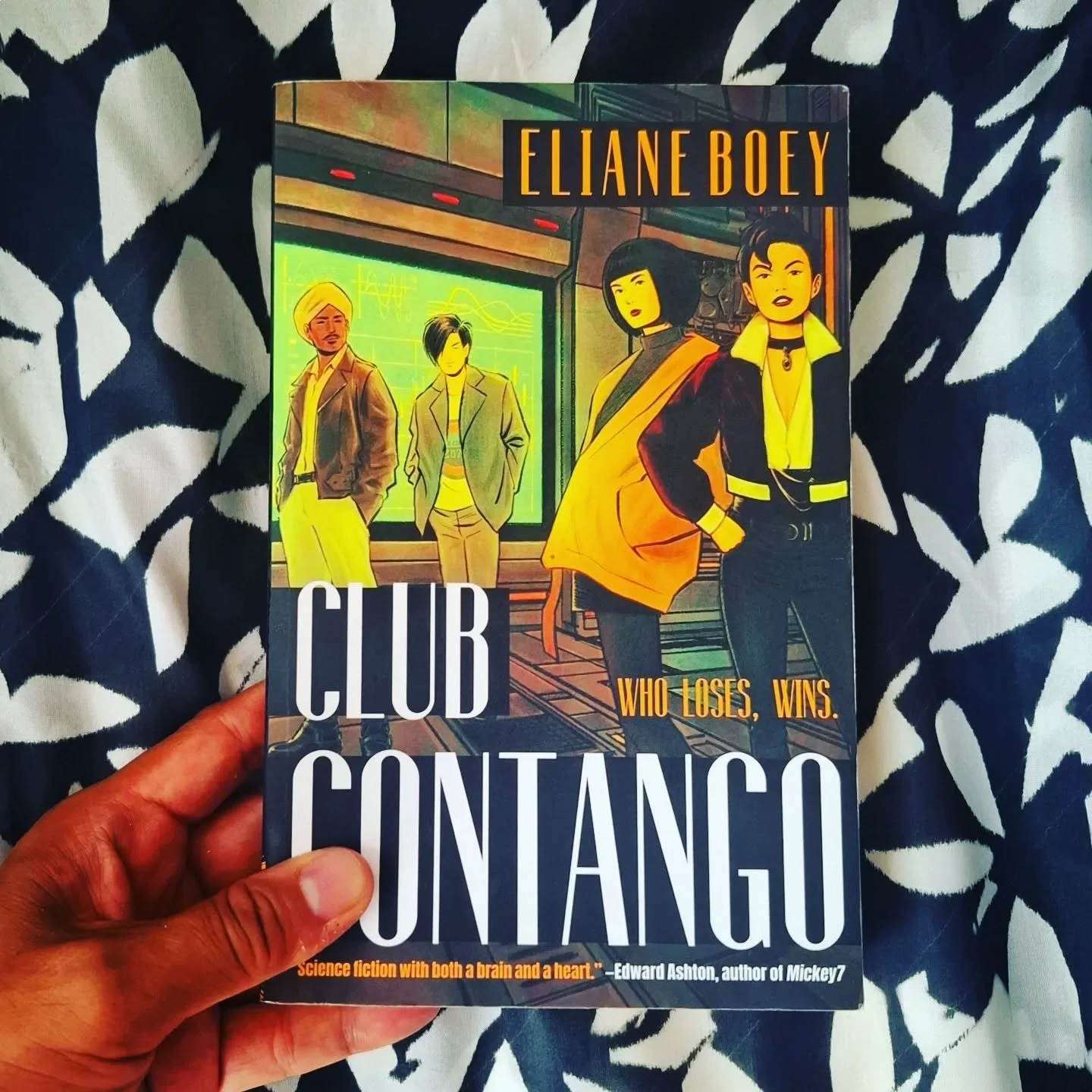
Club Contango, by Eliane Boey
Dark Matter INK, 2024
A jazzy cyberpunk noir novel, set in the late 21st century city of Freeport: a spin-off of Singapore on a distant asteroid, complete with colonial style hotels, dim sum and kopi joints, and a community of migrant workers trapped in precarious legal circumstances.
There’s a deep romance to the setting—the back cover uses the word “retrofuturistic”, and I do think that encapsulates how this world draws consciously on an array of 20th century cultural motifs: Shanghai in the 30s, New York in the 80s, pop culture from the 90s (which is cool again, cos people are sick of A.I.), not to mention the real vintage chandeliers and other antiques brought all the way from Earth to add to the glamour of this city. (There’s clear inspiration taken from the Singapore Freeport, where the megarich of the world keep artworks for storage as a form of tax avoidance.)
However, the story's also weighted down with deep sadness. Our protagonist, Connie Lam, keeps visualising dark birds as symbols of her depression, descending on her as she loses control. And though she's rubbing shoulders with glitzy Sparklers (partygoers who wear virtual masks with the faces of cats and dolphins) and owns her own casino—the titular Club Contango—she’s constantly struggling, stressed about her six-year-old daughter Sticky, the debts offloaded onto her by her former partner, her memories of being unable to lift her factory worker parents out of poverty when their labour rights were revoked... and then someone gets murdered in her basement.
So, like most cyberpunk, this is about capitalism and how it poisons society—hell, it’s apparently poisoned the Earth too, which is why so many people have migrated offworld. Connie ends up accidentally selling herself: after she agrees to train someone’s A.I., holographic copies of her start popping up all over the city, hawking bad investments, and there are these crazy sequences when she starts arguing with them, trying to talk civilly by sharing youtiao, then poisoning them with electronic drugs. It’s a critique of labour exploitation, but also a psychological metaphor about losing oneself—which, and we’re getting close to spoiler territory, is manifested in more than one way in this story.
Going back to the theme of time and history: it’s also really interesting how Boey’s projecting theories about generations forward: Connie refers to herself as a Midlennial, and notes that their Zoomer grandparents did the finishing touches of destroying the planet, after inheriting a legacy of pollution from their ancestors. A reference to all the debates on whether it’s Baby Boomers or Millennials or whoever who’s more to blame for trashing the economy. Turns out it’s not about when you were born; it’s about our inability to become Marxists.
Some downsides. It’s a little tricky to follow some bits of the plot—I never did quite understand how Club Contango worked: what does it mean to bet against simulations of your future self?—and despite Connie's desperation, we only get a peek at the deeper underclasses of Freeport, drugged out in alleyways, abandoned by deported parents. (Singapore’s migrant workers often live much worse than she does.)
And something I appreciate: Boey doesn't yellow-wash Singapore, instead featuring characters with identifiably Chinese, Malay, Indian and Eurasian names living casually alongside each other in the urban jungle (I rather like the fact that she didn’t feature a more globalised population), and with no exoticisation of our culture, just the familiar taste of teh halia and Pocky in outer space. It’s a representation of Singapore that I'm glad to see in an international publication—it genuinely feels like home.
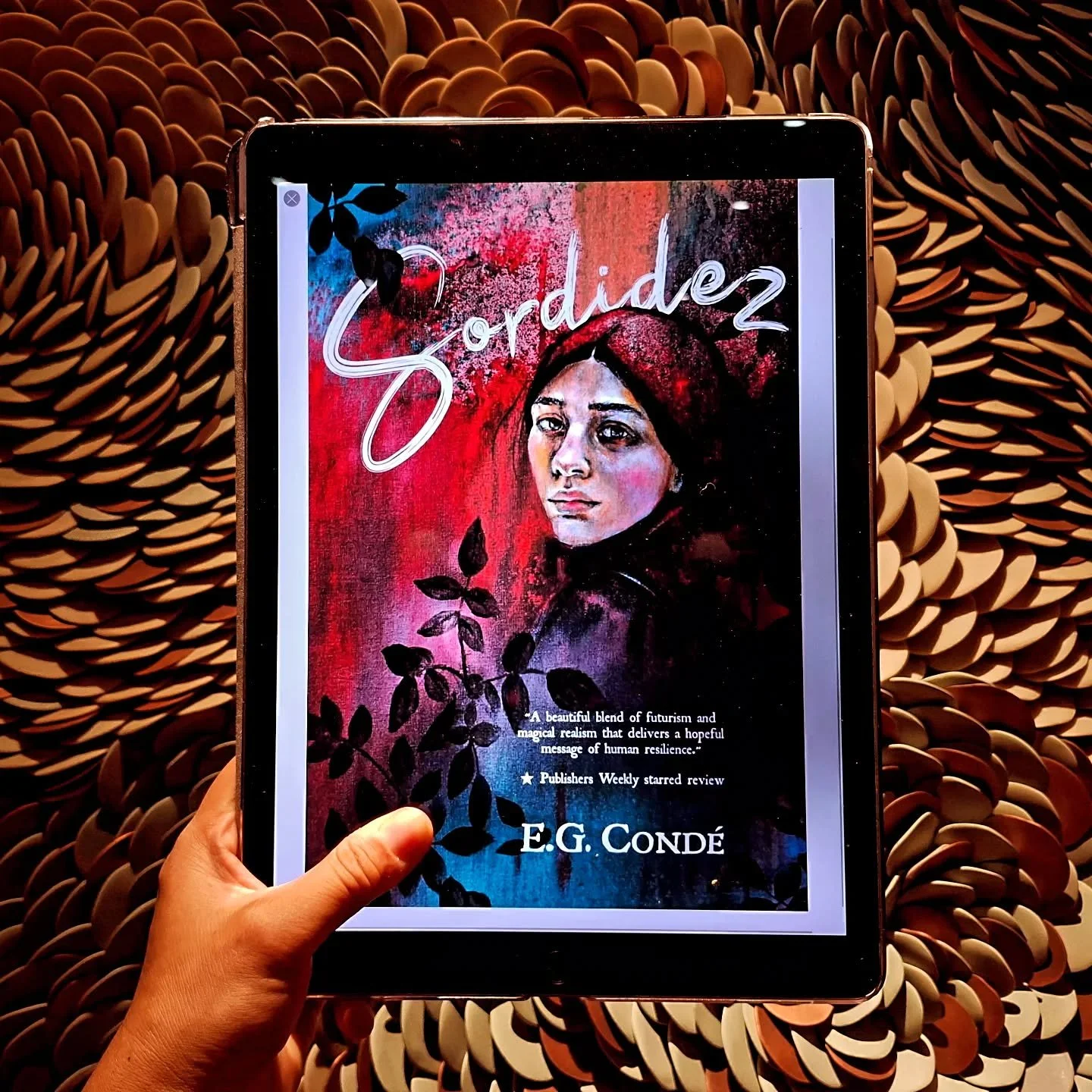
Sordidez, by E. G. Condé
Stelliform Press, 2023
This is kinda gorgeous: a sci-fi tale of a post-apocalyptic future, with Puerto Rico decimated by Hurricane Teddy (named after Theodore Roosevelt) and the Yucatán laid waste by a genocidal dictator, with the United Nations conducting dubious chemical experiments in the countryside in the wake of a world war between the USA and China… and yet, it’s hopepunk.
The author calls this genre Taínofuturism, after the Indigenous people of the Caribbean. Our protagonist, so to speak, is Vero, a Puerto Rican trans man and a returnee from studying journalism in the USA. He becomes a cacique, a chief of his surviving community, patching together solar generators and conducting military comms over the old equipment of runaway crypto bros. However, his story of surviving on the island forms only the first of ten chapters—most of the book takes place in Mexico, where Vero occasionally pops up as a background character amidst the drama of Margarita, a woman tending a sanatorium of brain-damaged war survivors called sordidos, and a Maya rebel leader called la Loba Roja, the Red Wolf… though eventually Vero, too, becomes a key player in this drama.
The book’s strangely brief considering the scope of its worldbuilding—the ending is, IMHO, too rushed—but that’s a quibble considering the beauty of its language (not just English, but also sprinklings of Spanish and Indigenous languages and even portrayals of sign language), as well as the power of its ideas: that what we fear as the end of the world is simply an extension of the colonial forces that wrought havoc in 1492, and that there will be healing and reclamation after trauma. The people of the land survived Columbus and Cortés and US hegemony, and they’ll survive future disasters too.
Deeply comforting in these times when the news is full of horror, especially with its vision of how tech, Indigenous knowledge and acceptance of the queer and disabled are all essential tools for a sustainable tomorrow. Also rather interesting how much Condé needs to support his Taíno/Boricua narrative by drawing on the Maya, a more monumental culture—he litters the story with references to its myths and archaeology, even numbering the chapters with their numerical glyphs. Sure, it’s about solidarity, but I can’t help but wonder if it’s cos he couldn’t find enough in his own Indigenous culture to talk about!
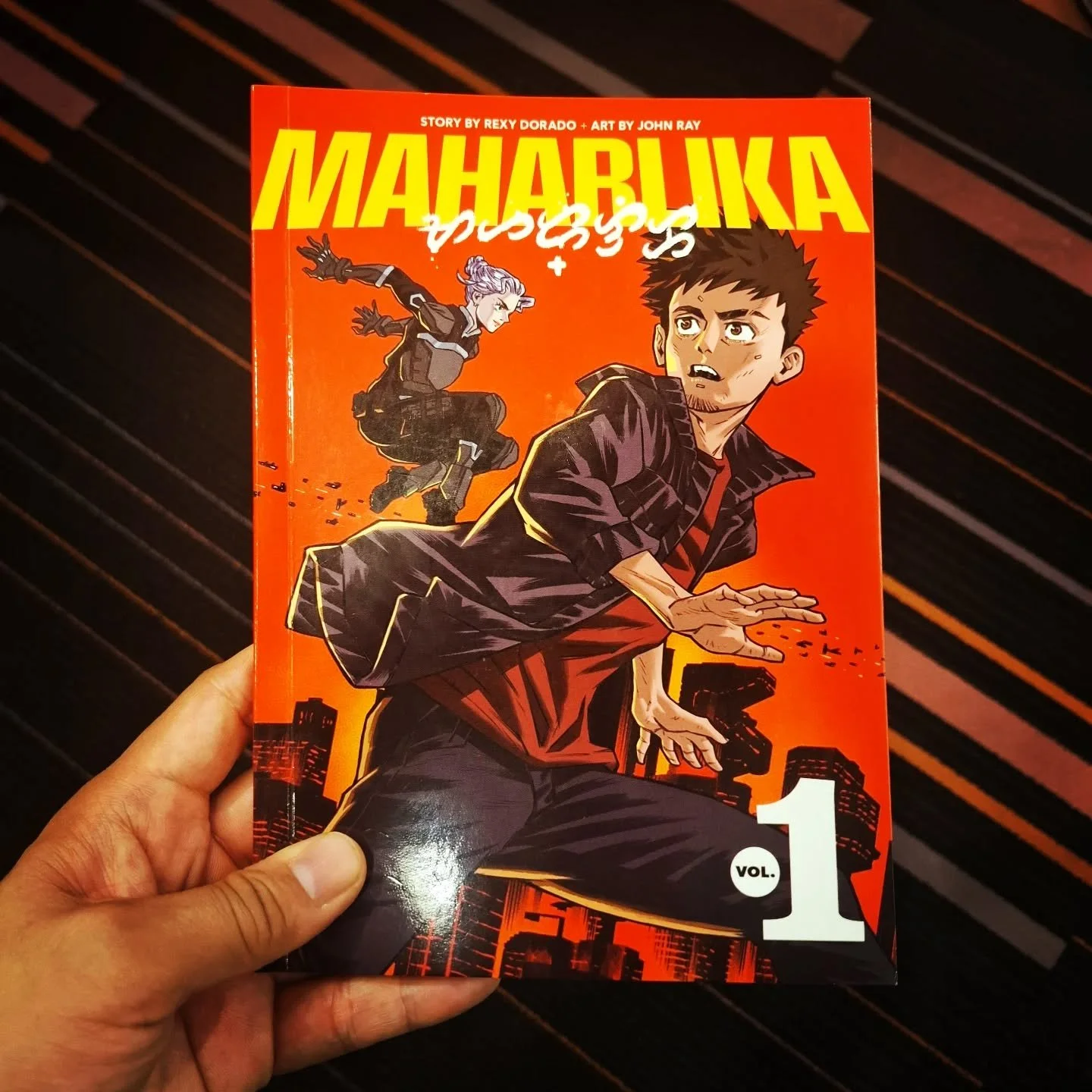
Maharlika: Volume 1, by Rexy Dorado and John Ray
RAYGUN, 2025
This is just the first volume of a sci-fi action comic series, set in an alternate universe where the Philippines is the most powerful nation in the world, having triumphed in its 1896 revolution and expanded to include much of postcolonial Pacific Asia, including Malaysia, Indonesia and Korea—the last of which it rules like a colonial power.
Cultural worldbuilding takes a back seat, alas, to the plot about a team of high-tech security operatives called the Agila, trying to take down mysterious techno-terrorists who've left behind cassette tapes from another dimension, with labels like “Star Wars” and “Fly Me to the Moon”. There’s a sense that the Maharlika government is deeply corrupt, violent and secretive about its true history, though the full answers about its machinations are yet to be revealed. (The following is a SPOILER, but I think it’s tantalising enough that it enhances reading more than it ruins it: in Volume 2 it turns out that they’ve got time-altering technology, which means everyone’s just living out the timeline of Volume 1 again, only with a few key people retaining memories and altering the course of the future. SPOILERS end.)
The term cyberpunk comes to mind while reading this, but Rexy expressed his unease with that during his Singapore Writers Festival panel. A more direct influence is the mecha genre, complete with its Japanese tropes of co-ed shock troops and chibi sprites—one antagonist, Akira Castrosaez, is literally described as a Japanese-Filipino space samurai.
Anyway, the art’s gorgeous (I love the way the sound effects are written with the indigenous Tagalog alphabet of baybayin instead of katakana) and the action’s high-octane, and I think a lot of readers would be into this. Be warned, though: the proliferation of characters and shifting POVs means the story’s a little hard to follow!
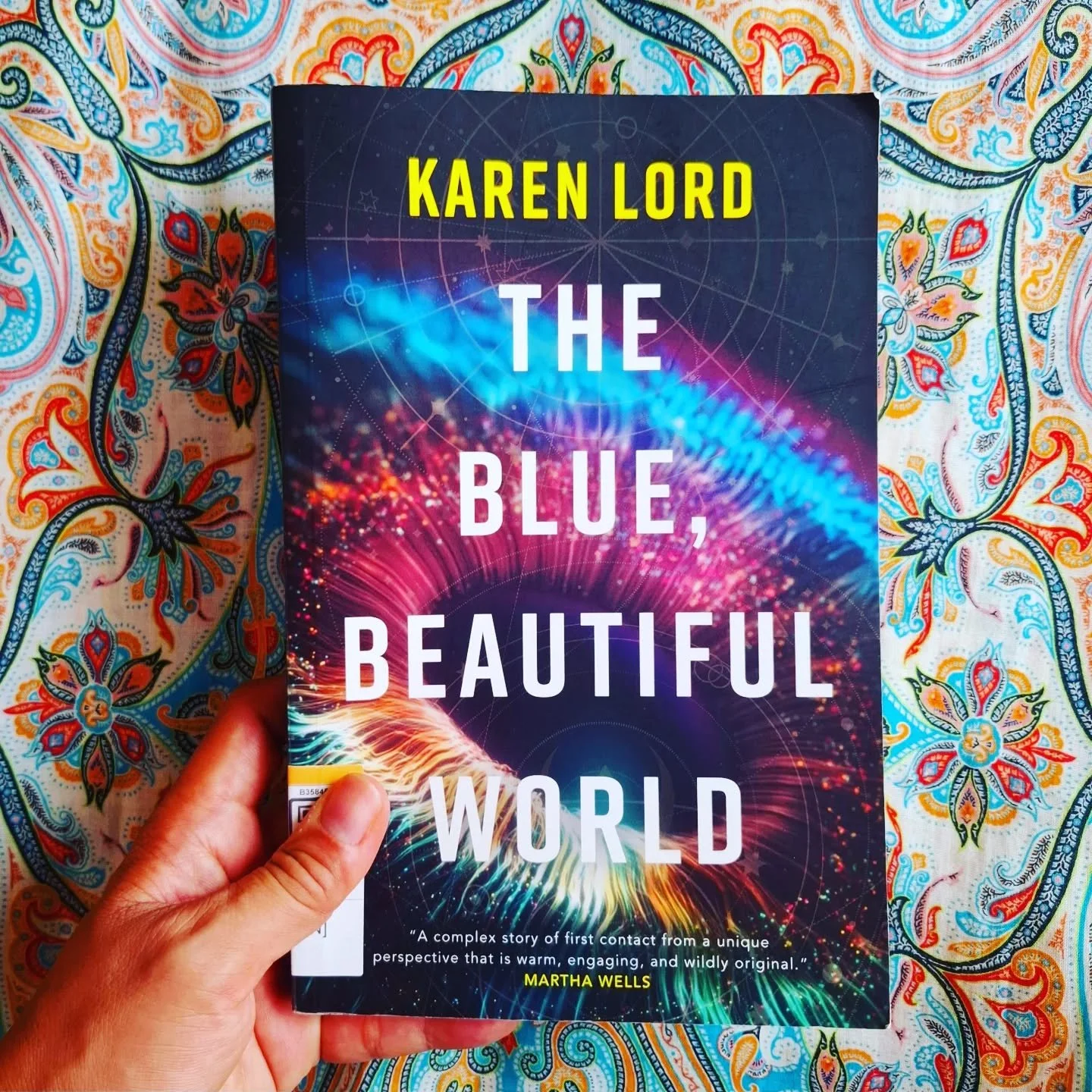
The Blue, Beautiful World, by Karen Lord
Gollancz, 2023
This Barbadian novel defies expectations. It’s not interested in direct representations of Caribbean identity, being mostly set on a post-racial 22nd century Earth. Our principal characters are Japanese (the curmudgeonly agent Noriko Fourier) and Samoan (the young diplomat Kanoa Havili), as well as a whole bunch of extraterrestrials. Yet it’s still intimately concerned with themes of colonialism, not only because of the cultural histories behind these characters, but also because it's a First Contact story. Is there some scenario, the author asks, in which societies of vastly differing tech levels can come together and not have everything end in bloodshed and conquest?
One complicating factor is that this is actually the third book in Lord’s ongoing Cygnus Beta series, which I dipped into a little—the earlier books were harder to get into because they're wholly space opera, plunging the reader into a complex world of four planets of related humanoid species and a turbulent Galactic Government; this one actually starts off with a pop star stuck in Paris traffic. However, as the story progresses, the situation gets more complex, not only referencing characters and events in the prequels, but also upheavals in Earth’s own timeline, which is somehow both optimistic (the global South has clearly risen in prosperity and dignity, while the dominance of the global North has declined) and realistic (climate change and population decline have had their toll), with the effect that when New York gets destroyed by floods—a classic Hollywood staple—it happens off-camera, as the erasure of a decaying relic of civilisation, with global leaders busy debating whether they should hold meetings in Nairobi or Bogotá instead.
Nor is this truly a First Contact scenario, since it’s revealed that the other planets have had clandestine intercourse with Earth for some time now—Kanoa learns that survivors of our wars and genocides were sometimes quietly channeled into portals to help with population, and gets so furious that he flings his tablet across the room. (At this point he thinks it’s all a preposterous fiction, but he’s also mad that these civilisations didn’t stop the genocides—an admonition Lord must’ve heard herself about her books!) So what Kanoa and his team are being prepped for is galactic diplomacy with foreknowledge of their potential colonisers’ cultures—which in turn is being paired with their own ethnic backgrounds, being descended from Inuit, Polynesians and Indigenous Brazilians who had to negotiate colonisation themselves, meeting in a fortress in Havana. (This is the only direct representation of the Caribbean in the whole book, aside from a techie with the surname Hendrix!)
It’s instructive to read Lord’s acknowledgments in which she speaks of authors who’ve influenced her work. She singles out Malaysian Zen Cho as a fellow Commonwealth writer, understanding what it means to live with the legacy of the British Empire. It’s unusual to cite the Commonwealth as aspirational, but then, this is an institution wherein the former coloniser and colonised theoretically interact as equals, peacefully, productively. Which is what the characters in the book are working towards: not Star Wars but Star Peace. (One of the big tech innovations in the story is VR meeting rooms so people can genuinely feel like they’re in the same room talking!)
Full disclosure: I’m not utterly in love with this novel: there’s not much flourish to the prose, and the way it’s not a standalone work means that there’s a lot I feel that I’m not caught up on, and plenty that remains unresolved by its end. But I’d say it’s quietly provocative, exploring ideas and perspectives you don’t get in more sensationalistic sci-fi... and also planetary in a way most of us writing in the margins don't quite dare to be.
Endnotes
[1] Ng Yi-Sheng. “#YISHREADS February 2024.” Suspect. 23 February 2024. https://singaporeunbound.org/suspect-journal/2024/2/23/yishreads-february-2024
Ng Yi-Sheng (he/him) is a Singaporean writer, researcher and LGBT+ activist. His books include the short story collection Lion City and the poetry collection last boy (both winners of the Singapore Literature Prize), the non-fiction work SQ21: Singapore Queers in the 21st Century, the spoken word collection Loud Poems for a Very Obliging Audience, and the performance lecture compilation Black Waters, Pink Sands. He recently edited A Mosque in the Jungle: Classic Ghost Stories by Othman Wok and EXHALE: an Anthology of Queer Singapore Voices. Check out his website at ngyisheng.com.
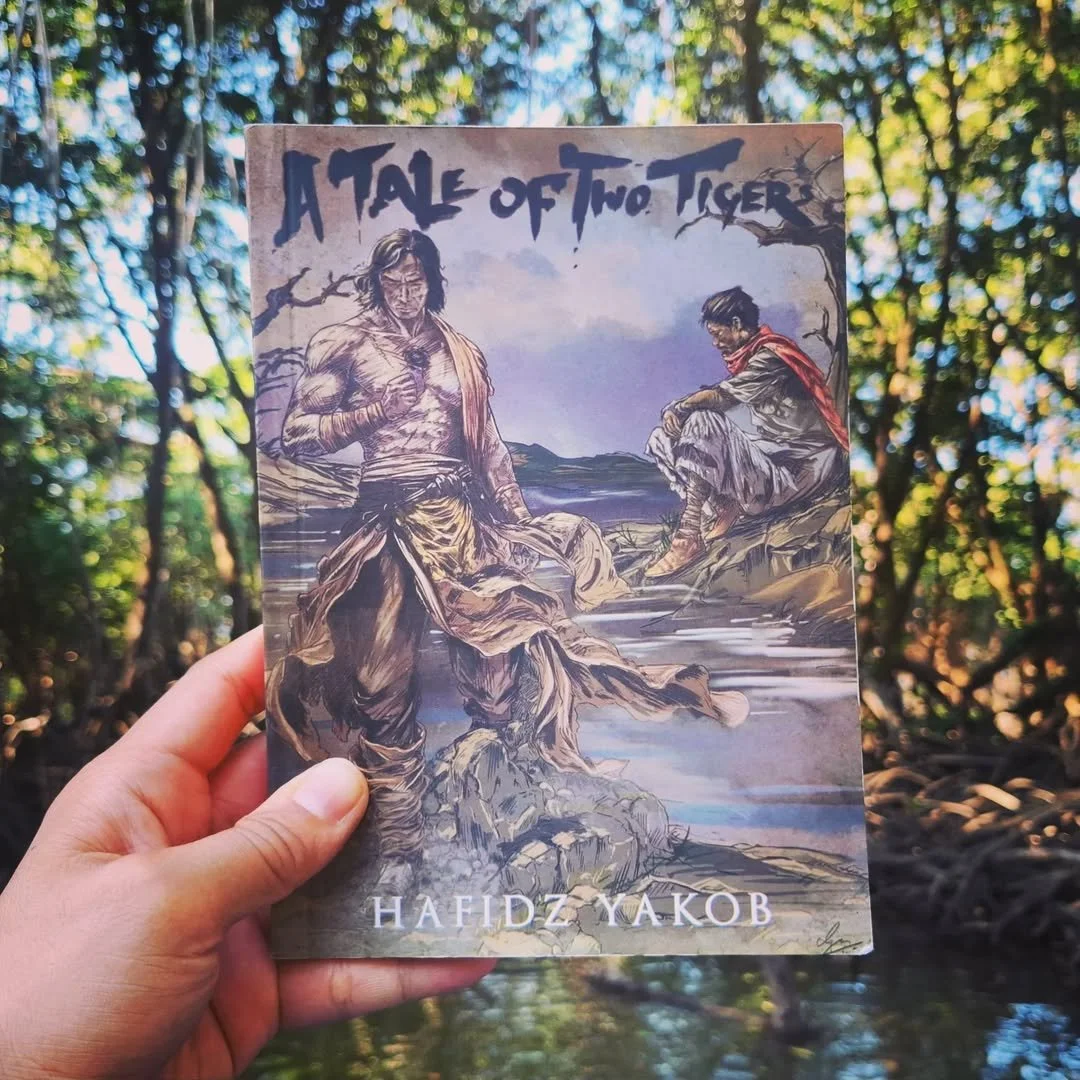

‘A snapshot of our planet, filled with souls dead and living, crying out that they matter, that their stories must be told.’—this September, Ng Yi-Sheng reviews writers exploring their own pasts.