
#YISHREADS February 2026
By Ng Yi-Sheng / @yishkabob
I’m back! Beloved reader, please pardon my one-month hiatus, when my column was temporarily replaced with “Felix: the Comics” by my friend and fellow poet Felix Cheong. [1] He's got my spot for January and July; #YISHREADS will be your regularly scheduled programming the rest of the year.
To mark the occasion of my return, I’m dedicating this second month of the year to sequels, bringing back characters and unresolved threads from books previously reviewed on this site—all, coincidentally, in the genres of fantasy and science fiction, which have a tendency to spawn multi-volume sagas exploring the same universe: think CS Lewis’s Chronicles of Narnia, George RR Martin’s A Song of Ice and Fire, Ursula LeGuin’s Hainish Cycle.
This is a theme I’ve been wanting to tackle for a while, because sequels get such short shrift in criticism—it’s thrilling to leap into the world of hot new bestseller, but it takes more dedication for a reader to follow that story into subsequent books, whereupon we’re going to judge them harshly, either because they don’t deliver all the familiar delights of the original, or because they don’t introduce compelling innovations.
In other words, to read a sequel is to venture into a minefield of disappointments. But so what? There are treasures to be found in these fields. Below, please find a selection of works from the US, Canada, the UK and Singapore, all extending and elaborating on the earlier tales of their authors.
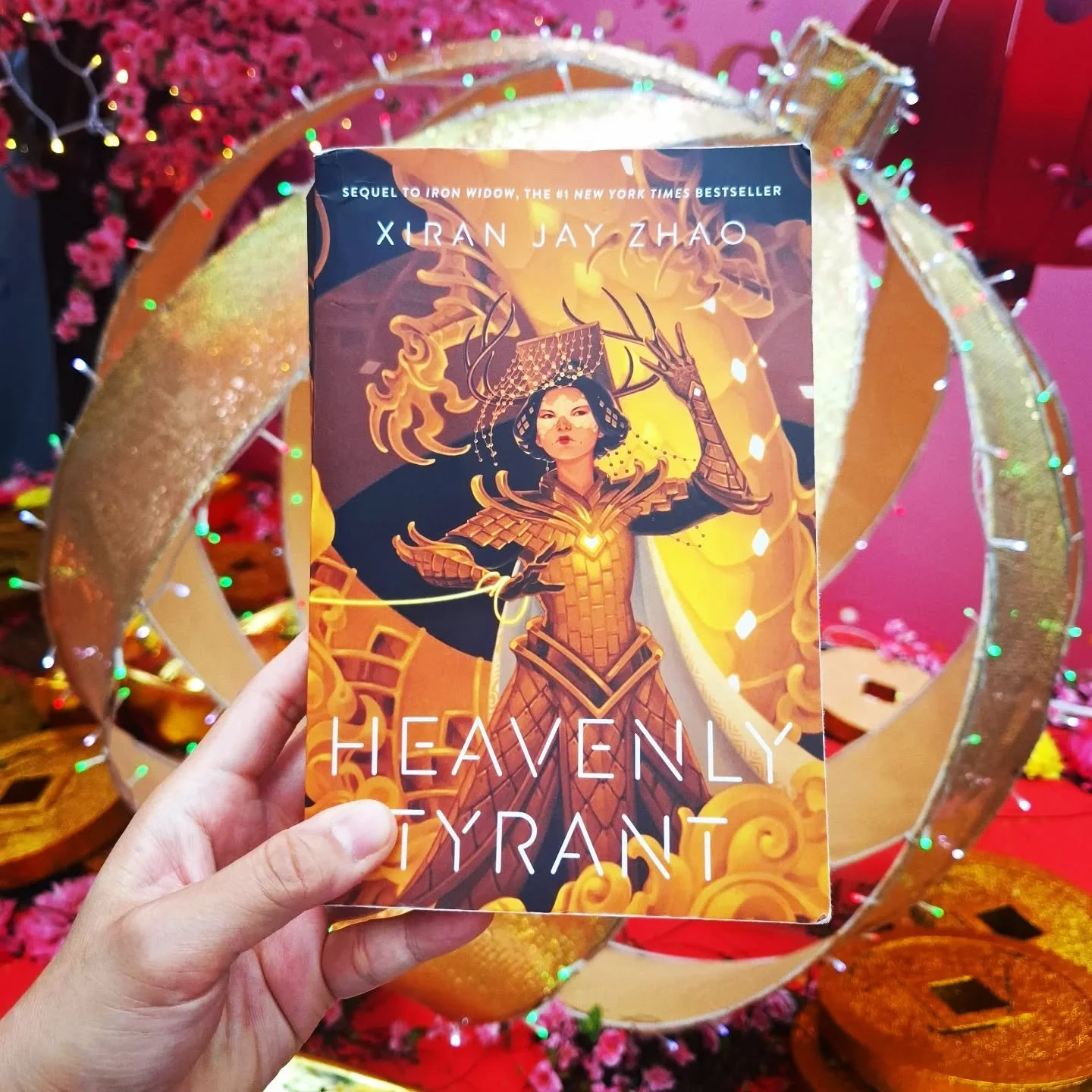
Heavenly Tyrant, by Xiran Jay Zhao
Tundra, 2024
This is the sequel to Iron Widow, the crazy reimagining of the rise of 7th century Chinese Empress Wu Zetian as a teenage mecha pilot... [2] and while that was a high-octane explosion of female rage, this is something way more complex: a collision of thought experiments about how one might actually lead a revolutionary transformation of society, if you actually had the power.
At the end of Iron Widow, Zetian had awakened the legendary emperor Qin Zheng (i.e. Qin Shihuang, first Emperor of China, portrayed as a twunky pilot), uniting to violently overthrow the government by obliterating it with the Yellow Dragon mecha. Now the two of them are determined to reform the dystopian techno-capitalist society of Huaxia, and to challenge the gods dwelling in their orbital spacecraft, dictating mortal actions... but the two are embroiled in a toxic love/lust/hate relationship with each other, and there are allies and traitors all over the administration, including Zetian's former lover, Zhang Yizhi (historically, one of Empress Wu's officials).
So what plays out is a combination of the Cultural Revolution, the French Revolution and a utopian leftist revolution of the present/future: we get televised public executions of billionaires, redistribution of private property, accusations of ideological treachery and right-wing militias, peppered with all these references to ancient and medieval Chinese history. Shangguan Wan'er (Empress Wu's prime minister), Taiping (her daughter) and Di Renjie (a legendary detective of the era) appear as characters, together with Zhuge Liang (statesman of the Three Kingdoms Period) and Liu Che (aka Han Wudi, founder of the Han Dynasty) from the last book. Not to mention a very rushed climax of the book that moves us towards a global context beyond Chinese history, with teasers suggesting that we'll be seeing a reimagining of Genghis Khan in the third volume.
It’s arguably a less satisfying read than Book 1, but that's probably because of how difficult its mission is: laying bare the challenges and pitfalls of transforming a regressive sociopolitical system, based on all the failed revolutions of the past. Tempering the violence and politics, we've also got a whole bunch of sex—not just Zetian and Qin Zheng, but also rather more queerness and genderbending than before (Taiping and Yizhi keep crossdressing for practicality and pleasure). Very amusing to picture figures from Chinese history doing jello shots off each other's bodies! Seriously, more of us should be subverting our national heroes that way.
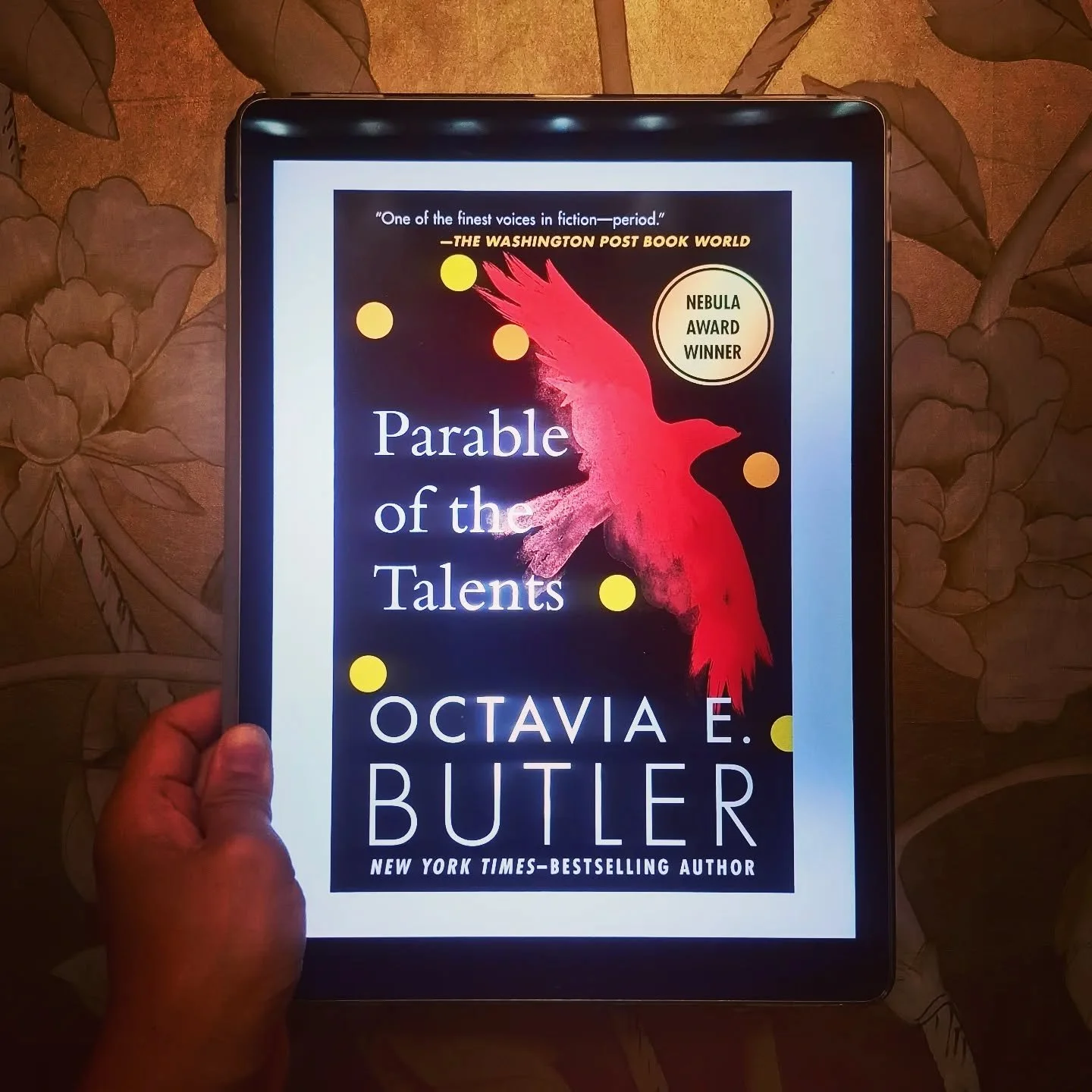
Parable of the Talents, by Octavia Butler
Open Road Media Sci-Fi and Fantasy, 2012
Next up: the sequel and conclusion to Parable of the Sower, [3] which I read last year, spurred by the fact that it had curiously foretold the Los Angeles fires of 2025. That book, first published in 1993, charted the breakdown of American social order, as our teenage heroine Lauren Oya Olamina witnesses her town fall to marauders, and treks to a safe haven, forming a community she calls Acorn and the idea for a new religion called Earthseed, which preaches that God is Change and humanity's destiny is to disseminate life among the stars.
Easy to guess what comes next: the growth of that community and the fulfilment of its dreams. But as it turns out, Butler wasn't that interested in telling a simple success story: what happens instead in this 1998 novel is that Acorn falls, devastatingly, to the Christian Crusader shock troops of the Christofascist regime of the newly elected President Jarret (he genuinely uses "Make America Great Again" as a slogan), leaving Lauren enslaved in a shock collar and separated from her infant daughter. Most of the story thus consists of journal entries accounting her endurance, escape and survival, with only the last bit relating how she begins to win over new followers in the city of Portland as Jarret's regime falls into decline, eventually rising to become a great spiritual leader.
At the same time, Lauren's philosophy is challenged, over and over again, not only by those she meets but also the redactor of the tale itself: her daughter Asha, who is only reunited with her in adulthood and who assembles the journal entries into the account we're reading. Though she's no Christian Crusader, she's deeply skeptical of Earthseed and blames her mother for prioritising her ideals above safety, for promoting space exploration over care for the needy on Earth. And indeed, we see Lauren make mistakes and witness horrific atrocities she might or might not have been able to prevent. (She commits violence, too, but for reasons of self-defence that make utter sense. Non-violence can get you killed.)
Today, we expect SFF to be about ethnic minority girlboss characters. Asha’s actually named after one: a Black heroine who smites heathens in her Christian VR headset stories, which I guess is Butler pointing out how easily tokenism can be co-opted. This is a story in which characters are flawed and complicated, human before they become superhuman, failing each other, failing themselves, not necessarily worthy of redemption. There's something raw and messy and unsatisfying about that—but in the age of the extremely polished big-five romantasy novel, that too feels precious.
What's really depressing is her frank admission of how long it'd take the USA to recover from a dictatorship; how impossible it'd be for some of its perpetrators to admit they were wrong, even as they lose everything because of their selfish choices. But then, it’s debatable these days if there’ll even be a recovery!
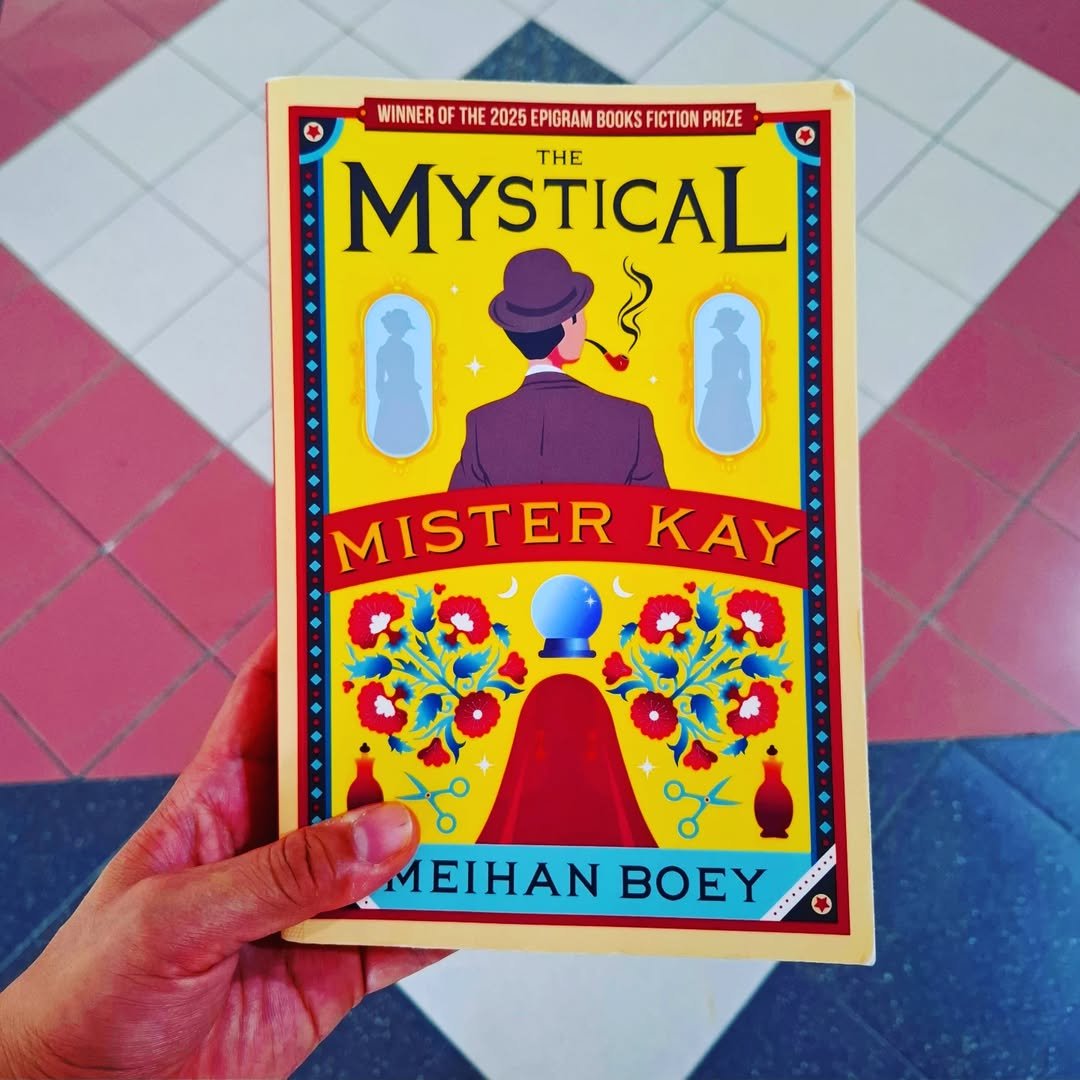
The Mystical Mister Kay, by Meihan Boey
Epigram Books, 2025
Third, let’s look at a threequel: the winner of the Epigram Books Fiction Prize 2025, which beat out my own novel Utama! (No hard feelings: Meihan’s an old friend, and all of us finalists ended up doing a panel together at Singapore Writers Festival.)
This is the final book of a historical fantasy trilogy, beginning with The Formidable Miss Cassidy, wherein the magical Scottish governess Miss Cassidy arrives in Singapore in 1895, dispelling various hantu and falling in love with the family she serves, especially the esteemed widower patriarch Mr Kay. The Enigmatic Madam Ingram saw her in a battle against the émigrée bomoh temptress Bungadarah, leaving her stranded in a limbo full of Greek gods. [4] This concluding novel, set in 1907, has Mr Kay travel all the way to the UK to rescue her, only to be embroiled in yet another transcontinental struggle with a Malay monster. (Too soon, I think, to spoil the ending by saying which one, but I will grumble that it exhibits traits that I've never seen associated with said hantu in other fiction.)
What makes this novel rather different from its predecessors is that it's mostly a portrait of the UK, with most of the action set in the town of Tolwich (patently based on Norwich, where Meihan did a National Centre for Writing residency). It's here where the Malay Princess Nora (first seen briefly in Book 1) deals with the shambles of her finishing school for other Asian princesses, and where the mysterious tailor Hieronymous Ruby clothes his patronesses in divine garments lined with unearthly red calico. And it's here that we see an exposé of the violence of class and gender, explored in characters like the housemaid Binks, the seamstress Mary Farrier, and disempowered aristocrats Lady Windover and Princess Soraya.
What isn't really an issue is race. Sure, Mr Kay has to travel disguised as a faux-Chinese fortune-teller, playing into Orientalist tropes, and Princess Soraya's tragic backstory is based on the life of the actual Punjabi princess-in-exile Sophia Duleep Singh. But the Asian characters are portrayed as so wealthy they can make ordinary problems go away with a flash of silver—even Mr Kay's Malay manservant Ahmad is utterly at ease with himself, making friends with Binks by sharing candied ginger. Similar story in the scenes set in Singapore and mythic space: there are no racial or cultural hierarchies, no linguistic barriers to stop the Taoist toilet goddess Zigu from being chummy with a lady of the Sidhe; even a minor plot note revealing that Castor/Pollux and Nakula/Sahadeva are the same beings, both being divine twins. (There's a lot of gods and goddesses hatching convoluted plots here; enough to categorise this as godpunk!)
I could grumble that this is a Bridgertonised version of history, pleasing to the eye but kinda whitewashing the violence of empire. But I think that's the point of the tale. The fantasy isn't that magic exists, but that people and supernatural beings of Asian descent might prosper and move with fluency in the imperial core of Edwardian England.
Ah, but this is a horror novel as well, and there are nightmarish sequences aplenty, not only concerning Mr Ruby's sinister garments but also the red veil that pursues Shradhra (a new character!) in Singapore, the mad world of mirrors Miss Cassidy is trapped in, and the Gothic world of Tolwich, where ghosts of drowned witches and chambers full of taxidermy and brimming rivers and maimed factory girls compete for the crown of the uncanny. We go from bubbly comedy to dreadful action sequences in the blink of an eye, and it's a delight.
As lovely a novel as this is, however, there is something a little frustrating about the ending. Yes, the mystery's solved (though I confess I'm a little lost over the specifics), but several threads go unresolved, particularly the fate of Princess Nora, who starts off as a daring bad-ass but then has rather little to do once the story reaches a climax. Which is to say that there's no reason there can't be a Book 4, or perhaps a series of collected short fictions, to wrap this whole thing up. Who knows?
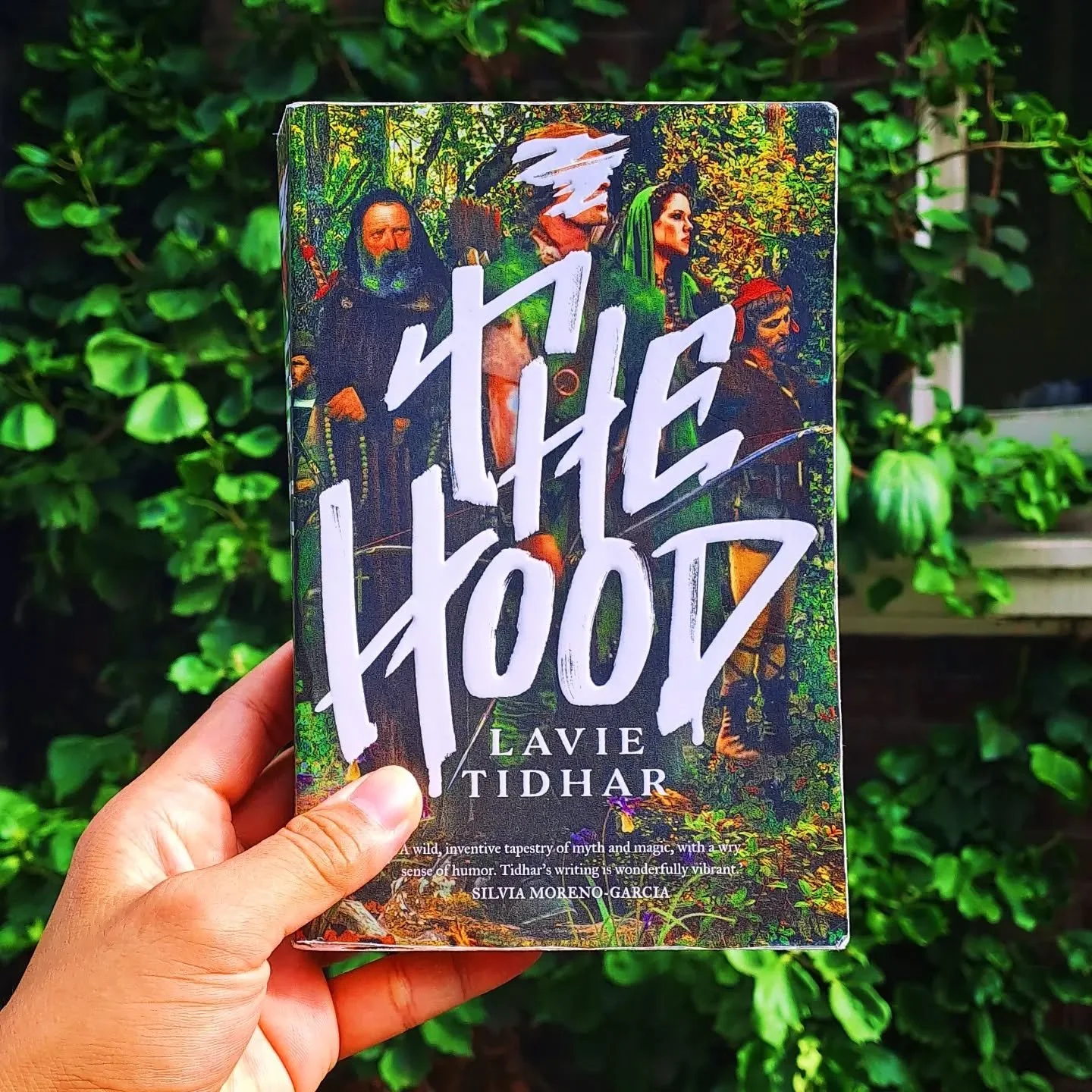
The Hood, by Lavie Tidhar
Head of Zeus, 2022
Let’s turn to the second volume of the Anti-Matter of Britain series, which began with By Force Alone, an explosively bloody reimagining of the legends of King Arthur in post-Roman Britain of the 500s. [5]
Now we've moved on to the late middle ages: the era of Robin Hood in the 1100s, with modernity on the horizon and Fairyland receding. But while the first book, with its myriad perspectives, still sorta centered on the character of Arthur from boyhood to old age and death, this book uses Robin as a cipher: he's a being of the woods that occupies different mortal bodies and keeps dying and being reborn—he and Maid Marian are the Green Man and the May Queen, woodland divinities against which temporal powers like the Sheriff of Nottingham are helpless.
Our principal POV character (there are several, e.g. Will Scarlett, Alan-a-Dale and several Sheriffs) is Rebecca, a Jewish physician from Walter Scott’s Ivanhoe, reimagined as a ruthless drug dealer, torn between the madness of the mortal and magical worlds. Her perspective's pretty damn cool: a window into both the oppression and surprising extent of Jewish society in medieval Europe; an outside perspective on a world torn between paganism and the church—and I've gotta say I'm relieved at how she expresses no desire to return to the Holy Land, despite meeting numerous returned Crusaders. Yay for a non-Zionist girlboss.
But while this is weird and wild and thoroughly engrossing, I've gotta say it's just a little harder to swallow than By Force Alone—not that it's hard to read; just that part of my brain chafes at characters being granted magical longevity (the story spills over into the 1200s!), at fairytales as common as “Jack and the Beanstalk” and “Snow White” being parodied together with the old legends (feels cheap, like Shrek); at the way the characters are conscious that they're stories; at the difficulty of catching references to the lore (feels like there hasn't been a really beloved Robin Hood adaptation since Kevin Costner... but Lavie assures us in the afterword that the original ballads are in fact full of magic and spells).
A fun read, but less satisfying and focussed than I would’ve liked. Was looking forward to Books 3 and 4, which I believe would’ve explored Elizabethan and Victorian times, but alas, Lavie seems to have turned his attention to other series. Could this review drum up a teensy bit of momentum for the next book?
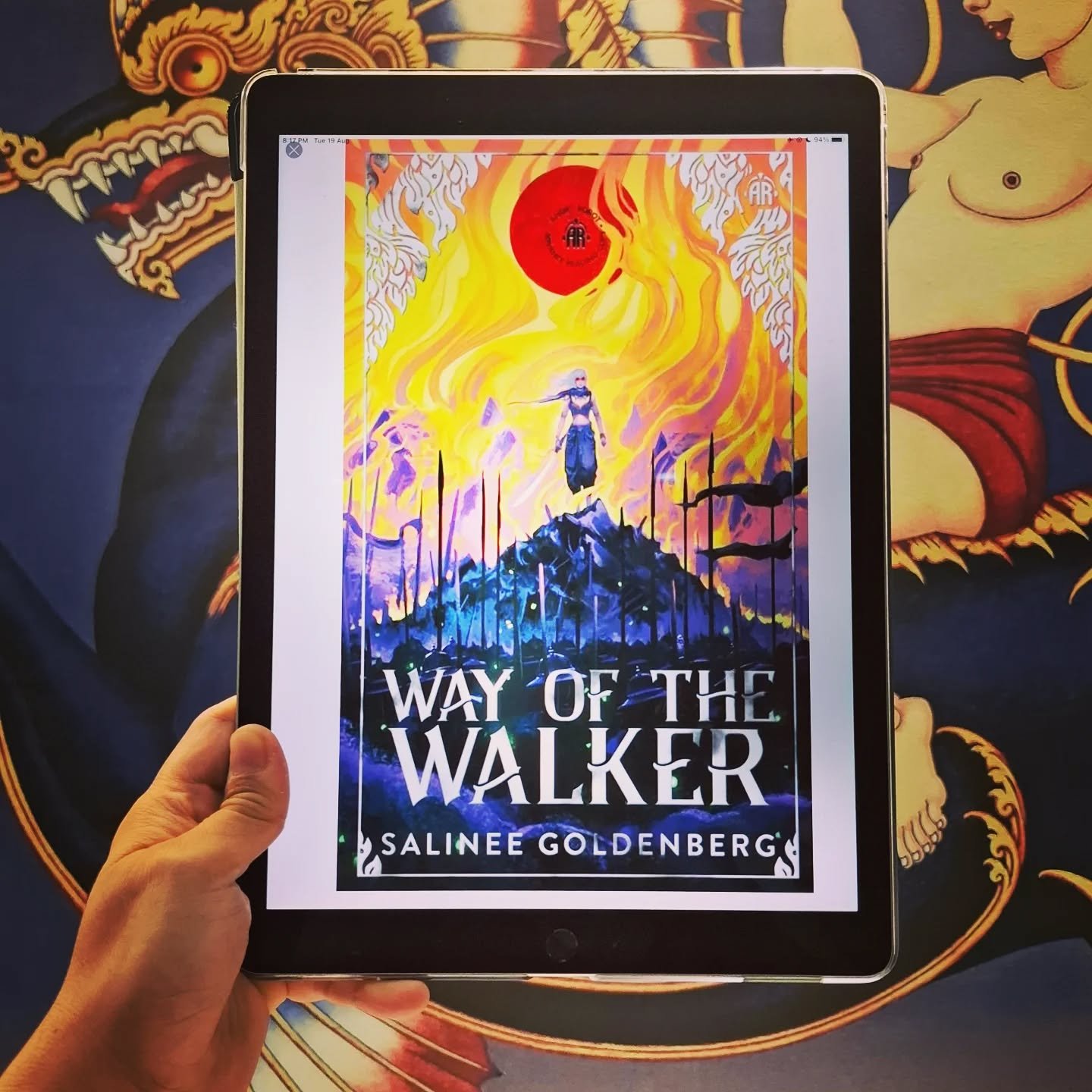
Way of the Walker, by Salinee Goldenberg
Angry Robot, 2026
After I reviewed this author’s Thai heritage-inspired high fantasy novel, The Last Phi Hunter, [6], she asked me to blurb her follow-up! Here’s what I wrote:
“This novel doesn't just return us to the magical world of Suyoram: it cranks up the stakes to an epic crescendo, as our heroine Ree embarks on a quest not to save herself, but to rid her land of European colonialism. The horrors, the betrayals and the sexual chaos of the first book are multiplied to the nth degree, plunging readers into grimdark depths reminiscent of RF Kuang's The Poppy Wars... yet light and hope are never lost, and the agony is always tempered with the redemptive solace of Buddhist spirituality.”
Ignoring quotability for a second, it's also fascinating how this book connects with its predecessor. The Last Phi Hunter focussed on the young demonslayer Ex; it took a while for this reader to realise he was the dad in this sequel, and that Ree is in fact the spirit baby who spent almost all the previous plot locked up in a bottle. I grumbled at the cishet-ness of Book 1, so I'm delighted to find that Ree is a classic chaos bisexual, who struggles with loving and trusting herself, even as she becomes worshipped as a goddess incarnate by the rebel masses.
It's also super-interesting to see the licence that Goldenberg's taken with history. A major plot point here is that the neighbouring kingdom of Loram has been occupied by the Grisi—but these appear to correspond to Laos and the British East India Company (English = งกฤษ), when of course it was the French who occupied Indochina, while the Brits took over the Malay peninsula (and indeed, there’s a brief appearance of rubber plantations)—not to mention the fact that Siam avoided colonisation not through war, but through diplomacy. So this is more of a pan-Southeast Asian fable—the theocratic mania of the Grisi is reminiscent of the Spanish in the Philippines—and possibly represents an aspirational alternate historical narrative in which Siam can boast not only of having escaped colonisation but actually having fought it back.
Also of note: this book works well as a standalone novel—and indeed, it's tonally rather different from The Last Phi Hunter. Yet I'm pretty sure it was always Goldenberg's objective to write this, cos it's only in this novel, set decades after its predecessor, that Ex actually becomes the last phi hunter!
What's disappointing is that the ending wraps up the saga of Suyoram rather neatly, leaving very little room for a third book to form a trilogy—although, once again, it's not impossible! A prequel or a much-later urban fantasy threequel would probably rock.
Endnotes
[1] Felix Cheong. “Felix: The Comics, January 2026.” Suspect. 30 January 2026. https://singaporeunbound.org/suspect-journal/2025/1/30/felix-the-comics-january-2026
[2] Reviewed here: Ng Yi-Sheng. “#YISHREADS August 2022.” Suspect. 26 August 2022. https://singaporeunbound.org/suspect-journal/2022/8/26/yishreads-august-2022
[3] Reviewed here: Ng Yi-Sheng. “#YISHREADS February 2025.” Suspect. 28 February 2025. https://singaporeunbound.org/suspect-journal/2025/2/28/yishreads-february-2025
[4] Reviewed here: Olivia Ho. “Review of the Enigmatic Madam Ingram and Sister Snake.” Suspect. 12 September 2025. https://singaporeunbound.org/suspect-journal/2025/9/12/review-of-the-enigmatic-madam-ingram-and-sister-snake
[5] Reviewed here: Ng Yi-Sheng. “#YISHREADS February 2025.” Suspect. 28 October 2022. https://singaporeunbound.org/suspect-journal/2022/10/28/yishreads-october-2022
Ng Yi-Sheng (he/him) is a Singaporean writer, researcher and LGBT+ activist. His books include the short-story collection Lion City and the poetry collection last boy (both winners of the Singapore Literature Prize), the non-fiction work SQ21: Singapore Queers in the 21st Century, the spoken word collection Loud Poems for a Very Obliging Audience, and the performance lecture compilation Black Waters, Pink Sands. He recently edited A Mosque in the Jungle: Classic Ghost Stories by Othman Wok and EXHALE: an Anthology of Queer Singapore Voices. Check out his website at ngyisheng.com.

‘A snapshot of our planet, filled with souls dead and living, crying out that they matter, that their stories must be told.’—this September, Ng Yi-Sheng reviews writers exploring their own pasts.