
Negotiating Nostalgia: The Politics of Language and Kampung Nostalgia in Jack Neo’s “The Diam Diam Era"
By Ng Shang Wen
Having either written or directed all of Singapore’s top 10 highest-grossing local films as of 2024 (Wong), Jack Neo is indisputably one of Singapore’s most commercially successful filmmakers. Yet, despite his success at the box office, critical opinions of his films are polarised, and even tend towards the negative. Neo’s style is often recognized as relying on a “low-brow comic formula” (Tan, “Imagining the Chinese Community” 146), playing on familiar yet crass stereotypes for comedic effect. Some critics, such as Chua Beng-Huat and Yeo Wei-Wei, are more charitable and argue that Neo “represents the real concerns of Singaporeans in their everyday life” (121). Other critics, such as John Lowe and George Wong, are less sympathetic and instead dismiss his films as “government-sponsored nostalgia” (21), a striking characterisation that I will go on to discuss more extensively.
Through a close examination of Neo’s use of nostalgia in The Diam Diam Era, a film series set in the 1980s, I seek to investigate whether these criticisms of Neo are justified. I argue that Lowe and Wong’s interpretation of Neo’s films as a form of state-sponsored nostalgia is under-explained and oversimplifies Neo’s use of nostalgia. I show that in Diam, Neo presents two distinct kinds of nostalgia and responds to them in different ways. These two kinds of nostalgia—each tied to different aspects of Singapore’s past—are language nostalgia and kampung nostalgia. Language nostalgia refers to a longing for a time preceding the 1980s before English became increasingly dominant, entrenched in large part by the government’s decision in 1987 to make English the medium of instruction in all schools (Dixon 28). Kampung nostalgia, in turn, refers to a longing for a time before people were resettled from wooden houses to public housing flats, a policy which began in the 1950s and was accelerated in the 1960s and 1970s under the Housing Development Board (HDB).[1] While Neo’s response to language nostalgia is ambiguous and even conflicted, his treatment of kampung nostalgia is consistently critical. These varied responses reveal Neo’s nuanced stance towards past government policies: he disagrees with language policies but supports developmental efforts. I suggest that Neo’s ambivalent response to language nostalgia reflects an intentional effort to stay within the government’s political out-of-bound (OB) markers, a term coined in 1991 by former Minister for Information and the Arts, George Yeo, to denote topics deemed too sensitive for public discourse. Finally, I consider the broader implications of my analysis: if films wish to tap into nostalgia to shape how their viewers relate to specific time periods, they are more likely to succeed by evoking nostalgic moods rather than being reflexive about nostalgia.
I begin by providing a working definition of nostalgia, the central concept explored in this essay. The American sociologist Fred Davis offers perhaps the most succinct characterisation of the term in the title of his book, Yearning for Yesterday: A Sociology of Nostalgia. Specifically, the object (or “material”) of this yearning emotion “is the past,” and the “nostalgic feeling [tends to be] infused with imputations of […] positive affects of being” (8, 14). For Davis, the “distinctive rhetorical signature” of nostalgia is “good past/bad present” (15–16). While Davis primarily refers to nostalgia as a mood,[2] film academic Paul Grainge subsequently theorises that it can also be a mode, which he defines as an “aesthetic modality” that has “no necessary relation to loss or longing” (25, 21). One way of understanding the nostalgic mode is that it “represent[s] our cultural stereotypes of the past” rather than actually “represent[ing] the past” (47)—think, for instance, of a modern-day photograph rendered vintage by applying a sepia filter. These terms do not refer to “mutually exclusive categories;” for example, a nostalgic mode can evoke a nostalgic mood, although it need not do so (35). I will primarily refer to nostalgia as a mood—for example, a nostalgic character is a character who experiences a nostalgic mood—but I will indicate when I am referring to nostalgia as a mode.
Beyond conveying an emotion or aesthetic, the term nostalgia also carries political connotations. Literary scholar Susan Bennett observes that nostalgia tends to “lea[n] on an imagined and imaginary past which is more and better than […] a defective and diminished present” (5). For this reason, many authors—especially in the American context—tend to view nostalgia as “conservative [in its] political alignment,” positioning it in opposition to political progress (5).
It is against this political backdrop that some academics deploy nostalgia as a negative descriptor in critiquing films. One such scholar is the Singaporean political scientist Kenneth Paul Tan, who introduces the concept of state-sponsored nostalgia in his essay “Choosing What to Remember in Neoliberal Singapore.” Tan argues that the state “sponsor[ed] widespread national nostalgia” with the objective of “regain[ing] hegemony after […] its worst electoral losses in the […] general elections of 2011” (233). This has come in the form of “the state actively fund[ing] and support[ing] films and other artistic works that nostalgically portray The Singapore Story” (246), which in turn refers to a “regime-legitimising official account of Singapore’s history […] inculcated in the Singaporean polity” (233). At the same time, for the “creative economy to be credible,” or for the films’ messages to resonate with people more effectively, the state recognises the importance of giving filmmakers “the aesthetic autonomy to rise above the commercial and propagandistic functions” (246). Tan argues that the film 7 Letters, directed by seven local directors, including Neo, and “[f]ully funded by the Singapore Film Commission,” is one such example. This is because the film “escapes the rigidities of The Singapore Story and rides the popular wave of nostalgic pleasure, while staying within the political ‘out-of-bound’ markers” (245). Though he does not explicitly define state-sponsored nostalgia, Tan implicitly suggests two of its key characteristics. Sponsorship, quite literally, entails direct state funding. But more than that, Tan also implies that state sponsorship can be less literal, and can occur even in the absence of actual funding, when the state imposes unspoken OB markers on artists, or artists behave as if they are subjected to such constraints (245).
Subsequently, Lowe and Wong, in their essay “Legitimizing Viewing Publics through Nostalgia,” appear to position Neo’s films within Tan’s framework of state-sponsored nostalgia, or as they put it, “government-sponsored nostalgia” (21). While the authors do not explicitly situate their reading in this way, they heavily imply it by interspersing the literature on state-sponsored nostalgia with scholarly literature on Neo’s films (Lowe and Wong 21–23). They lend support to such a reading by highlighting how other authors have identified pro-government stances in Neo’s films. For example, Ying-Ying Tan and Irving Goh characterise Neo’s films as “populist cultural production[s] that brin[g] the consciousness of state-endorsed narratives to reel life” and observe how these films are “marked by constant reconciling of unpopular public policies” (qtd. in Lowe and Wong 21).
While Kenneth Paul Tan, and Lowe and Wong, use the similar terms of “state-sponsored nostalgia” and “government-sponsored nostalgia,” they conceptualise it somewhat differently. As previously highlighted, Tan uses the term more literally by referring to direct state funding and implicit political constraints. In contrast, Lowe and Wong use the term more liberally: they seem to interpret any film that employs nostalgia to justify or advocate for government policies as state-sponsored nostalgia, even if the film is not directly funded by the state. This broader understanding of state-sponsored nostalgia undergirds Lowe and Wong’s subsequent analysis of Diam.
The works of Jack Neo that Lowe and Wong particularly position as “government-sponsored nostalgia” are four films that come from, as they put it, “the cinematic life-world of the kamp[u]ngs” (21): Long Long Time Ago I and II, and The Diam Diam Era I and II. As their titles suggest, the first two films are part of a series, as are the latter two. In fact, all four films form a series—this is more apparent in the Chinese titles, where “Long Long Time Ago” forms the title and “Diam Diam Era” the subtitle—and the four films follow the same characters through several decades. The Long Long Time Ago series was first released in 2016 in conjunction with Singapore’s 50th birthday in 2015, although it is worth noting that the series was not funded by the government (and thus not literally sponsored as discussed by Kenneth Paul Tan). Long is a two-part film, comprising Long I and Long II (henceforth Long). This was followed by the Diam Diam Era series (henceforth simply Diam), released in 2020. Diam I is set in the early 1980s, while Diam II takes place in the late 1980s. The two-part Diam touches on social issues during that period, including language policies which were perceived as discriminatory by the Chinese-speaking population (Lui). As Diam contains stronger political themes than Long, it is more useful to examine Diam to draw broader conclusions about Neo’s supposed use of state-sponsored nostalgia. As such, I primarily analyse Diam (i.e., both Diam I and Diam II) in this essay, and consequently, I only consider Lowe and Wong’s arguments relating to Diam, disregarding their commentary on Long.
According to Lowe and Wong, Diam “encourages an amnesia of the contentious nature of the government’s policies of the 1980s that aroused agitations for a return to the kamp[u]ng spirit” (27). This is achieved through what Lowe and Wong describe as the “planned ‘misrecognition’ of the nostalgia surrounding the 1980s” (29).[3] Specifically, Diam portrays characters in the 1980s who are nostalgic for a “better” past, but the film ultimately delegitimises (hence “misrecognition”) and casts these sentiments as “irrational” (29).
I agree with Lowe and Wong that Neo delegitimises his nostalgic characters in Diam to defend certain government policies in the 1980s. However, I argue that Lowe and Wong’s analysis of Diam—often conducted only in broad strokes—not only fails to distinguish between different kinds of nostalgia in Diam, but also fails to identify Neo’s different responses to these kinds of nostalgia. Closely examining these distinctions reveals that Jack Neo’s attitude towards government policies in the 1980s is more complicated than what Lowe and Wong suggest, and that their characterisation of Diam as an example of state-sponsored nostalgia is oversimplistic.
To understand how Neo deploys nostalgia in Diam, it is useful to consider his stated intentions in producing the film. In an interview, Neo acknowledges that Diam may be sensitive (Chen). However, he believes that it is ultimately important for Singaporeans to “understand the feelings from being left behind by the country’s progress,” and to “view history with the correct attitude, so as to learn from our mistakes” (qtd. in Chen).[4] These statements suggest that one of Diam’s purposes is to recognise the nostalgic sentiments of (older) Singaporeans, which he does by presenting nostalgic characters, who can be interpreted as advocating for a certain kind of nostalgia. However, Neo’s use of the phrase “correct attitude” implies that he has certain views about whether these nostalgic sentiments are justified. He expresses these views by either endorsing or delegitimising the nostalgic characters in Diam, although they are not always obvious, even to critics. I subsequently use this framework (of first presenting, then responding) to analyse the portrayals of different kinds of nostalgia in Diam.
I begin my analysis of Diam by identifying the two distinct kinds of nostalgia depicted by the nostalgic characters. The first is language nostalgia, which refers to the characters’ nostalgia for a past before English became the dominant language. The second is kampung nostalgia, or what Chua Beng-Huat terms “Nostalgia for the Kampung” in his essay by that title, which refers to the characters’ nostalgia for the simpler kampung days. To be clear, these are not different types of nostalgia per se,[5] because they both reflect a longing for the past. However, they are attached to different aspects of the past, which I will refer to as different kinds of nostalgia for simplicity. While Lowe and Wong also discuss these kinds of nostalgia in their paper, they do not explicitly make such a distinction, which I suggest results in them overlooking certain nuances in Diam.
Language nostalgia is exhibited by the characters Shun Fa and Ah Kun in Diam I. Shun Fa is a secondary school student and one of the main characters in Diam I, while Ah Kun is his disgruntled uncle who works as a taxi driver and often grumbles about government policy. Shun Fa, who comes from a “Chinese stream primary school” (07:37), is socially and academically disadvantaged by the new emphasis on English. For example, Shun Fa is ridiculed by his peers for misunderstanding “catch up” as “ketchup” (07:40–44), and Neo even encourages the audience to laugh at him by signalling his slip-up with a cartoon-style “boing” sound effect. Shun Fa also does poorly in academics—even comically having his test paper thrown out of the window (26:25)—as he and “other Chinese [educated] students […] struggle to adapt [to] all subjects [being] taught in English” (09:52–10:11). Shun Fa does not directly express nostalgic sentiments, at least not in the same sense Davis describes. Davis argues that “nostalgia must be in some fashion be a personally experienced past” (8), but Shun Fa only briefly experienced a past that favoured Mandarin. Nevertheless, he expresses some frustration towards the new language policy in schools. When his sister questions him about his poor exam grades, Shun Fa responds with a tone of resignation, saying, “the textbooks are all in English, I don’t understand” (22:35–37). Here, in blaming the present policy, Shun Fa is displaying the “distinctive rhetorical signature” of nostalgia as “good past/bad present,” albeit with more emphasis on the latter (Davis 15–16).
Unlike his nephew Shun Fa, the older Ah Kun expresses his language nostalgia more explicitly. In Diam I, Ah Kun expresses anger at the marginalisation of the Chinese-speaking community during his niece’s graduation ceremony at Nanyang University,[6] the only Chinese university in Singapore, which in the film will soon be merged with the University of Singapore to form the National University of Singapore. In a mix of Mandarin and Hokkien, Ah Kun remarks that “it feels comfortable to be here, [because] everyone speaks Mandarin,” and criticises “those who speak English” for “think[ing] highly of themselves” (15:22–26; see fig. 1).
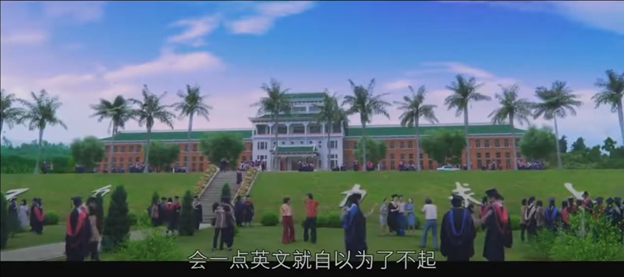
Fig. 1. Freeze frame of Nanyang University’s final graduating ceremony (Diam I 15:26).
In this moment, Ah Kun distances his older Chinese-speaking generation from the new English-speaking generation which he perceives as elite: while he finds comfort in the former, he expresses disdain towards the latter’s arrogance. Language, in this scene, serves as a marker of both generational and class divisions. These divisions, against the backdrop of the impending merger of Nanyang University, trigger Ah Kun’s longing for a previous time when his Chinese-speaking generation held more prominence. Ah Kun then extends his personal nostalgia to a more general anger towards the government for being ungrateful to his entire generation, rhetorically asking, “If Singapore didn’t have our generation, how would today exist?” (15:27–29).
Kampung nostalgia is exhibited by the characters Ah Kun and his friends Osman and Shanmugam in Diam II. Osman excitedly recalls some of their “happy” kampung days (13:04); for example, he “went to his neighbour’s house to pluck his coconut, and [his neighbour] went to [his] house to pluck [his] papaya” (12:49–57). Osman then laments that, unlike in the kampung, when “he talk[ed] to the neighbours, they [would] happily talk to me,” today, “the neighbours close their doors and I can only talk to the door” (13:45–49). Shanmugam likewise expresses that he “really miss[es] the kampung days” (13:38–40) and goes further to critique HDB living by likening the transition to public housing to Singaporeans “send[ing] themselves into Changi Prison” (13:53–58). In both instances, Osman and Shanmugam feel nostalgic for the kampung in the traditional sense that Davis describes, as their dissatisfaction with present-day HDB living triggers their longing for a better past of the kampung days. This is also the same kind of nostalgia for the kampung that Chua describes:
Invoking the spirit of the kampung is a popular, if inarticulate, response to the stresses of living under the ‘disciplinary’ effects of industrial capitalism. […] Lost are the spontaneous, simple, casual interactions among acquaintances which were fundamental to feelings of belonging in a kampung community, replaced by potential social isolation in a sea of strangers in the comparatively very large residential population of a new town. (160)
The last sentence of the above extract is exactly what Osman and Shanmugam describe—the plucking of neighbours’ fruits is an example of “spontaneous, simple, casual interactions,” while the comparison between HDB flats and Changi Prison reflects “potential social isolation.” What is more interesting is Chua’s suggestion that this is a broader response to the “stresses of […] capitalism,” rather than a specific policy. The three characters may not express that, but this precisely validates Chua’s point that this is an “inarticulate response.” Their conversation culminates in a call to action by Osman to “bring back the kampung spirit to Singapore,” since, according to Ah Kun, “the people are lost” because “the kampung spirit is lost,” and “they need [the political party that Ah Kun and his friends plan to form] to save them” (14:06–21). The trio’s nostalgia for the kampung goes beyond a mere critique of the government and becomes a motivation for concrete political action, as they contest the elections to express their unhappiness. This seems to go slightly further than Chua’s suggestion that nostalgia for the kampung tends to be “blunt[ed] [in] its powers” (166).
Having explained how Neo sets up his nostalgic characters, I now consider the methods used by Neo to respond to—even dissipate—both kinds of nostalgia exhibited by the characters. His resolution of both kinds of nostalgia by the end of Diam II appears to align with Lowe and Wong’s account that Neo’s films tend to carry pro-government messaging. Indeed, Chua argues that the government “cannot afford to allow this desire for contentment to take root as part of Singaporean everyday life,” since its “claim to legitimacy […] is based on the ability to improve the material life of the population” (165). However, I make a slightly more complicated argument here that Neo’s responses differ across the two kinds of nostalgia.
Neo seems to endorse, or at least not reject, language nostalgia through his plotting and narrative. This can be seen in his sympathetic portrayal of Shun Fa, who is disadvantaged by the state’s language policy and expresses (limited) language nostalgia. In Diam I, Shun Fa is framed by Yong Xin, his cousin and Ah Kun’s son, for getting involved in a gang fight outside school. However, the principal chooses to believe Yong Xin over Shun Fa—he points to how Yong Xin has won many “trophies” and “don[e] the school proud, while Shun Fa “only make[s] the school and [his] family embarrassed” (33:08–17, see fig. 2).
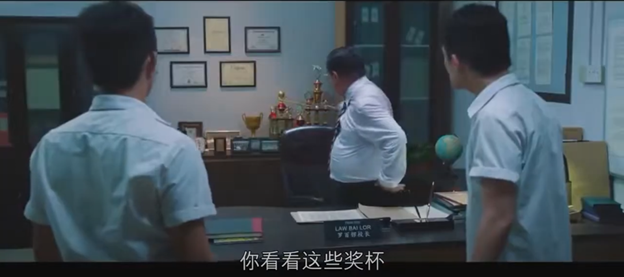
Fig. 2. Freeze frame of Shun Fa’s principal pointing to the many trophies won by Yong Xin as he scolds Shun Fa (Diam I 33:08).
The audience is nudged to sympathise with Shun Fa as his character is misjudged on the unfair basis of his poor academic performance and language ability.[7] In contrast, Yong Xin is trusted by the school and even rewarded by the government, eventually receiving a President’s Scholarship, despite his morally problematic behaviour of framing Shun Fa. Such prejudiced treatment continues even when they both enlist in the army, as Shun Fa receives military punishment for disobeying orders from his superior, Yong Xin. The show hints at the injustice of these differing outcomes. For instance, the scenes of Shun Fa being punished are played in slow motion and accompanied by sad music, interspersed with Yong Xin looking on from afar with a guilty look (1:07:12-09:28). These film techniques serve to evoke sympathy for Shun Fa while casting Yong Xin as a villain of sorts. Through this plotline, Neo problematises the state’s language policy for unjustly privileging the so-called elite English-speaking class over the Chinese-speaking class, and affirms Ah Kun’s frustration at the state’s elitist language policy.
Yet, somewhat conflictingly, Neo also seems to reject language nostalgia through his “politicized voice-over afterword” (Lowe and Wong 30) at the end of Diam II by Shun Fa:
Although Singapore has become an English-dominated society, this is also the reason why we have a harmonious multiracial society and an advantage in bridging internationally. For those who had been complaining, [they] wasted their time complaining and had no time to do other things […] [hence] miss[ing] the opportunit[ies] [of the 1990s] (1:19:27–48).
Neo, through Shun Fa, acknowledges that the transition to English resulted in some people struggling in the 1980s. However, he ultimately supports and justifies the necessity of this transition, owing to its social and economic benefits. In doing so, Neo appears to also tacitly shift the responsibility for people’s struggles to the people themselves, suggesting that they failed to capitalise on the “opportunit[ies] [of the 1990s]” because they were preoccupied with complaining. This sentiment can be interpreted as a rejection of nostalgia, as these complaints, as noted earlier, are often rooted in nostalgic longing for the past.
Other authors have also noted Neo’s seemingly conflicting attitudes towards the state’s language policies. In their essay, “Politics of Language in Contemporary Singapore Cinema,” Ying-Ying Tan and Irving Goh acknowledge that Neo’s films “appear to function as a medium or outlet of ‘anti-state’ criticisms” that the “Chinese-speaking masses in Singapore who [are] marginalized by the state […] strongly feel but are unable to articulate” (611). However, Tan and Goh argue that this merely “belies an attempt to reconcile the audience with unpopular policies,” and that Neo’s films ultimately “further perpetuate government propaganda” (611). They demonstrate this by highlighting that Neo, in his older film I Not Stupid (2002), “suggests that there is hope for the children of Chinese-educated […] as long as one does not resist but adapts oneself to state policies” (622).
While I agree with Tan and Goh that Neo’s handling of language policies is complicated, I disagree with their characterisation that the ultimate intent is to “perpetuate government propaganda” (611). Instead, I suggest that Neo is generally sympathetic to language nostalgia. Unlike in I Not Stupid, and despite what the ending voiceover narration says, the Chinese-educated Shun Fa eventually succeeds not because he follows the “government-endorsed path” of learning English. Instead, he relies on his street smarts and his own efforts, such as “learn[ing] to take videos during [his] free time” (Diam I 1:23:57), which enabled him to later build a successful business selling karaoke tapes. Moreover, throughout Diam, the narrative consistently encourages the audience to sympathise with Shun Fa over Yong Xin, implicitly endorsing the former’s sentiments of language nostalgia. Against this context, the ending voiceover narration appears abrupt and somewhat perfunctory. The impact of its message is also weakened by its didactic nature: it tells rather than shows, which I argue is insufficient to outweigh the narrative’s effective evocation of audience sympathy towards Shun Fa and his language nostalgia.
In contrast, Neo is much less ambiguous in rejecting kampung nostalgia through both the plot narrative and his directorial commentary. On the plot level, Diam II punishes the three nostalgic political aspirants, who are humiliated by their crushing electoral defeat and lose their election deposit (59:45). Their party is made out to be a laughingstock from the outset. The party name “CMI” officially stands for “Chinese, Malay, Indian” in a nod to the candidates’ ethnicities and the new Group Representative Constituency (GRC) system. However, the modern Singaporean viewer is likely to interpret it as standing in for the Singlish slang phrase “cannot make it.” As if the joke is not obvious enough, Neo takes pains to tell the joke to the audience’s faces: when CMI eventually loses the election, they are jeered with boos of “cannot make it.” In another instance, their election flyers are trampled upon and used to clean up a puddle of water (46:54). The effect of this comedic, even laughingly pathetic portrayal is to not only dismiss the legitimacy of their nostalgia-motivated concerns, but even to ridicule such concerns.
Neo also ventriloquises his directorial voice in a brief conversation between several side characters (who act as ordinary Singaporeans) in Diam II to rebut the kampung nostalgia expressed by the three political aspirants. One of the characters remarks that in HDB flats, there are “[n]o flood[s], no fire disaster[s],” but there is “water and electricity,” which is much better compared to the kampung days (35:46–50). Here, the character, like the CMI trio, similarly compares the living experience of HDB flats to that of kampungs. However, her comparison characterises the HDB experience as superior over the kampung experience in terms of amenities and safety. This moment is a direct rebuttal to the previous longing for the better kampung days expressed by the CMI trio and frames their kampung nostalgia as irrational. The fact that the side characters only appear in Diam II for this brief and abrupt scene suggests that this is a deliberate directorial intervention that reflects Neo’s views.
However, even though Neo is more explicit in critiquing kampung nostalgia experienced during the 1980s, I argue that his critique ultimately falls short because it relies on rejecting a caricatured version of that nostalgia. The portrayal of Ah Kun is perhaps the most prominent example of this. Ah Kun is abrasive, loud, and short-tempered. He complains about almost everything the government does, to the point where any small issue spirals into an unreasonable attack on the government. For example, in Diam I, Ah Kun refuses to allow Yong Xin to accept the President’s Scholarship, because he does not want his son to be a “lackey” who “work[s] for the government to come up with useless laws to exploit the citizens” (1:20:33-40). However, when Yong Xin asks him to elaborate and give an example, Ah Kun can only vaguely repeat that it is “that thing” (1:20:52–21:02). Even when he eventually remembers the example, it turns out to be a minor parking coupon incident that hardly justifies his characterisation of an “exploit[ative]” government. This insufferable portrayal of Ah Kun makes him frustrating for the audience, undermining his credibility as a representation of the kampung nostalgia genuinely felt by people in the 1980s.
Likewise, Neo’s ventriloquism is also guilty of not adequately representing the nostalgia it responds to. As Chua highlights, nostalgia for the kampung is “all too conscious of its own selective amnesia; the material deprivation of the old lifestyle is neither forgotten nor desired […] but rather it is about recovering control over daily life within the present zone of material comfort” (166). In the same vein, CMI is not literally calling for HDBs to be demolished and replaced by attap houses, but rather, they want to “recove[r] some traces of the sense of ‘community’ that was inherent in the kampung” (166). In caricaturing Ah Kun’s nostalgia, Neo’s ventriloquism thus fails to address the crux and root causes of the nostalgic sentiments for the kampung.
The differences in Neo’s responses to the two kinds of nostalgia, I suggest, reflect the different attitudes Neo personally holds towards the different kinds of nostalgia. While Neo is more sympathetic to language nostalgia and hence portrays it more ambiguously, he is more critical of kampung nostalgia—even seeing it as anti-development—and hence unabashedly criticises such nostalgic characters. The source of these personal attitudes, of course, is ultimately only a question that Neo himself can answer. Nevertheless, I suggest that Neo’s personal experiences may have contributed his sympathy for language nostalgia. In an interview for Diam, Neo is frank about the challenges and even discrimination that he faced at work in the 1980s as a Chinese-educated person (Lim). In fact, the term “Chinese helicopter” (a deliberate, mocking mispronunciation of “Chinese-educated”) that appears in the movie is taken from Neo’s personal experience. However, this is tempered by his overall acceptance of the Singapore Story—he believes that the government back then had “foresight” and “wisdom” to ensure our “stable future” today, which is reflected in both his critique of kampung nostalgia and (half-hearted) attempt to resolve language nostalgia in Diam (qtd. in Lim).
I now go further to suggest that Neo’s ambiguous, even conflicted, response towards language nostalgia may in fact be intentional. Such a deliberately muted rejection allows Neo to subtly express his more sympathetic attitude towards language nostalgia, while remaining within the bounds of the state’s unspoken OB markers. Including the voiceover helps to present Diam as broadly supportive of the Singapore Story. This may be considered a form of pre-emptive self-censorship to ensure that Diam is approved for screening by the government. Even though Neo states in an interview that they “didn’t [run into issues with censorship]” (qtd. in How), this may be precisely because he had already taken steps to ensure that Diam does not end on an anti-government or anti-progress note that the authorities would frown upon.
On a more speculative note, Neo’s desire may extend beyond merely avoiding censorship to actively maintaining good relations with the state, or what Tan and Goh term the pursuit of “political friendship” (624). This political friendship refers to the state’s appreciation of a subdued critic like Neo, exemplified by their conferment of the Cultural Medallion, the highest honour that the state accords to artists, on Neo in 2005, despite his lack of other local or international film awards. Tan and Goh suggest that this recognition could be a “reward for Neo’s art of politics in his films” (624). This point is echoed by Chua and Yeo, who argue that Neo “has let the system off the hook,” noting that even his most critically acclaimed film, I Not Stupid, was subsequently “appropriated” and “endorsed” by the Minister of Education (124).
So far, I have analysed how Neo establishes and responds to different kinds of nostalgia in Diam and considered possible reasons for his different responses. I now consider the broader implications of my argument on portrayals of nostalgia in films. Neo, in Diam, employs two levels, or to use Davis’s term, “orders” of nostalgia to respond to the nostalgic sentiments of his characters.[8] First-order nostalgia, according to Davis, refers to one “harbour[ing] the largely unexamined belief that THINGS WERE BETTER THAN […] NOW” (18). Simply put, it refers to evoking the nostalgic mood. One example in Diam, which I will elaborate upon later, is the portrayal of carefree life in the 1980s to evoke viewers’ nostalgia for that period. Second-order nostalgia (or reflexive nostalgia), in turn, refers to a person “summon[ing] to feeling and thought certain empirically oriented questions regarding the truth, accuracy, completeness, or representativeness of the nostalgic claim” (21). An example of this is how Neo’s ventriloquism challenges whether Osman’s kampung nostalgia accurately remembers kampung life and its material discomforts.
I argue that if filmmakers wish to respond to nostalgia, they are more likely to achieve their intended outcome(s) through first-order nostalgia, rather than second-order nostalgia. I make this case because the use of second-order nostalgia requires filmmakers to first accurately understand and then faithfully portray the nostalgic sentiment in question. This can be difficult, which can be seen in Neo’s inability to faithfully represent his characters’ nostalgia for the kampung. This flawed representation is unsurprising, given Neo’s reliance on “melodramatic [scenes]” and a “low-brow comic formula” (Tan, “Imagining the Chinese Community” 145–46), which often works against such accuracy.
Instead, it may ironically be easier for filmmakers to respond to nostalgia by evoking their own nostalgic mood. Neo himself also deploys such generalised nostalgia in the less political Diam I, which features scenes of students playing football and watching pirated DVDs together (19:30-20:40). The aesthetic choices of slow motion and overlaid Cantonese music (see fig. 3) create a warm and sentimental atmosphere that invites the audience to long for a simple and carefree past.
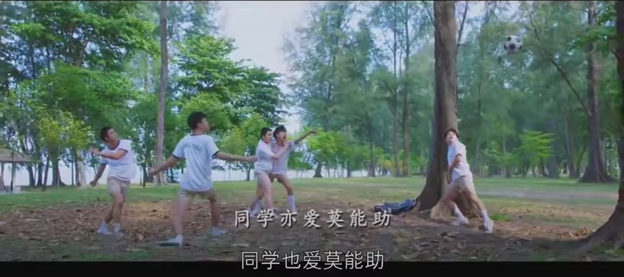
Fig. 3. Freeze frame of students playing football (Diam I 19:45).
Evoking such a nostalgic mood in relation to a certain time period can be an indirect yet stronger response to nostalgic sentiments. In the case of Diam, if the audience feels nostalgic for the 1980s and sees it as a “good past,” then they may also question kampung nostalgia as expressed by the film’s political party CMI, since their nostalgia implies that the 1980s were a “bad present” (Davis 15-16). This may risk perpetuating a vicious cycle, in that viewers may now see their present as a “bad present” (which thus challenges the state’s legitimacy). However, I believe Neo contains this risk by limiting his evocation of nostalgia to feel-good scenes that do not directly say anything about the present. If anything, Diam asserts the ‘goodness’ of the present, such as in the epilogue which reminds viewers of today’s economic prosperity.
In conclusion, my close examination of Diam has revealed that Lowe and Wong’s claim that Neo promotes state or government-sponsored nostalgia is oversimplistic. Neo portrays two distinct kinds of nostalgia experienced by people in the 1980s—language and kampung—and responds to each differently. While Neo is more sympathetic towards language nostalgia (and thus critical of the state’s language policies), his attitude is not immediately obvious, likely in a deliberate attempt to stay within the state’s OB markers. In contrast, he is more critical of kampung nostalgia and supportive of the state’s developmental efforts. Neo’s attempts to showcase and respond to these kinds of nostalgia are deserving of attention within academic and public discursive spheres, as these were very real emotions experienced by many people back then. Additionally, because nostalgia is an emotion that can be exploited for political purposes, it is important for filmmakers to represent the nostalgia felt by their characters, and by extension, the people who inspire such characters, accurately. However, many films—including 7 Letters, as noted by Tan—find it easier to evoke first-order nostalgia rather than stage second-order critique. While this tendency is not inherently problematic, filmmakers could nevertheless do well to consider how they can encourage viewers to reflect on the political uses of nostalgia. Critics, writers, and educators can also play their part by encouraging audiences to reflect on the accuracy of such nostalgic representations, thus promoting greater media literacy.
Notes
[1] The historian Loh Kah Seng notes that such resettlement began in the 1950s under the British government, but it faced stiff resistance from residents unwilling to relocate (147–48). It was only following the Bukit Ho Swee fire in 1961 that the People’s Action Party (PAP) government was politically enabled to accelerate resettlement in the 1960s and 1970s (151–54). The initial resistance perhaps makes the subsequent kampung nostalgia in the 1980s unsurprising.
[2] This refers specifically to Davis’s arguments in “The Nostalgic Experience.” In his other work, “Nostalgia and Art,” Davis acknowledges that nostalgia can also be a “device of art” (74), although this is perhaps less explicit than Grainge’s conception of nostalgia as a mode.
[3] In Lowe and Wong’s essay, the “state” is the entity that is “misrecogni[sing]” nostalgia (29). There is some ambiguity here as to whether the state refers to the government as portrayed in Diam, or the actual government of today. Given Lowe and Wong’s tendency—perhaps not fully justified—to conflate Jack Neo’s direction with the state’s direction over the film, I interpret it as the film’s rejection of its characters’ nostalgia.
[4] This is a translation of Neo’s original interview quote in Mandarin.
[5] An example of a different type of nostalgia would be nostalgia as homesickness, which is more spatial as opposed to temporal in its referent. This was the original intended meaning of the term. “Nostalgia,” when it was first coined by Johannes Hofer back in 1688, described the medical condition of homesickness amongst soldiers (381).
[6] When I refer to the “Chinese-speaking community,” I refer to both dialect and Mandarin-speaking communities. Historically, dialect-speaking communities were also unhappy with the government’s Speak Mandarin Campaign, “an aggressive strategy to eliminate Chinese dialects in the local linguistic landscape” (Ng 26). Nevertheless, given that Diam focuses more on how the primacy of English displaced both dialects and Mandarin, I will collectively term them as “Chinese.”
[7] In this context, Shun Fa’s academic performance is closely tied to his language ability—his eldest sister highlights that “his Mathematics is weak because [his] English is weak” (Diam I 22:41-43).
[8] The concept of two orders of nostalgia is distinct from two kinds of nostalgia. The former refers to the level of engagement with nostalgia, while the latter concerns its objects of longing: in Diam’s case, kampung nostalgia and language nostalgia.
Works Cited
Bennett, Susan. “New Ways to Play Old Texts: Discourses of the Past.” Performing Nostalgia: Shifting Shakespeare and the Contemporary Past, Routledge, 1995.
Chen, Yun Hong. “开拍《我们的故事》触敏感课题 梁志强:正视历史.” Lianhe Zaobao, 19 Mar. 2019, https://www.zaobao.com.sg/zentertainment/movies-and-tv/story20190319-941323.
Chua, Beng-Huat, and Wei-Wei Yeo. “Singapore Cinema: Eric Khoo and Jack Neo—Critique from the Margins and the Mainstream.” Inter-Asia Cultural Studies, vol. 4, no. 1, Jan. 2003, pp. 117–25, https://doi.org/10.1080/1464937032000060258.
Chua, Beng-Huat. “Nostalgia for the Kampung.” Political Legitimacy and Housing: Stakeholding in Singapore, Routledge, 1997, pp. 152–67.
Davis, Fred. Yearning for Yesterday: A Sociology of Nostalgia, Free Press, 1979.
Dixon, L. Quentin. “Bilingual Education Policy in Singapore: An Analysis of Its Sociohistorical Roots and Current Academic Outcomes.” International Journal of Bilingual Education and Bilingualism, vol. 8, no. 1, Jan. 2005, pp. 25–47.
Grainge, Paul. “Theorizing Nostalgia Isn’t What It Used to Be.” Monochrome Memories: Nostalgia and Style in Retro America, Praeger, 2002, pp. 19–37.
Hofer, Johannes. “Medical Dissertation on Nostalgia, 1688,” translated by Carolyn Kiser Anspach. Bulletin of the Institute of the History of Medicine, vol. 2, no. 6, 1934, pp. 376–391.
How, Mandy. “We Sat Down with Jack Neo, Mark Lee & Henry Thia for 2 Hours. Here’s What We Learnt about Their Friendship.” Mothership, 10 Feb. 2021, https://mothership.sg/2021/02/jack-neo-mark-lee-henry-thia-interview/.
Lim, Bryan. “Jack Neo Faced Discrimination for Not Being Able to Speak English, New Film Shows How Tough It Was for ‘Chinese Helicopter’ Folks.” AsiaOne, 25 Nov. 2020, https://www.asiaone.com/entertainment/jack-neo-faced-discrimination-not-being-able-speak-english-diam-diam-era-chinese-helicopter.
Loh, Kah Seng. “Conflict and Change at the Margins: Emergency Kampong Clearance and the Making of Modern Singapore.” Asian Studies Review, vol. 33, no. 2, Jun. 2009, pp. 139–59.
Lowe, John, and George Wong. “Legitimizing Viewing Publics through Nostalgia: The Mediated Tropicality of Singapore’s ‘Kampong Spirit.’” Chinese Journal of Communication, vol. 16, no. 1, Jan. 2023, pp. 19–34.
Lui, John. “The Diam Diam Era Looks Back at a Time of Change in Education, Says Jack Neo.” The Straits Times, 25 Nov. 2020, https://www.straitstimes.com/life/entertainment/the-diam-diam-era-looks-back-at-a-time-of-change-in-education-says-jack-neo.
Ng, Patrick Chin Leong. “Review of Literature on the Speak Mandarin Campaign (SMC).” A Study of Attitudes of Dialect Speakers Towards the Speak Mandarin Campaign in Singapore, Springer Singapore, 2017, pp. 25–30.
Tan, Kenneth Paul. “Choosing What to Remember in Neoliberal Singapore: The Singapore Story, State Censorship and State-Sponsored Nostalgia.” Asian Studies Review, vol. 40, no. 2, Apr. 2016, pp. 231–49.
———. “Imagining the Chinese Community Through the Films of Jack Neo.” Cinema and Television in Singapore: Resistance in One Direction, vol. 16, Brill, 2008, pp. 145–85.
Tan, Ying-Ying, and Irving Goh. “Politics of Language in Contemporary Singapore Cinema: The Films of Jack Neo, or Politics by Cinematic Means.” Interventions, vol. 13, no. 4, Dec. 2011, pp. 610–26.
The Diam Diam Era. Directed by Jack Neo, Golden Village Pictures, 2020.
The Diam Diam Era Two. Directed by Jack Neo, Golden Village Pictures, 2021.
Wong, Silvia. “‘Money No Enough 3’ Breaks Post-Pandemic Record at Malaysia, Singapore Box Office.” Screen Daily, 29 Feb. 2024, https://www.screendaily.com/news/money-no-enough-3-breaks-post-pandemic-record-at-malaysia-singapore-box-office/5191108.article.
Acknowledgements
I would like to express my sincere appreciation and thanks to Associate Professor Lo Mun Hou from NUS College for his valuable input and guidance in the process of writing this paper.
Ng Shang Wen is a final-year undergraduate at the National University of Singapore, where he studies Philosophy, Politics, and Economics. He believes that an interdisciplinary approach can deepen our understanding of society. In this spirit, he maintains an interest in engaging with Singaporean artwork and literature, both as part of his academic work and in his personal explorations.


What is our remedy when the law is broken beyond repair? In this provocative essay, Alicia Izharuddin looks for answers in Southeast Asian revenge films.