
#YISHREADS September 2026
By Ng Yi-Sheng / @yishkabob
Time for some shameless self-promo! Last month, I launched Crazy Colonisers, a kids’ book all about the British colonisation of Singapore. I’m frickin’ proud of it: it just might be the first work of popular history to balance the story of the colonists with all the dirt and drama of the Johor-Riau royal family, and it’s doing all of that with subversive yet G-rated jokes to keep it accessible for everyone ages nine and up.[1]
This provides me with a handy excuse to devote this month’s column to historical non-fiction. But as much as I’m indebted to Western scholars of Southeast Asia like Tim Hannigan, William Dalrymple and Barbara Watson-Andaya,[2] I’ve also become sensitised to the colonial dynamic of how their voices get amplified. How crazy is it that in the 21st century, the best-known experts on a nation’s history can still be outsiders?
For this reason, I’ve decided to choose books based on the principle of #OwnVoices, highlighting writers who’re exploring the pasts of their own ethnic, national and transnational communities. Which means there’s something personal about these texts: their authors are fighting to represent themselves, countering colonial and/or nationalist narratives, arguing that a new perspective is possible and essential.
The selection below includes works looking at the merger of Singapore with Malaysia, the Chola Empire of India, the Roma and Jewish diasporas, plus, in an elastic take on #OwnVoices, a survey of the Indian Ocean world. Though centred on modern Asia and Europe, these works encompass over a millennium of global history on five continents. It’s a snapshot of our planet, filled with souls dead and living, crying out that they matter, that their stories must be told.
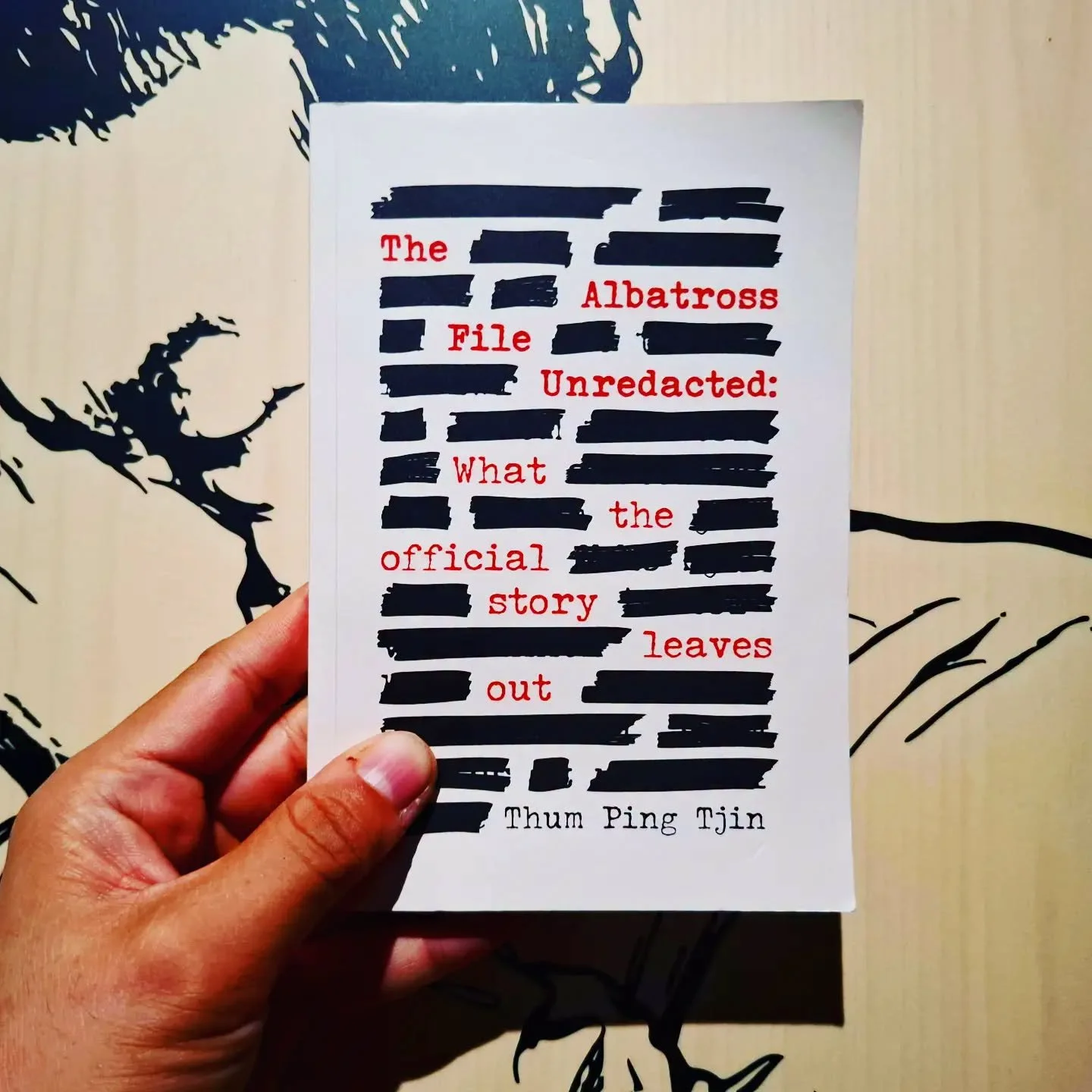
The Albatross File Unredacted: What the Official Story Leaves Out, by Thum Ping Tjin
Pagesetters Services, 2026
This first work requires some context for non-Singaporeans. For a long time, we’ve been told that our first Prime Minister Lee Kuan Yew fought valiantly for Singapore to merge with the Malay peninsula, thus forming the nation of Malaysia in 1963, only for us to be kicked out of the union on 9 August 1965. To this day, that’s our National Day, consistently illustrated with footage of LKY weeping his eyes out on live television.
Last December, however, the National Library opened The Albatross File Exhibition: Singapore’s Independence Declassified. This show was patently propaganda—AI-augmented propaganda, in fact—but I was nevertheless intrigued by the fact that it was revisionist history, revealing that Singapore had more agency in the Separation than previously advertised, portraying LKY as just a bit player, with more of the spotlight going to Finance Minister Goh Keng Swee.[3]
Enter historian and activist Thum Ping Tjin (a lot of us call him PJ),[4] who argues this too is a piece of deceptive propaganda, not because it's lying, but because of what it omits. I attended one of his launch events, so I already knew the gist of his argument: that LKY was in fact the main driver of merger because he feared that the People’s Action Party would be voted out in the early 60s; how he agreed to terms that were discriminatory to Singaporeans (we'd be contributing a lot economically but have fewer political rights); how he then reneged on those terms by challenging Malay supremacy in Malaysian politics, all of which led to such racial turmoil that Goh went behind his back and negotiated an exit.
Cool story—but how believable is this new counter-narrative? Very much so: PJ not only provides ample citations but also direct quotes from PAP politicians, revealing their concerns about LKY's strategy. What’s particularly damning are the specifics of what LKY was saying to piss off the “Malay ultras”: saying they were no more indigenous than Chinese, calling Malay culture a product born of “warm sunshine and bananas and coconuts”, calling them “mad mullahs”. Sure, it was all part of a strategy of brinkmanship aimed at forcing PM Tunku Abdul Rahman to step in and formalise a non-racialised democracy, but frickin’ yikes—no wonder folks called Othman Wok a traitor.
Basically, PJ’s supplied loads of evidence for LKY's problematic complicity, and presented it in a really accessible way—we’ve even got notes on how to digest this alongside the spectacle of the exhibition. Still, there is conjecture: more circumstantial evidence than smoking guns—Did LKY really dream of being PM of Malaysia someday? Did the lingering sense of betrayal over merger really lead directly to the 13 May 1969 racial riots? Also terribly interesting: the fact that there were all these calls to have LKY assassinated or arrested (just like he’d done to buddy Lim Chin Siong); and the accounts that he was coping with all this stress by drinking heavily and binging on prescription drugs (this was the ‘60s: the Kennedys did the same, but what irony!).
And, of course, the fact that all this is so damn cinematic, down to the moment Goh Keng Swee, on medical leave for liver problems in Germany, gets so freaked out by the racial riots that he checks out of his spa and comes home to straighten Singapore out. If only they’d released this information eleven years ago for SG50, then maybe we might’ve had some decent movies!
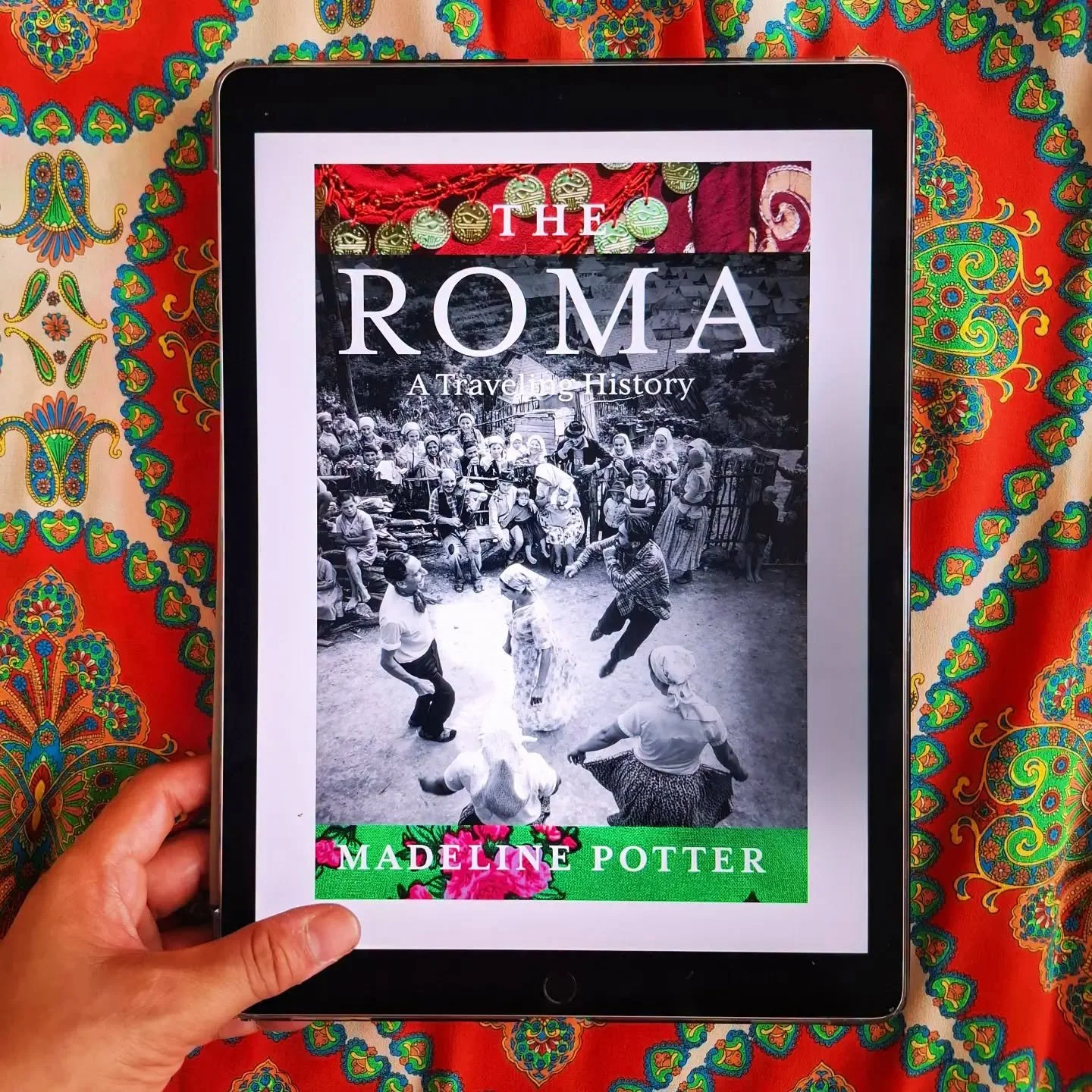
The Roma: A Travelling History, by Madeline Potter
Harper, 2025
I've been curious for a while about the subject of the Roma/Romani peoples: the largest ethnic minority in Europe that’s got all this representation as a mystical historical other but somehow almost zero contemporary coverage—seriously, can you name one living Roma celebrity?
Which is why I’m thrilled to have found this book: a transnational history of the Roma, written by a member of the community. The Romanian-born, UK-based author has arranged this in the form of nine chapters covering the traumas, struggles and heroism of her people in ten different countries, while also including elements of travelogue in each. Tellingly, she can share accounts of racialised microaggressions or full-on aggressions in every single country, all of them antiziganist (anti-Roma) except in the USA, where everyone assumes she's Latina or Indian.
Be warned: it’s kind of heart-crushing to read about the centuries of oppression and outright genocide the community’s endured—enslavement, expulsions, denial of education rights—not just from traditional baddies like the Nazis in Germany and the Catholic Monarchs in Spain, but also from Enlightenment figures like Maria Theresa of Austria and Gustava Vasa of Sweden and 20th century governments. As a scholar of 19th century literature, Potter also reminds us of the demonisation of the people in literature: Stoker’s Dracula, Hugo’s Hunchback of Notre Dame, Prosper Mérimée’s Carmen (better known through Bizet’s opera adaptation.)
Yet Potter also gives us stories of heroes: Ceija Stojka, Austrian survivor and documenter of the Samudaripen (the Roma Holocaust); Johann Trolmann, German boxer; Django Reinhardt, Belgian violinist; Steve Kaslov, Russian-American activist (though illiterate, he corresponded with Eleanor Roosevelt!); Katarina Taikon, Swedish activist (she posed with Martin Luther King when he came to collect the Nobel Peace Prize and let him know the country wasn't an egalitarian paradise).
And also phenomenal pride, in the form of vardos, mansions, their observance of mahrime taboos, and even in the concentration camp of Birkenau, where the Jewish doctor Lucy Adelsberger was shocked to see Roma women casually chatting about their former riches by the wire fence—naked save for their rags, they almost looked like they were at the beach. May we all have such dignity under oppression.
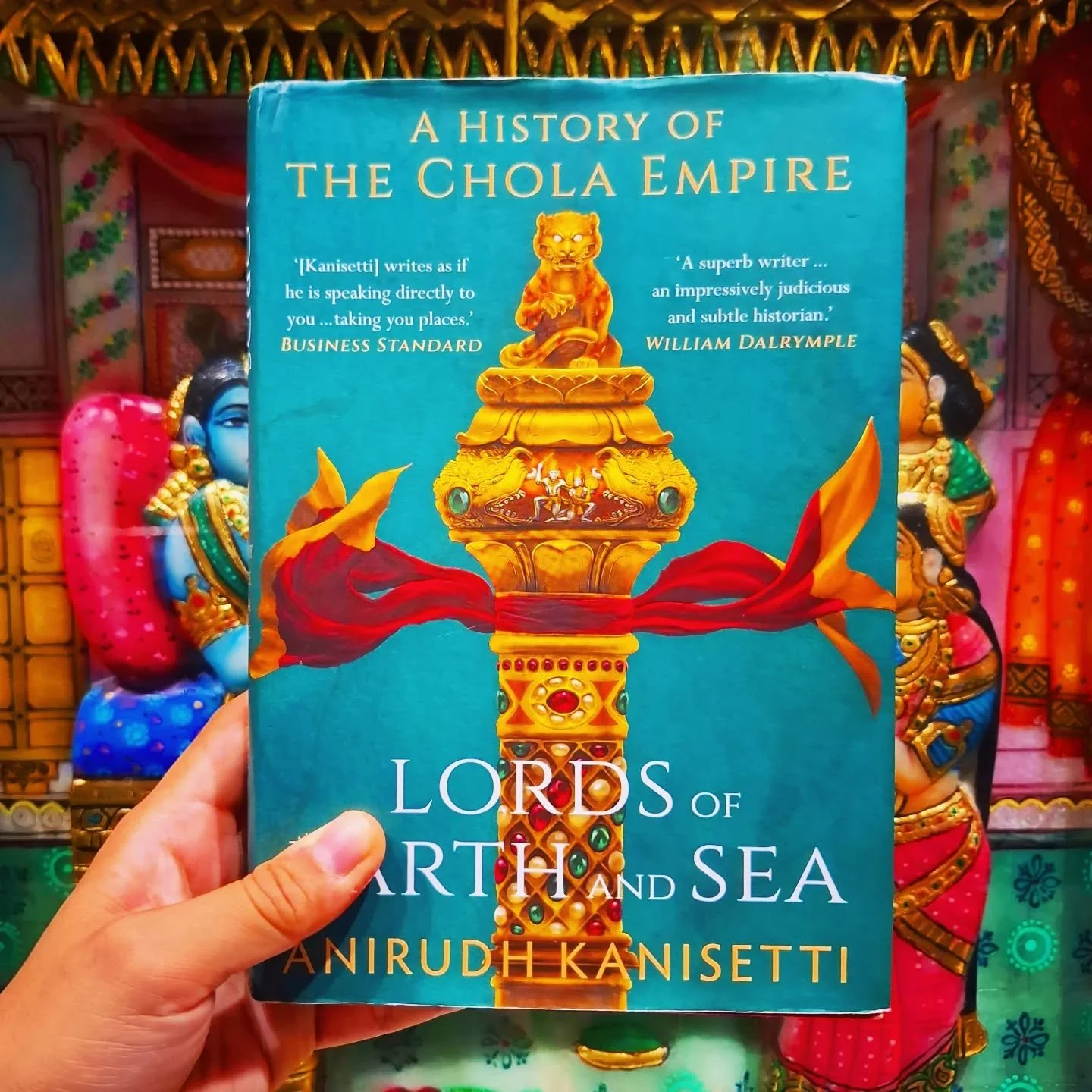
Lords of Earth and Sea: A History of the Chola Empire, by Anirudh Kanisetti
Juggernaut, 2026
I’ve been listening to the author’s podcasts for years,[5] and was thrilled to finally get hold of his books at last year’s Singapore Writers Festival. Now, for the first time, I’m getting a sorta-comprehensive understanding of this fascinating Tamil dynasty that once invaded Southeast Asia, which I’ve mostly read about via Amar Chitra Katha comics, the historical novel series Ponniyin Selvan, and the extremely distorted picture of Rajendra I (r. 1014-1044) who appears in the Malay legends of Sejarah Melayu as Raja Chulan. It’s possibly the first time I'm learning about any Indian dynasty in this depth, aside from the Mughals!
However, there’s the rub: this is a little tough going for outsiders. There’s no handholding with regards to Western history, no comparisons to Alexander the Great or William the Conqueror to make the historical figures more comprehensible. (OK, there’s a comparative chart of temples revealing their size next to the Leaning Tower of Pisa and Angkor Wat.)
What we’ve got instead is a remarkable animation of these medieval royals: drawing largely on royal temple inscriptions (e.g. records not only of triumphs, but also gifts of holy statues). He reconstructs the journeys of kings and queens as they travel via palanquin to be wedded, as they compete with each other for influence, as they are massaged by women of the Service Retinue (a harem of concubines, many drawn from conquest of neighbouring royal families) and leap into the pyre for sati.
Nor is he only speaking of royals: he tells us of the foul-smelling ships of the merchant guild of the Five Hundred (who probably lent their ships to Rajendra for the Kedah raid in 1025), the machinations of guilds like the Vellalas and the Golden Plough (Kanisetti argues that it was in this era that caste solidified in South India, not ordered by kings but through competition among the middle classes), farmers who appear in court documents to plead for mercy for murder, fallen noblewomen who sell themselves into temple slavery.
In total, we get this saga of an empire that expands in influence due to the entrepreneurial donations of its queens, then grows in conquest with warrior kings like Rajaraja and Rajendra (whereupon indications of female agency promptly disappear! sorry gals, that's patriarchy for ya), but eventually falls prey to internal squabbling (fratricides!) and collapses as its nobility take over the roles of patronage, rendering loyalty to the royals irrelevant, and competing kingdoms like the Pandyas and Hoysalas, once the conquered, become the conquerors.
What’s a little unexpected is his revelation that culture actually exploded with decline, since the aristocrats were keeping the temples splendid. The middle years of the dynasty are when religious culture explodes with the competition between the worshippers of Krishna (who come up with the Twelve Alvars, or poet-saints) and of Shiva (who come up with the Sixty-Three Nayanars, with shockingly graphic origin stories), and of amazing poems like Jayankondar's Kalingattu-Parani, which ostensibly celebrates Kulottunga (r. 1070-1122)’s conquests but does so through a magical realist parody of court politics as Kali's ghouls hunger to feast upon the souls gorily slain in battle—there are even Brahmin ghouls begging for alms, Buddhist ghouls who only eat brains, Jain ghouls who strain blood to make sure it contains no hair.
I do have to quibble a bit about the bits about Rajendra's invasion of Southeast Asia. I don’t actually think Kanisetti got to read Sejarah Melayu: surprisingly little is made of the legend that Raja Chulan engendered the royal lines of the Malay world, and there’s a claim that he travelled to the region via flying horse (when he actually only did to surface from the underwater kingdom of Dika, beneath the seas of Temasek). Also, his name is misprinted in the family tree in front, which was terribly confusing for half a minute!
But yeah, this is all deeply fascinating and informative and hopefully useful for my future SFF writing. Need to read more in-depth surveys of other Asian dynasties. Kanisetti’s working on one about the Guptas!
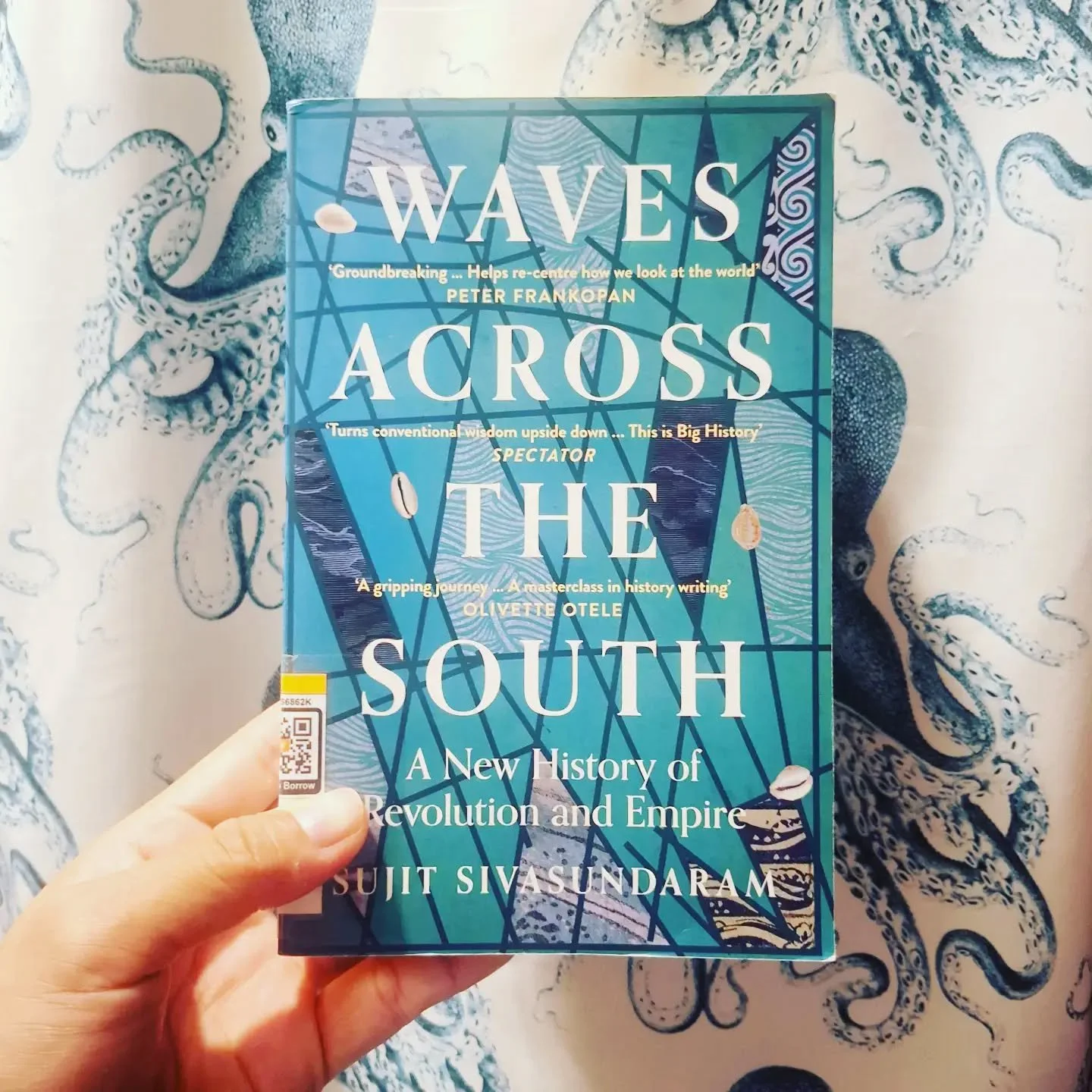
Waves Across the South: A New History of Revolution and Empire, by Sujit Sivasundaram
William Collins, 2020
I picked this up because I was headed to Sri Lanka and wanted to read Sri Lankan authors, but really, it’s a global story, looking at the world during the Age of Revolutions (1770s-1840s), which has always been portrayed as an Atlantic event, encompassing the American, Haitian, French and 1848 Revolutions.
What Sivasundaram’s setting out to do is to demonstrate that this era of transformation can also be observed across the Indian and Pacific Oceans. He notes the vigorous political, intellectual and economic upheavals in Sri Lanka (where the Matale Rebellion took place slap-bang in 1848 as well), India, Mauritius, South Africa, the East Indies, New Zealand and Tasmania, many in response to British and French colonialism: revolutions and counter-revolutions, vigorous settler resistance to bans on slavery, the co-option and erasure of indigenous knowledge by scientific researchers, etc, etc.
Surprisingly, Singapore gets quite a bit of discussion, with a comparison between Munsyi Abdullah’s embrace of Western technology vs. Tuan Siami’s (aka Tuan Simi) literary protests at the marginalisation of Malay trade (though Sivasundaram claims he’s of Chinese descent rather than Malay, which is a claim I haven’t heard elsewhere). Also an unpacking of the dynamics of labour in the building of Horsbergh Lighthouse, which was totally new info for me.
I do think Sivasundaram proves there was more exchange of info and ideas between colonies than ordinarily assumed, and he makes a great point that our understanding of a lot of these connections was lost due to the 19th century study of these regions as discrete entities, with the assumption that the expansion of the British Empire was unavoidable destiny. Still, in spite of his fascinating stories about Australian Aboriginal seal huntresses and chiefs, he can’t convince me that colonised indigenous peoples were anything like equal agents in the Age of Revolutions—the folks participating in this global movement in anything like a coordinated wave were European settlers.
What I do love, however, is how this marks an attempt by an author from the global South to write not a national but a transnational history. Usually, that’s the kind of thing only white folks like Peter Frankopan get to do!
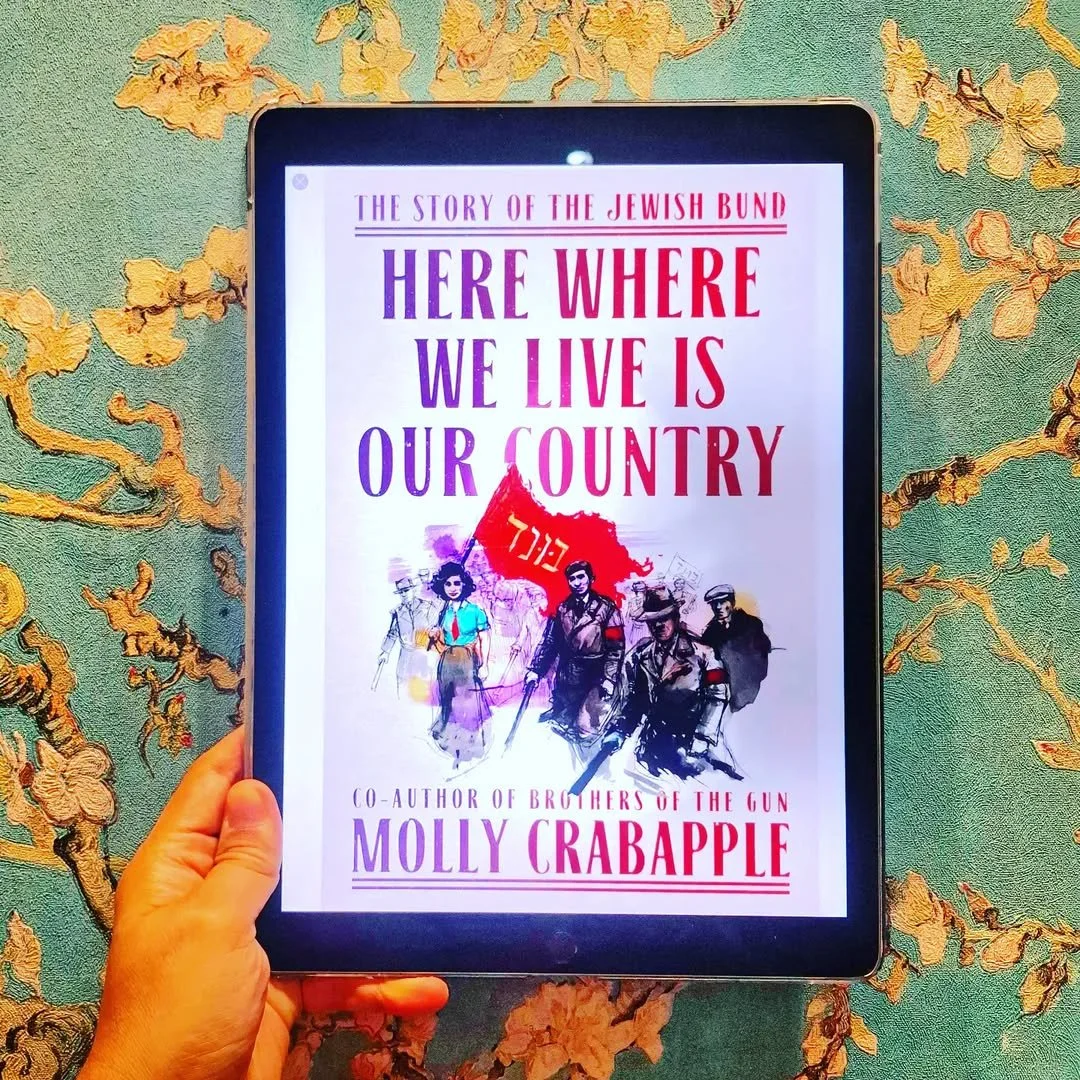
Here Where We Live Is Our Country: The Story of the Jewish Bund, by Molly Crabapple
One World, 2026
Finally, here’s an antidote to the sloppy narrative that equates Jews with Zionists, perpetrated by both Zionists and anti-Semites (two categories that often intersect). Turns out that there was a major transnational party called the General Jewish Labour Bund, founded in 1897, that consistently and stubbornly opposed the idea that European Jews should colonise Palestine, and their story is a jaw-dropping multi-generational epic of heroism, idealism, general bad-assery, love, and deep, heartbreaking loss.
Crabapple writes from the perspective not of a historian, but as a descendant—this all started when she dug into the political background of her Jewish great-grandfather from the Belarusian town of Volkovysk—and also as an activist, which means that she’s constantly taking time to reflect the parallels between the material and her own life, working with the Occupy movement, visiting prisoners on Rikers Island, marching for Black Lives Matter, trying to save refugees from Gaza... even commenting that early attempts to educate peasants turned them not into revolutionaries, but pretentious hipsters.
Her research, however, is astonishing. She draws on materials written in eight languages on four continents, including personal diaries and letters and the Bund’s own archive. As a result, she’s able to bring to life the players in the drama of history, like Bund co-founders Arkady and Pati Kremer (there’s a deep romance of being a rich girl who falls in love with a poor, brilliant revolutionary, but also incredible danger), Menshevik leader Henryk Elrich and his poet wife Sophia Dubovna, commander of the Warsaw ghetto uprising Marek Edelman. Her sketches of female heroism are so damn moving, e.g. lesbian nurse Gina Medem, who snuck uniforms onto friends to prevent them from being deported; Sarah Fuchs, who drowned herself in Kiev after being accused of being a counter-revolutionary. and there’s a surprising amount of sex—in the darkness of the war, boys and girls loved hard between battle missions, with the girls later stoically enduring abortions without anaesthetic.
What's also remarkable is that the story unfolds across history that we kind of know already: the Russian Revolution (I’d forgotten that Trotsky was Jewish), the rise of Nazism and the Nakba (stories of the Bundist refusal to cooperate with Zionists till the Ghetto Uprising, and the Zionist leadership’s incarceration of Jews who refused to enlist to fight in Palestine, are also amazing). The Bundists were there, fighting back, throughout all this, refusing to abandon their dream of unity with their fellow workers in Poland and the former Russian Empire, even as these same people launched pogrom after pogrom, even after the fall of Nazism as concentration camp survivors streamed home. How they actually amplified stories of Jim Crow racial injustice and the suffering of Palestinians in their newspapers, to the fury of Zionists, because they cared about all humankind.
In her closing chapter, after she’s talked about walking through Eastern European cities depopulated of their Jewish citizens and wanting to retch, Crabapple mentions an argument with a friend who says the Bund failed. No, she corrected him: they lost. Failure is because of a fault in yourself; losing is because your opponent was too damn strong. And who’s to say that loss is forever? The Bund was right that ethnonationalism would be genocidal in Israel, just as it was in Germany and Poland, and now the Western liberal consensus is dissolving. What other right choice do we have but to understand that we're all in this together. “There is no other Earth, after all. We are trapped together on this one,” she says. “It is Egypt and the Promised Land.”
Furthermore, maybe one way to pave a path to a better future is to write and read about people who weren't monstrous murderers. Crabapple’s even drawn portraits of them! Seriously, this woman can do it all.
Endnotes
[1] It’s part of my Haywire Histories series, available at the Epigram website here: https://epigrambookshop.sg/collections/series_all/series_haywire-histories
[2] Seriously though: I thoroughly recommend Tim Hannigan’s Raffles and the British Invasion of Java, William Dalrymple’s The Anarchy and Barbara Watson-Andaya’s The Flaming Womb.
[3] Check out my commentary on the Albatross File exhibition here on my Facebook page: https://www.facebook.com/ng.yisheng.9/posts/pfbid0QQtL1rrqSydjfSkAr8kiq4fVnZsFG83YXiQRj2X6EhProyM7dVWHPGT5eNRE55PBl
[4] PJ Thum’s also known for being a founder and managing director of news site New Narratif: https://newnaratif.com/ , and for having his academic integrity questioned by the Minister of Home Affairs when he and fellow activists challenged the government over the creation of the Protection from Online Falsehoods and Manipulation Act (POFMA). See Belmont Lay, “How to understand 6-hour grilling of historian PJ Thum by K Shanmugam.” Mothership. 30 March 2018. https://mothership.sg/2018/03/pj-thum-k-shanmugam/
[5] Check out Echoes of India: A History Podcast, https://open.spotify.com/show/3gyenNhpv2JIvu5nTccaFr, and Yuddha – The Indian Military History Podcast, https://open.spotify.com/show/6iOUWo1PR5AmpR5me97idh .
Ng Yi-Sheng (he/him) is a Singaporean writer, researcher and LGBT+ activist. His books include the short story collection Lion City and the poetry collection last boy (both winners of the Singapore Literature Prize), the non-fiction work SQ21: Singapore Queers in the 21st Century, the spoken word collection Loud Poems for a Very Obliging Audience, and the performance lecture compilation Black Waters, Pink Sands. He recently edited A Mosque in the Jungle: Classic Ghost Stories by Othman Wok and EXHALE: an Anthology of Queer Singapore Voices. Check out his website at ngyisheng.com.

‘A snapshot of our planet, filled with souls dead and living, crying out that they matter, that their stories must be told.’—this September, Ng Yi-Sheng reviews writers exploring their own pasts.