
#YISHREADS October 2026
By Ng Yi-Sheng / @yishkabob
Happy Indigenous Peoples’ Day! Back in the before times, folks called this Columbus Day, but then activists in the USA got sick of that genocidal bastard and decided they’d create a counter-celebration instead, honouring the history and culture of the nation’s Native Americans, Native Hawaiians and Inuit.
I’m marking the month with a survey of writing by indigenous authors around the globe, something I last did back in January 2024.[1] What makes this column a little different, however, is that I’m focussing on speculative literature—fiction and poetry—representing not the documentary grief of the colonial past or the realist present, but the wild imaginings of otherworlds in time and space.
One fundamental concept here is “Indigenous Futurisms”, a term first coined by Anishinaabe scholar Grace Dillon in Walking the Clouds: An Anthology of Indigenous Science Fiction. I’d initially interpreted the term in the most basic way possible—utopian visions of cultures enduring and flourishing beyond the age of colonisers—which meant I found myself a little confused by my readings, which often ran towards the dystopian, the weird and slipstream.
As it turns out, Dillon’s got a broader definition for the term, using it to describe SFF works that “involve discovering how personally one is affected by colonization, discarding the emotional and psychological baggage carried from its impact, and recovering ancestral traditions in order to adapt in our post–Native Apocalypse world.”[2] In other words, violence, trauma and disorientation naturally appear in these works as means to authentically describe the suffering these communities have endured. (Turns out this might be a Halloween column after all!)[3]
Thus, for your consideration, here’s an assembly of works from Australia, Malaysia, the USA, Kurdistan and Singapore. Their contents range from the fantastical to the freaky to the futuristic, and I can’t say all of them suit my taste. Nonetheless, each of them deserve a place on my shelf as testimonies of survival.
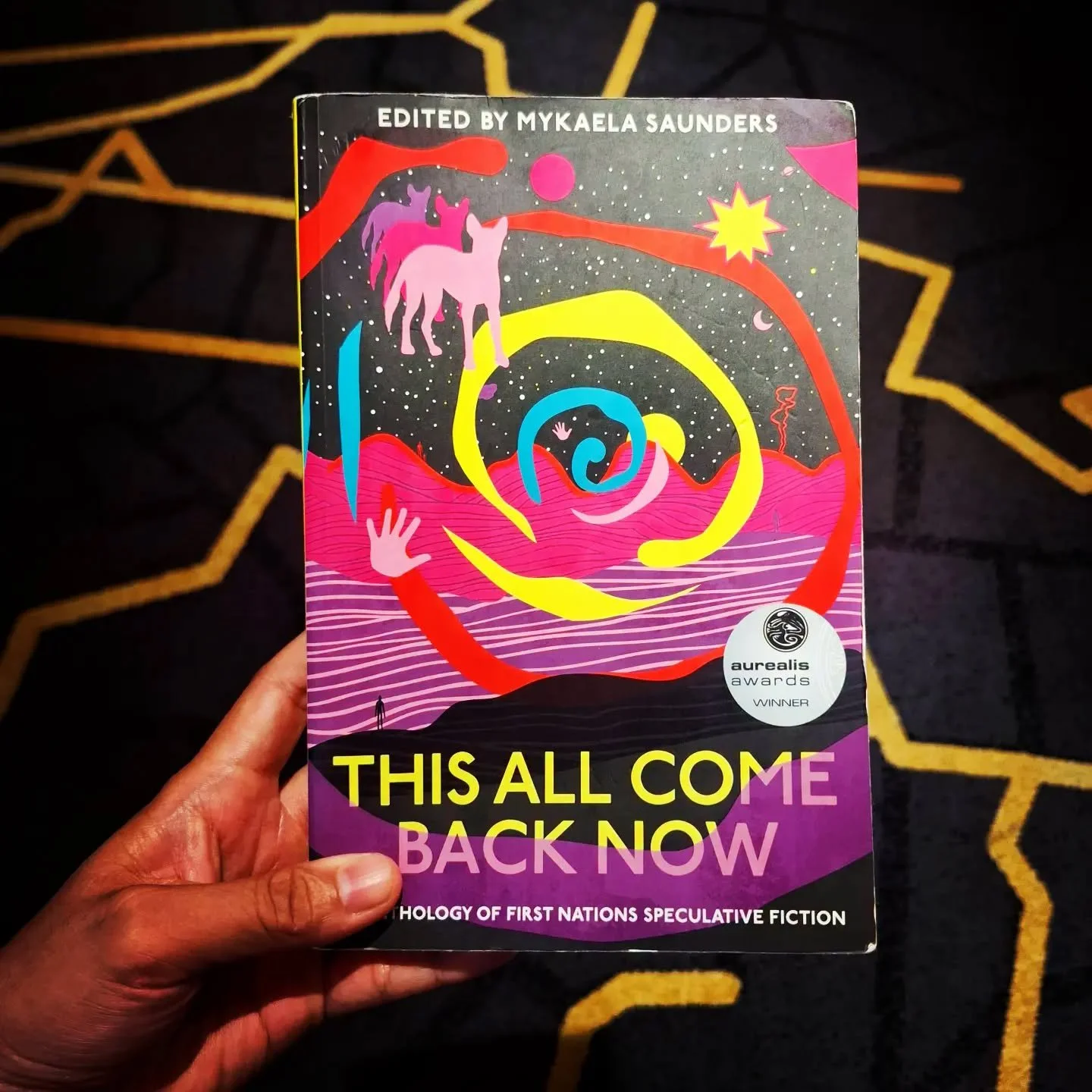
This All Come Back Now: An Anthology of First Nations Speculative Fiction, ed. Mykaela Saunders
UQP, 2022
Let’s kick off with a collection of twenty-two short stories and novel extracts, all written by Aboriginal Australians and Torres Strait Islanders, responding not only to cultural erasure and devaluation, but also appropriation. (As the editor explains in her foreword, the community gets big feelings when a white author gets praised for stereotypical Aboriginal characters or hackneyed Dreamtime imagery.)
As I mentioned in my intro, I’d assumed a lot of these tales would be sci-fi visions of a tomorrow where native cultures can finally prosper. While that’s true for some stories—the book’s title comes from the first tale, Evelyn Araluen's "Muyum, A Transgression", where a character finds herself in a mysterious landscape where extinct species reappear—many more take place in a recognisable contemporary or near-contemporary setting where indigenous characters have to grapple with their marginality.
Sometimes this takes the form of horror: in Kalem Murray's “In His Father's Footsteps” and Lisa Fuller's “Myth This!”, parents pass on knowledge of ancient taboos to skeptical kids and fight like hell when monstrosities rear their heads. A couple of my faves are near future sci-fi: Merryana Salem's “When From” has an Aboriginal woman exploitatively recruited by a film studio to do time travel research; Ellen van Neerven's “Water” has another Aboriginal woman doing official liaisons with an intelligent plant species with its own unique cultural perspective on land and belonging.
And some lie more in the arena of the speculative rather than straight-up genre fic. Adam Thompson’s “Your Own Aborigine” has a bunch of white guys chatting in a future Australia where they’ve all been assigned indigenous people to donate charity to; John Morrisey’s “Five Minutes” has an indigenous government employee experience microaggressions while struggling to write a sci-fi story in which aliens obliterate all white Australians, and tell Aboriginal Australians they have five minutes to say goodbye before suffering the same fate.
While there’s a bunch of hits in this collection, I’ve gotta admit there’s also plenty of misses—some stories are so disorienting that it’s hard to figure out the rules of the world they’re operating by (sometimes because they’re excerpted, e.g. is Archie Weller’s “The Purple Plains” set in the future or the past?)—or else because the authors are working more with the lyrical language of literary fiction than the slick conventions of genre fic.
Still, there’s something spellbinding about this work, not only cos of the worlds it opens my eyes to, but because of its historic significance as the first anthology of its kind—it’s a demonstration of how SFF can be used to reinvigorate a culture that’s been neglected, commodified and dispossessed from its people for centuries. Can there be any better use of the imagination?
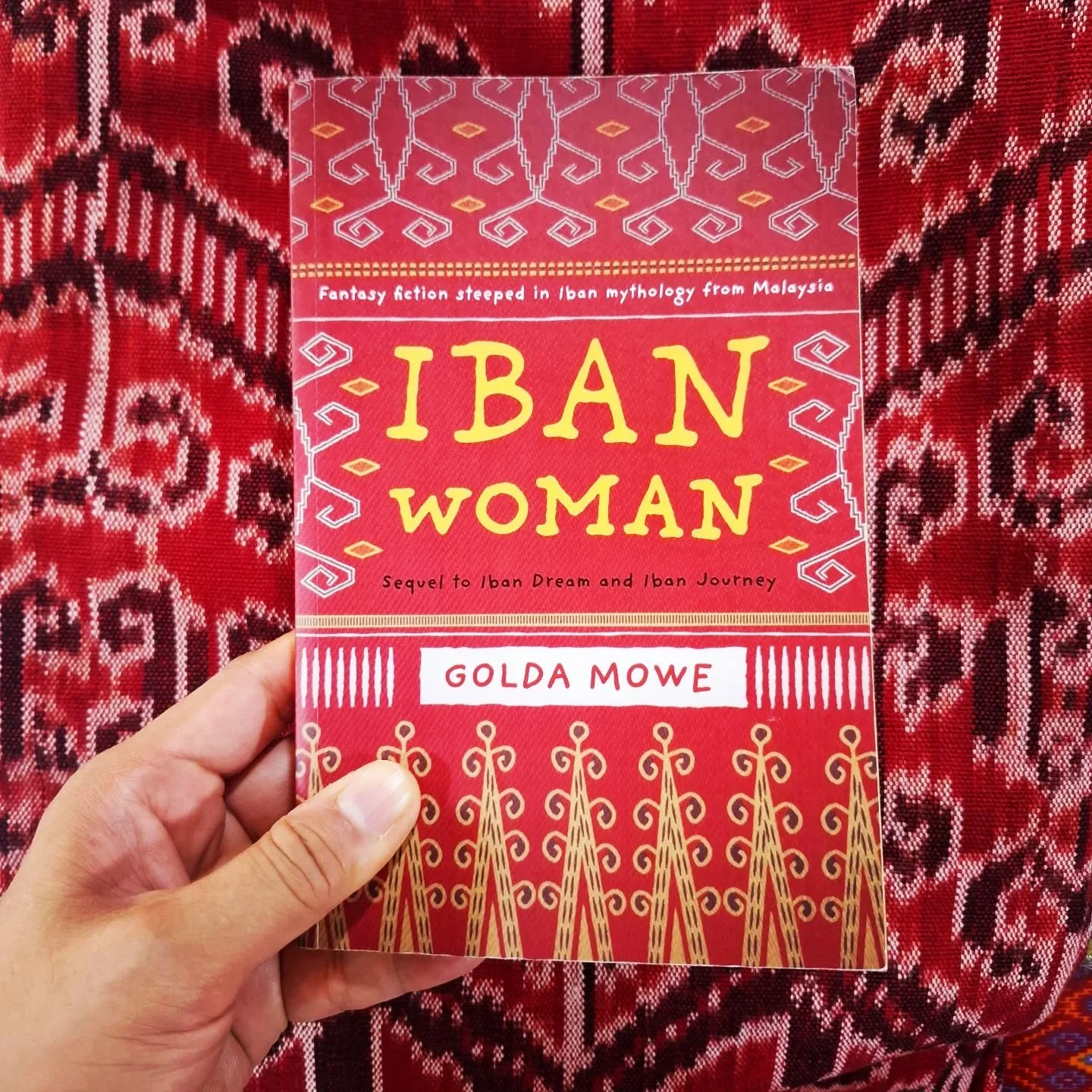
Iban Woman, by Golda Mowe
Monsoon Books, 2018
This is the third and final volume of a fantasy trilogy by an Iban author, set in the precolonial Iban world of Borneo. However, it’s doing something different from its predecessors. While Iban Dream and Iban Journey focussed on the stories of young men (first Bujang Maias, then his half-Malay son Nuing) fulfilling their destinies by becoming questing heroes, this tale’s got a female protagonist, their descendant Ratai… and as it turns out, there isn’t really a clear trope for female heroism in the author’s culture.
As a result, Ratai’s portrayed as a figure torn between genders. She’s great at hunting and bad at weaving, and literally has a dream sequence where the creator god Selampadai explains that he gifted her with a spindle, but she seized a spearpoint instead, and the weaver goddess Kumang prophesies that she’ll never master her craft. When her boyfriend Sagan gets killed by pirates, she ends up joining a headhunting expedition for vengeance (there’s a genuinely practical aspect to this: if she doesn’t, Sagan’s spirit will curse the tribe), dressing like a man, and actually coming back with a head of her own.
But this isn’t a Western-style Girl Power, Song of the Lioness-style story. Mowe makes it clear that women's work is important and valued by all, and has Ratai work hard at weaving, even introducing new dyeing techniques, courtesy of an encounter with a porcupine spirit. It’s also clear that Ratai has to put in painful physical work, rowing and doing sentry duty, to be seen as equal to the men. And through it all, Mowe honours tradition, meticulously describing rituals of courtship, healing, farming, building, feasting, war, with all the associated taboos and unglamorousnesses: pig sacrifice, ringworm, the fact that it may take days to find a shaman if your child is sick, the uneasy truth that Chinese jars which are worthless in the port are treasured in the tribe.
So what happens to Ratai, an untraditional girl in a novel about tradition? Something rather radical: in order to give her the classic woman’s narrative of love and marriage, Mowe introduces the figure of Mali, a Sri Lankan slave who's captured during the raid on the pirates (a multiethnic bunch, including a wolflike blond guy for some reason), and who turns out to be very useful to the tribe when he teaches them his knowledge of ironsmithing and boatbuilding. Nuing, her father, sees the growing chemistry between Ratai and Mali and buys his freedom so they can wed and become traders—now connected to a more cosmopolitan world, but not colonised, and still with roots in the village.
So yeah, this is a super-interesting work of precolonial historical fantasy… but on the downside, the prose is rather straightforward, the descriptions of ceremonies go on so long it’s clear the author’s trying to educate us, and every now and then there’s a word that pops up that breaks the spell of premodernity: “adrenaline”, “V-shaped”. Still delighted that I actually got to read this during a visit to Borneo!
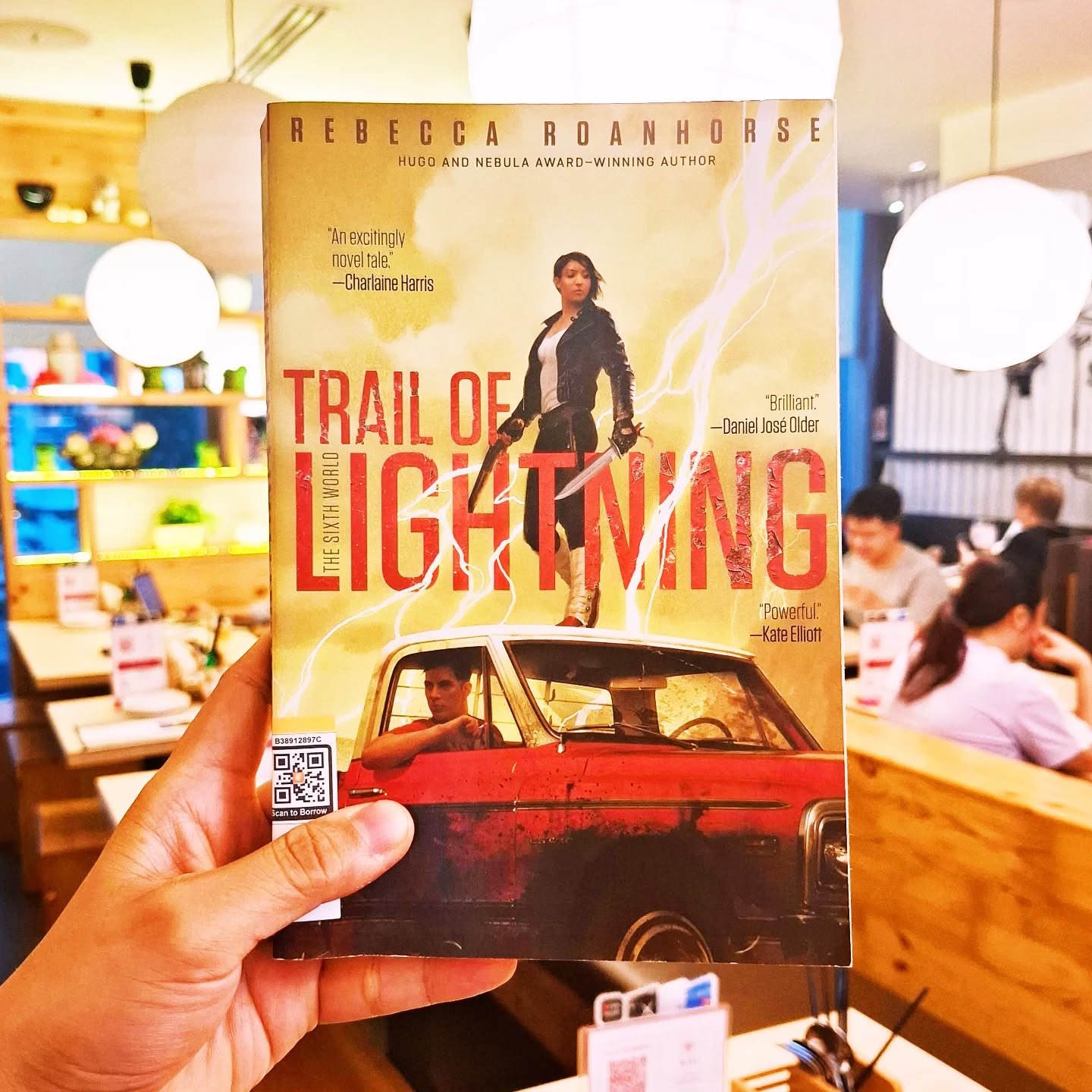
Trail of Lightning, by Rebecca Roanhorse
Saga Press, 2018
This was ranked as one of the 100 Best Fantasy Books of All Time,[4] and I’d dare say it deserves the hype. It’s the tale of Maggie Hoskie, a teenage Diné/Navajo monster hunter, living in a post-apocalyptic near future when all her culture’s prophecies have come true: a great flood (referred to as the Big Water) has swallowed up pretty much all of the USA, leaving the reservation intact because of its wall, turned by shamans fifty feet tall and made of shell, turquoise, abalone and jet overnight. But in this Sixth World (floods have destroyed civilisation cyclically), the gods and monsters and magics have all come back, together with terrible privations (e.g. coffee and batteries are luxuries).
So this is an almost all Diné world, heroes and villains alike, steeped deeply in myth—clan names now dictate what magical gifts you inherit. And when a weird zombie-like creature pops up, Maggie ends up on a road trip/quest to find answers, accompanied by a handsome cinnamon roll medicine man Kai Arviso (but like said rolls, he has layers), while also haunted by her former mentor, the demigod Neizghání, and periodically accosted by the trickster Ma'ii/Coyote. It's culturally rich, emotionally complex (she’s hardass because she’s a survivor of violent loss and, it’s implied, sexual abuse), and with a vivid set of backdrops and cast of characters you really grow to love (and whom could die at any time).
Honestly, it's bloody cinematic. I’m getting Hunger Games vibes, but with way more sophistication... which begs the question, why hasn't there been a TV/film adaptation of this yet? Non-white authors really do face more hurdles in this industry. Oh, and apparently there’s a whole controversy because Roanhorse is of African-American and contested Pueblo descent, not Diné, so she's being accused of cultural appropriation. Representation really is a minefield!
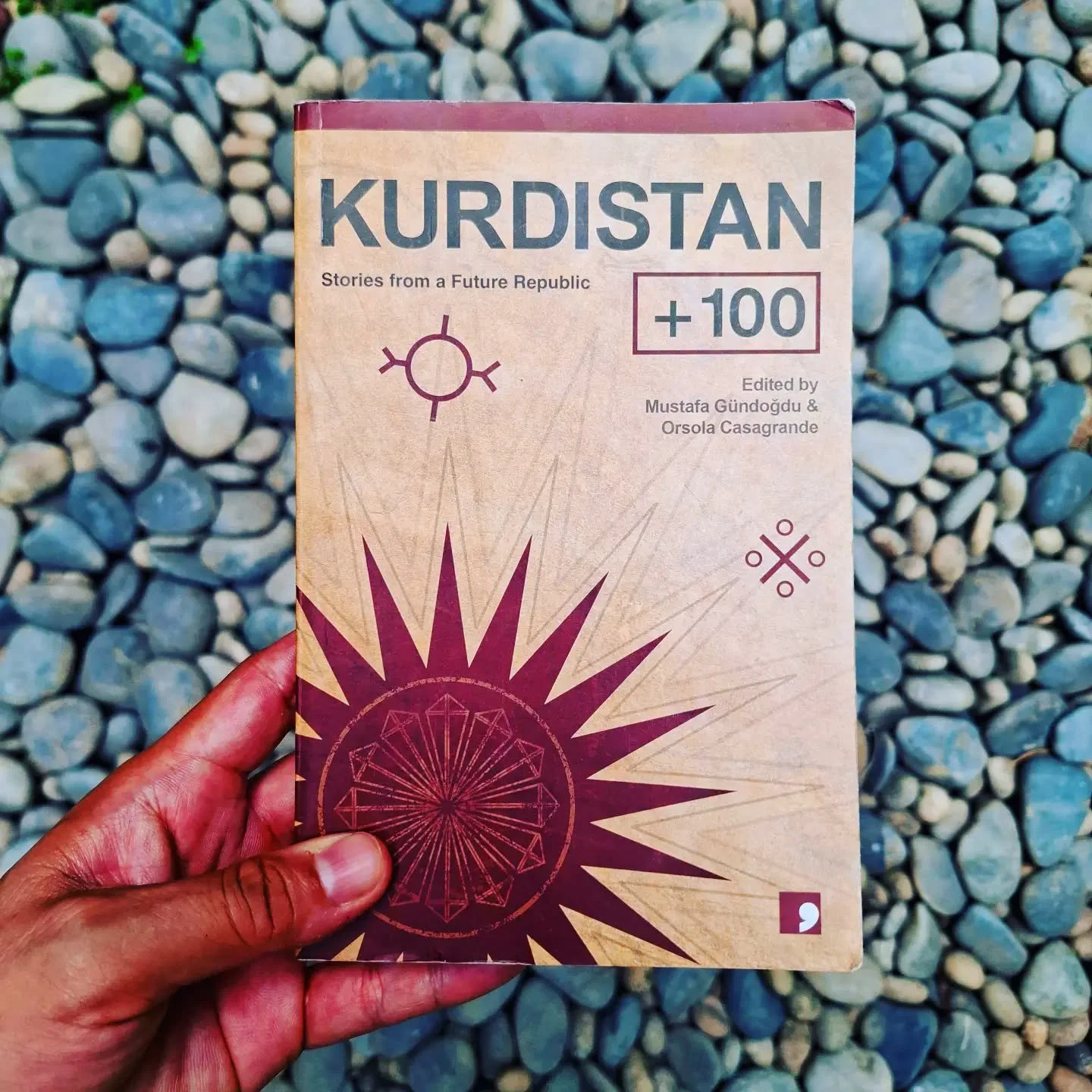
Kurdistan +100: Stories from a Future Republic, eds. Mustafa Gündoğdu and Orsola Casagrande
Comma Press, 2023
Here we have thirteen stories, written originally in English, Turkish and Kurmanji, each imagining what the world might look like in 2046, the 100th anniversary of the short-lived Kurdish Republic of Mahabad—a follow-up to Palestine +100, which I reviewed a couple of years back.[5] It’s got a turbulent history: one of its tales, Meral Şimşek’s “Arzela”—a strange fable about a woman in 2020 who falls into a mountain and is rescued twenty-six years later when her land’s become a democracy—was actually used as evidence against the author on charges of “terrorist propaganda”, forcing her into exile from Turkey.
Still, I’ve gotta admit that this anthology is a rather tough going, with quite a few tales (conveniently tucked away in the middle) that aren’t engaging with sci-fi tropes, are weighted down with historical infodumps, or are so obsessed with recounting the trauma of war that they don’t actually provide the foreign reader with interesting ideas or insights. Some of my frustration may come from the slipstream nature of the stories: it’s difficult to follow the parallel timelines in “Arzela”, the narrative of dreams and cyclical history in Muharrem Erbey’s “The Story Must Continue”, a male NASA employee’s extraterrestrial contact resulting in him being reborn as a woman, then again as a man, in Ömer Dilsoz’s “Rising Like Water.”
The tales that work best for me are simple in concept, but daring in their audacity: Sema Kaygusuz’s “Waiting for the Leopard”, where a woman from a 1938 massacre is cloned by mysterious park rangers who don’t even know if the animals they protect still exist (not quite believable as a 2046 scenario, but who cares?); Jîl Şwani’s “The Wishing Star”, where journalists infiltrate a Kurdish village so oppressed their tongues have been cut out; Hüseyin Karabey’s “Cleaners of the World”, where young environmental radicals led by a Greta Thunberg analogue set up their headquarters in the no-man’s-land of Kurdistan, launching high-tech attacks on oil conglomerates from beneath the mountains.
Not my favourite collection, but this does deliver visions I’d never have conceived otherwise, among a multinational community I’ve heard about mostly in depressing news articles, not on the warfronts of artistic creation. Dreams of great sorrow and devastation, but also hope, never despair.
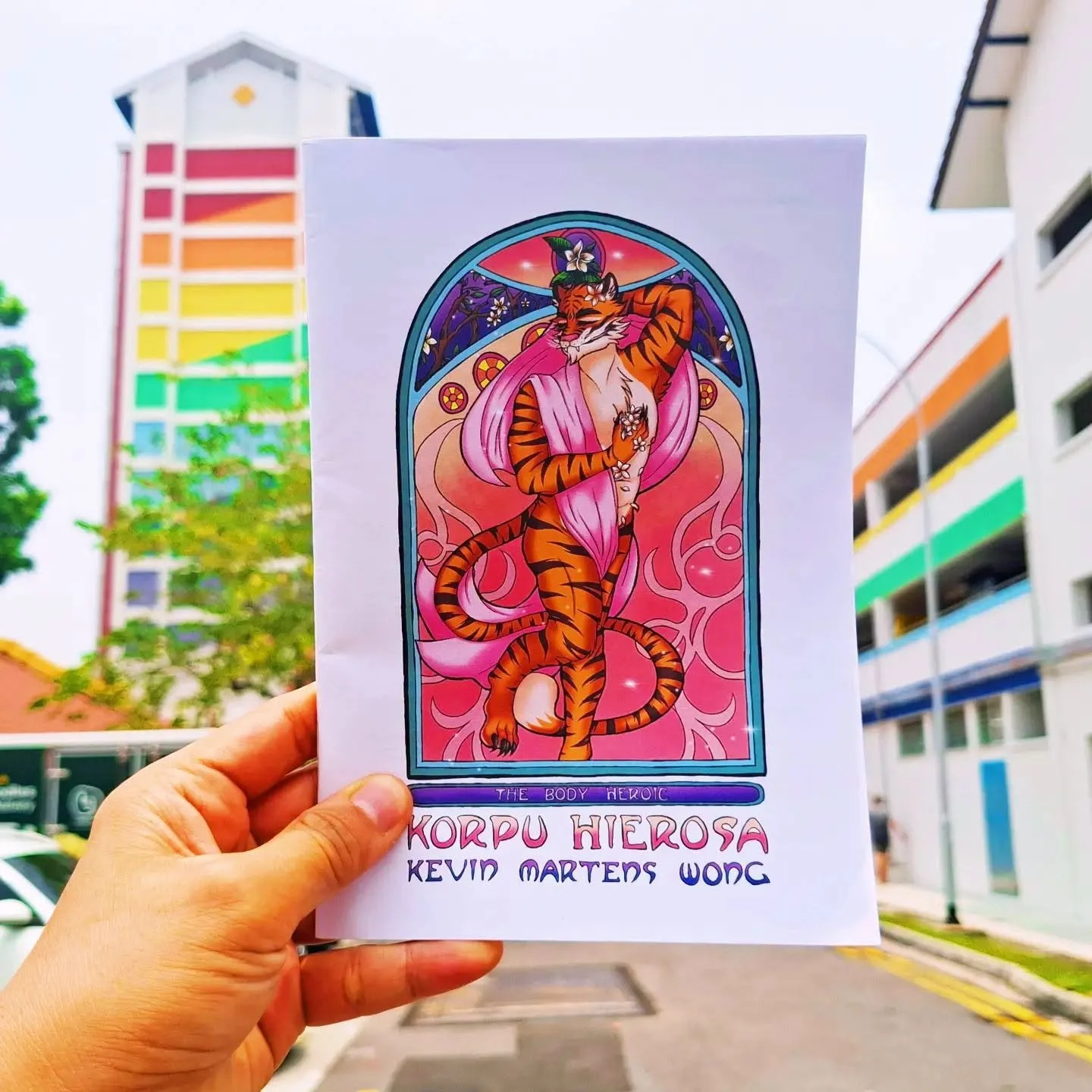
Korpu Hierosa: The Body Heroic, by Kevin Martens Wong
Rainbow Lapis Press, 2024
It’s specifically stated that Malays are the official indigenous race of Singapore, so you might’ve thought I’d use this opportunity to promote a work by a Malay Singaporean, as I did in previous columns with Nur Sarah binte Abdul Wahid’s Bandar Rimau and Diana Rahim’s We Saw Mountains.[6]
This chapbook, however, intrigues me. It’s by the Eurasian author of the acclaimed sci-fi novel Altered Straits, better known for his efforts to promote the critically endangered language of Kristang. In it, he describes himself as “a creole/indigenous man-woman”, which might sound like a contradiction, but has real precedent in discussions over the bumiputera status of Eurasians in Malaysia,[7] as well as the official recognition of the Métis in Canada.
The work’s noteworthy for being one of the rare publications to feature poems written in Kristang (“Flowers for Alphonso”, as well as the Kristang-English compositions “Prawn Star” and “Sun-soaked Malayan Supersoaker”), as well as interrogating what it means to be gay, nonbinary and Eurasian, drawing on tropes of both the confessional and the speculative in verses that are alternately intellectual and raw with angst.
As for the poetry itself, I find it reminiscent of Cyril Wong with its lyricism, its frank sexuality, its invocations of mysticism, its trauma and despair (that admittedly spill over into naked self-pity, e.g. in “Kristang Gay Sex Stallion of Singapore”). Yet it’s no way derivative, not only because of the language (Kristang combines the twin musics of Malay and Romance languages, and is surprisingly intelligible to me) but also the dazzle of it, the way it feels like the poet’s actually concocting spells which he might have geometric sigils for. Plus the directness of his literary references: Singaporean Eurasian works like Rex Shelley’s novels and a controversial 1988 Catherine Lim tale titled “Kenneth Jerome Rozario”; also Shakespeare’s A Midsummer's Night's Dream in “The Angel That Wakes You from Your Watery Bed” and Le Guin and Star Trek in “The Word for World is Dauntless”... and is the Dreamtiger he invokes from Jorge Luis Borges?
There’s only sixteen poems in here, and I’m hoping this collection might be expanded in the future into something more substantial, formally published with an ISBN and everything. Still, I get it if the author doesn’t choose that path. There’s something rather beautiful about the medium of a chapbook: its very ephemerality means liberty; the licence to be raw, to be messy, to speak languages that need not be understood.
Endnotes
[1] Ng Yi-Sheng. “#YISHREADS January 2024.” Suspect. 26 January 2024. https://singaporeunbound.org/suspect-journal/2024/1/26/yishreads-january-2024
[2] Quoted in Chelsea Vowel. “Writing Toward a Definition of Indigenous Futurism.” Literary Hub. 10 June 2022. https://lithub.com/writing-toward-a-definition-of-indigenous-futurism/
[3] Up till now, every single one of my October columns has been horror-themed! Some are focussed on horror fiction, such as “#YISHREADS October 2024”. Suspect 25 October 2022. https://singaporeunbound.org/suspect-journal/2024/10/25/yishreads-october-2024. Others, nonfiction, such as “#YISHREADS October 2023.” Suspect. 27 October 2023. https://singaporeunbound.org/suspect-journal/2023/10/27/yishreads-october-2023
[4] “The 100 Best Fantasy Books of All Time.” Time. 15 October 2020. https://time.com/collections/100-best-fantasy-books/
[5] Ng Yi-Sheng. “#YISHREADS December 2024.” Suspect. 27 December 2024. https://singaporeunbound.org/suspect-journal/2024/12/27/yishreads-december-2024
[6] Reviewed in Ng Yi-Sheng. “#YISHREADS September 2025.” Suspect. 26 September 2025. https://singaporeunbound.org/suspect-journal/2025/9/26/yishreads-september-2025. Also “YISHREADS August 2026.” Suspect. 28 August 2026. https://singaporeunbound.org/suspect-journal/2026/8/28/yishreads-august-2026
[7] “Interview: Kevin Martens Wong.” Momoka Schmidt. 24 December 2025. https://momokaschmidt.wordpress.com/2025/12/24/interview-kevin-martens-wong/
[8] Mariam Mokhtar. “The many classes of ‘bumiputera’ in Malaysia.” Free Malaysia Today. 26 July 2017. https://www.freemalaysiatoday.com/category/opinion/2017/07/26/the-many-classes-of-bumiputera-in-malaysia
Ng Yi-Sheng (he/him) is a Singaporean writer, researcher and LGBT+ activist. His books include the short story collection Lion City and the poetry collection last boy (both winners of the Singapore Literature Prize), the non-fiction work SQ21: Singapore Queers in the 21st Century, the spoken word collection Loud Poems for a Very Obliging Audience, and the performance lecture compilation Black Waters, Pink Sands. He recently edited A Mosque in the Jungle: Classic Ghost Stories by Othman Wok and EXHALE: an Anthology of Queer Singapore Voices. Check out his website at ngyisheng.com.
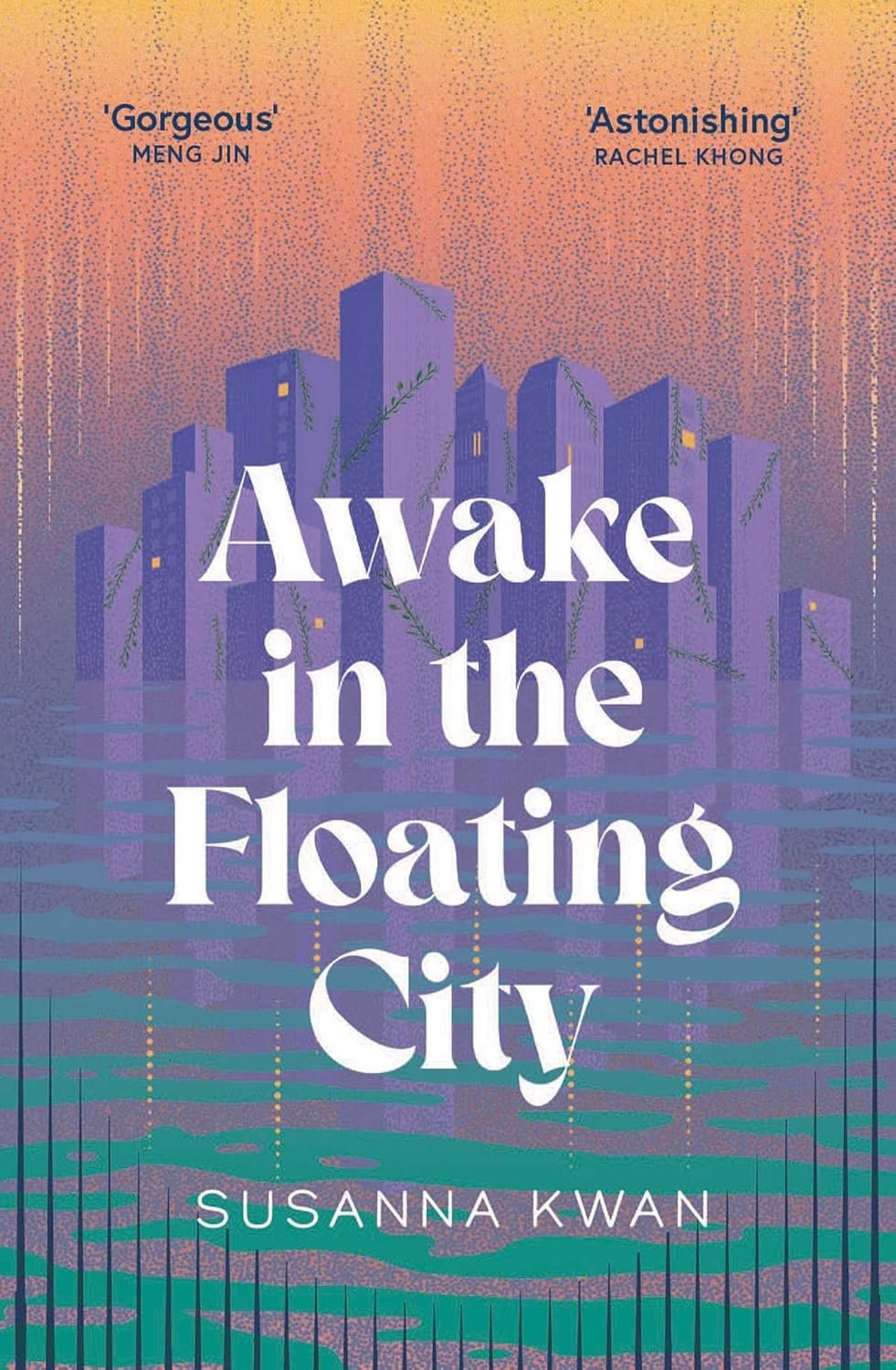
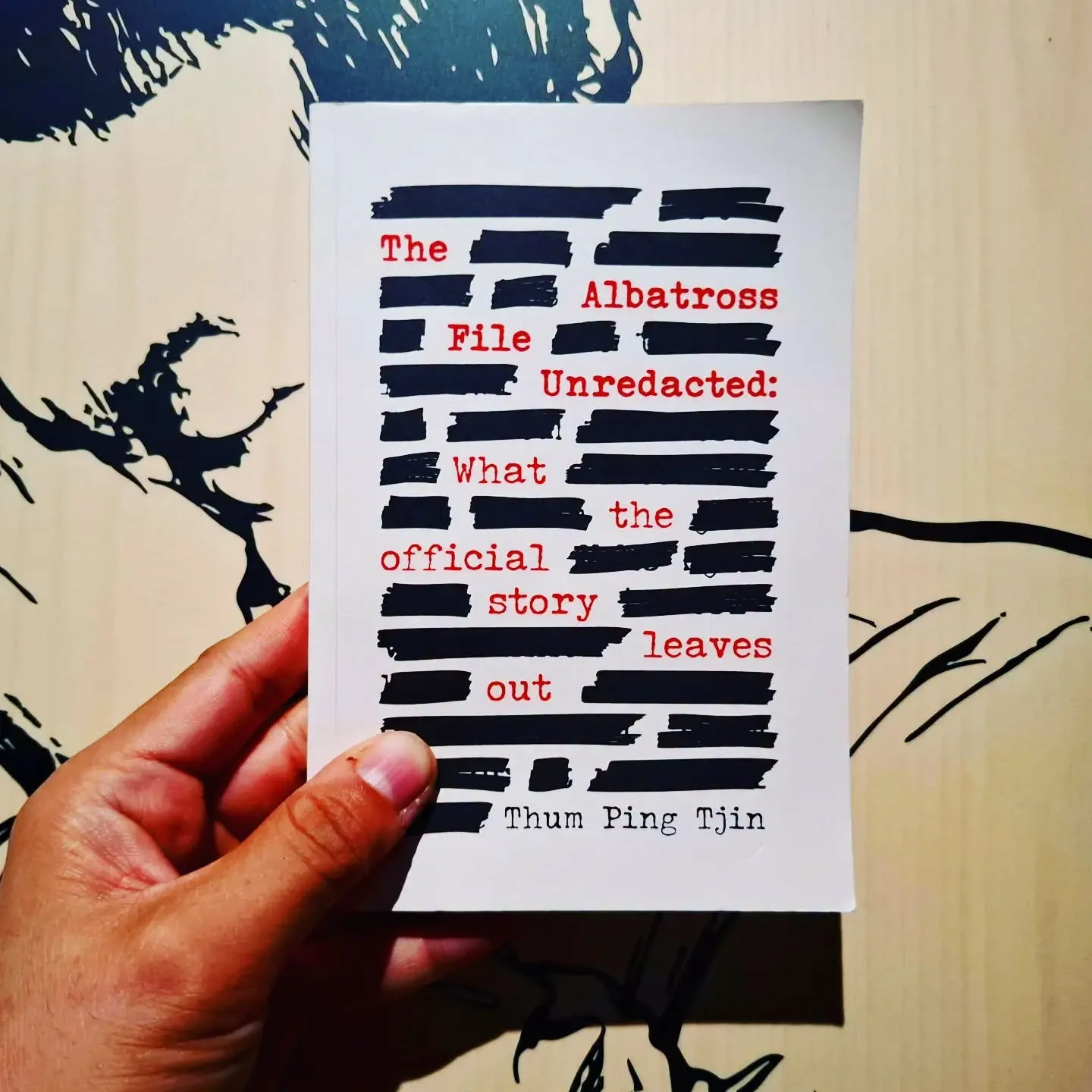
‘The fantastical to the freaky to the futuristic’—Ng Yi-Sheng reviews five works of Indigenous Futurism to commemorate Indigenous Peoples’ Day.