
#YISHREADS August 2026
By Ng Yi-Sheng / @yishkabob
August is a month of Nusantara pride, with three different nations in the region celebrating independence days: Singapore’s National Day on the 9th, Indonesia’s Hari Kemerdekaan on the 17th and Malaysia’s Hari Merdeka on the 31st. If you’re in the literary scene, this year might feel a little prouder than most, since it also marks the date when Malaysian-Australian author Omar Musa won the Miles Franklin Award for his magical realist ecofiction novel Fierceland.[1]
What better time could there be to present a lineup of speculative fiction works by authors of the Malay diaspora? This is a follow-up to last September’s column on the same theme,[2] but with a slightly different flavour: this roster includes no works of graphic fiction, science fiction or horror, but only fantasy and magical realism—though I’m using the latter as an extremely elastic term that also encompasses experimental fiction and mystical writing. There’s a sprinkling of realist short stories here, too!
Thus, for your pleasure, here are reviews of five fantastical works by authors from Singapore, Malaysia, Indonesia, Brunei and the Netherlands, all published within the last three years—save for one, which I’ve chosen to represent the deep pre-colonial roots of the genre. Tolkien didn’t invent everything, y’know.
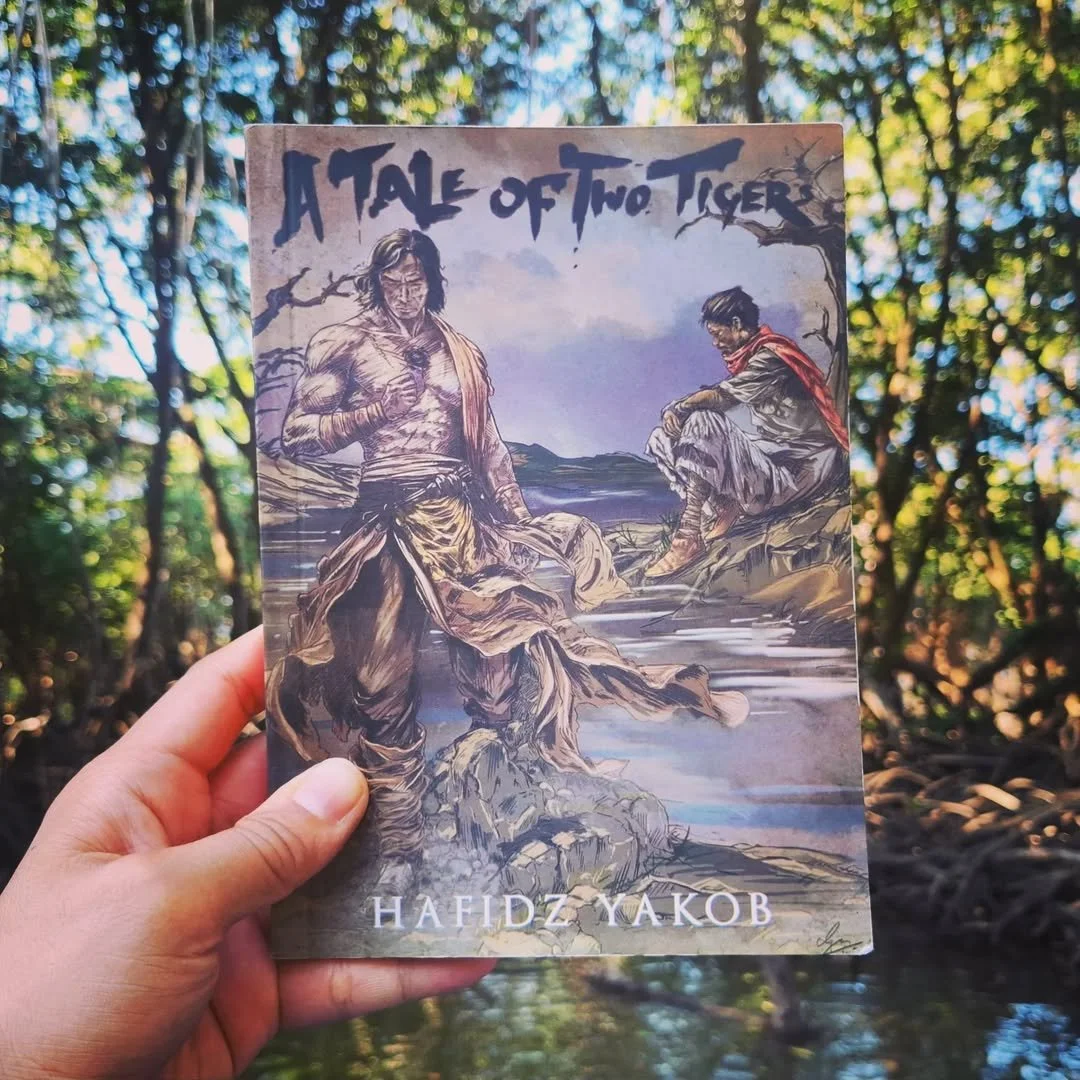
A Tale of Two Tigers, by Hafidz Yakob
Qasrun Nafis Publishing House, 2024
For your consideration, here’s a Bruneian sword and sorcery fantasy novel, following two brothers, Ammar and Akem, as they transform from village kids to divinely gifted heroes in an epic Malay-inspired world of war and court politics!
At first I was a little dismayed by the amateurish editing of this work (the punctuation for direct speech is all wrong), but the prose and worldbuilding and characterisation are all solid, and as the story progresses, I got increasingly drawn into the drama of these young men, both determined to liberate their community of the peaceful and egalitarian Asli, from the imperial reach of the warlike Asing, but both increasingly absorbed into the cutthroat culture they once saw as oppressing them.
The whole matter of their gifts is also super interesting. Ammar is bestowed superhuman strength, which makes him a legendary warrior—shades of the legends of Badang and Awang Semaun. But Akem, the younger brother, gets intelligence, enabling him to devise cunning stratagems for trade, manipulation, and ultimately warcraft—made me think of that other great paragon of Malay culture, Sang Kancil. and though Ammar gets all the laurels at first, his impetuousness drives him to lead a revolution first chance he gets, which means the brothers end up at war with each other, with Akem's invention of firearms and war elephants causing him to ultimately triumph. Brains beat brawn, which feels like an analogue for modernity—and indeed, the little passages about the two sending money back to their village to develop it feels extremely 20th century.
Also of note is the way the work dances with Bruneian taboos, i.e. criticising monarchy and black magic. While the brothers talk about liberty and resisting tyranny, the author seems to be playing a good tsar, bad boyars gambit: Tengku Shamsulmubin, the lord the brothers serve, is portrayed as a thoroughly chill dude, while it’s his underling Sorisso who’s evil. (Still arguable that they’ve failed by not persisting with revolution.) And the presence of prophetesses and magic and nenek kebayans is countered by the fact that organised religion just doesn’t seem to exist—though the names sound quasi-Islamic, no-one goes to a mosque or temple, no priests or imams preach.
The work’s not perfect. There's a bizarrely racialised depiction of the Indian trader Manu. (Technically, he's Bharati, but it’s weird that he’s othered in his speech patterns, while the quasi-Chinese Huan characters aren’t.) I’m also very unsure about the character of Naura, the beautiful princess whom Akem longs for—she’s given complexity by the fact that she’s confident and competent and pointedly refuses to drive a wedge between the two brothers, but she ultimately comes across more as a 14th century Cool Girl rather than the fully developed character she should be. Plus, the nenek kebayan’s curses—that Ammar must never love a woman and Akem will never attain his heart’s desire—ultimately don’t have a clear effect on the plot. What's up with that?
Still, this is probably the best example I’ve read of reimagining medieval European fantasy conventions in a Malay context, drawing on both indigenous classics and Western conventions. It really deserves wider readership!
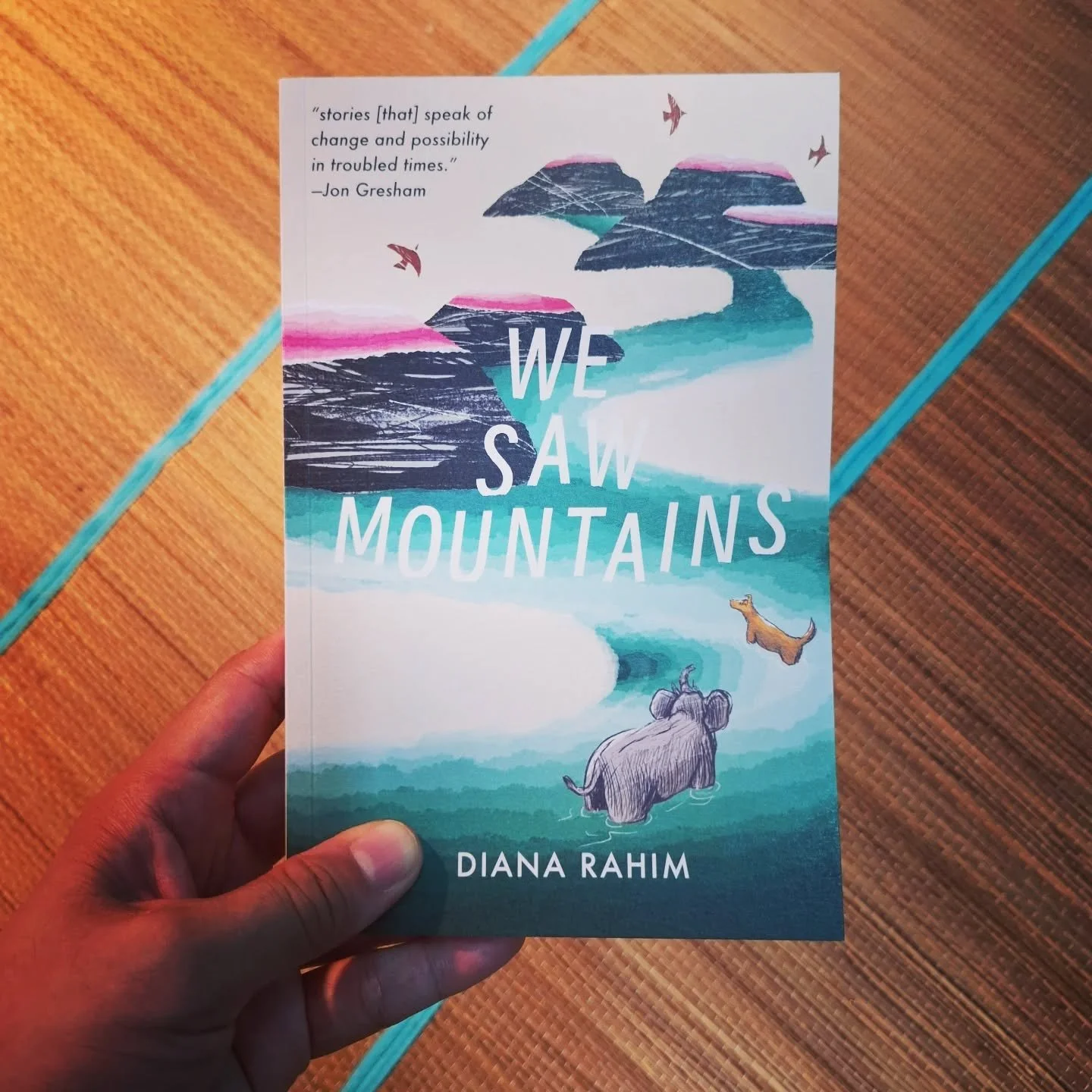
We Saw Mountains, by Diana Rahim
Ethos Books, 2026
I remember raising an eyebrow at the launch of this short story collection, upon learning that it was one third realist fiction, one third tentatively speculative, and one third full-on SFF. Not great for categorisations or coherence, I thought—wouldn’t this have been a stronger début publication if the author had committed to a single genre?
Now that I’ve read it, however, damn—these nine tales really do belong together. Hard to explain what unites them, though: Diana said something about everyday people practising small acts of resistance, but there’s also something thematically important about the power of the margins, of quiet misfits and the excluded. The realist stuff shines here: the fury of a hijabi woman excluded from the medical profession in “Mdm Junaidah's Interview”, the cringy social discomfort of teen shop assistant Zaki in “Stolen”, the psychological chaos of an abuse victim going to counter-productive therapy in “What the Belly Contains”.
The SFF stuff mostly takes the form of fables, told with greater psychic distance: the nameless nation and characters in “The Secret”, perspectives shifting from woman to soldier to elephant to dog in “Another Country”, the dreamlike dystopian wasteland and gentle conflict of “A Minor Kalahari”. The mighty exception to this, however, is “Transgression”, one of my favourite stories, about a girl realising her mother is an otherworldly spirit. It’s visceral, tinged with Malay heritage and psychological horror and longing; sensations later echoed in “What the Belly Contains”. And there are other echoes: not only of ecofiction, but a repeated motif of women cultivating trees, most visibly in “The Restoration”, and characters from that story actually pop up in the final fantastical fable, “We Saw the Mountain”, together with a random guy from “Stolen”. Realist characters wandering into miraculous geography.
Throughout, there’s a deep sorrow at the way Singapore and the world are—capitalist, racist, patriarchal, bureaucratic—paired with a flickering hope that another way is possible. (The ban on hijabs in healthcare already got overturned, making “Mdm Junaidah’s Interview” a historical piece! Liberation may not be inevitable, but change sure is.)[3]
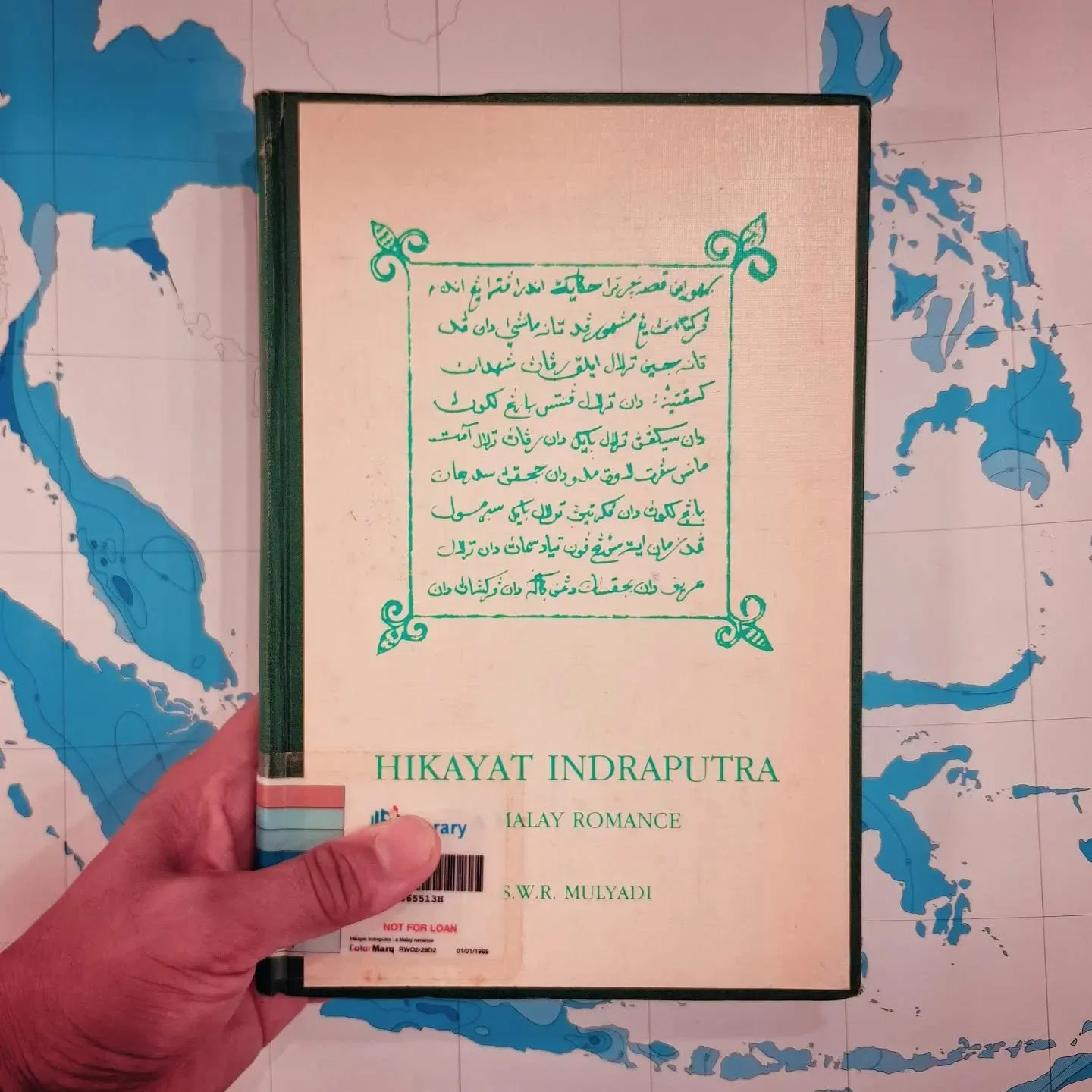
Hikayat Indraputra: A Malay Romance, ed. SWR Mulyadi
Foris Publications Holland, 1983
Let’s go back to the roots of Malay fantastical literature—all the way back to Northern Sumatra in the 1600s, when the Acehnese scholar al-Raniri was complaining that folks were wasting their time reading frivolous literature like this… though, to be clear, the date and provenance are uncertain: this manuscript’s dated to the year 1700 CE, and there’s a clear combination of Muslim and non-Muslim storytelling elements, but no real geographical locations are mentioned—plus, the story’s found all over the Malay world, even to Cham and Mindanao, making this a truly Nusantara story.
The story itself is that of Indraputra, a young prince who’s kidnapped from his palace as a boy by a golden peacock (an ill-advised toy purchased by his royal dad), deposited at the home of a kindly nenek kebayan who raises him as a flower-seller, and who then embarks on a quest to locate Berma Sakti, a sage who can help Raja Syahsyian to cure his infertility. Then comes the main body of the epic, which consists of Indraputra journeying from kingdom to magical kingdom, aided by his kemala hikmat (some kind of magical stone), settling disputes, slaughtering giants and winning three wives on the way, before finally meeting the sage and bringing back a magical lotus blossom that can cure the Raja.
After all our meanderings, the final section gives us something close to an actual plot, but it’s also gonna provoke a yikes for folks who care about age gaps. You see, the child who’s born due to the lotus turns out to be a gorgeous princess, Megindra Sari Bunga, who’s sought after by 39 suitors (this specific trope pops up multiple times in the tale), but her destiny is clearly to be wedded by Indraputra himself, who dazzles her with jewelled barges full of musical fish. Conniving ministers and jealous suitors keep assassinating him (shades of the treacheries of Hikayat Hang Tuah here), but his three other wives (yep, they’re still by his side) keep bringing him back with the kemala hikmat, sometimes cross-dressing as men to infiltrate the palace, or unleashing arrows that turn into ants to track down the dismembered parts of his body. All of which concludes with a joyous wedding and a reunion with Indraputra’s biological parents. Standard fairytale fare—although, to our 21st century eyes, little else about this tale feels standard or formulaic.
Cultural values aside, what’s marvellous about this text is its sense of wonder. Picture the Samundera Sea, which Indraputra visits early in his journey, with gold sand, diamond stones, pearl gravel, saffron grass, musk ground, a rosewater river, and a tree below which lie talking corpses. Or else his encounter with the Princess Seganda Caya Iram-Iram, whom he first sees as a seganda flower (no idea what that is), then a jewel, then a blue lily, as she attempts to escape her rival suitors: two pigs with sapphire bodies, feet of turquoise, eyes of pearl and nails of marble, who become battling eagles, then dragons with golden wings and jewelled eyes. (Indraputra resolves the matter by bringing her reflection to life, so there’s a princess for them both!)
And it’s rather heartbreaking to realise that this work, once so popular, is now so obscure: I can’t identify any televisual media or novelisations based on it, and when I google the hero’s name, I get an announcement about an upcoming Bollywood film.[4]
This book, alas, is also frustrating. It’s compiled for academic purposes, and while it boasts a complete Malay text and commentaries on the 300 extant manuscripts, it only contains an English “summary” that doesn’t bother to translate the pantun occasionally uttered by humans, birds and fish. Lord knows what else I’m missing from this banquet!
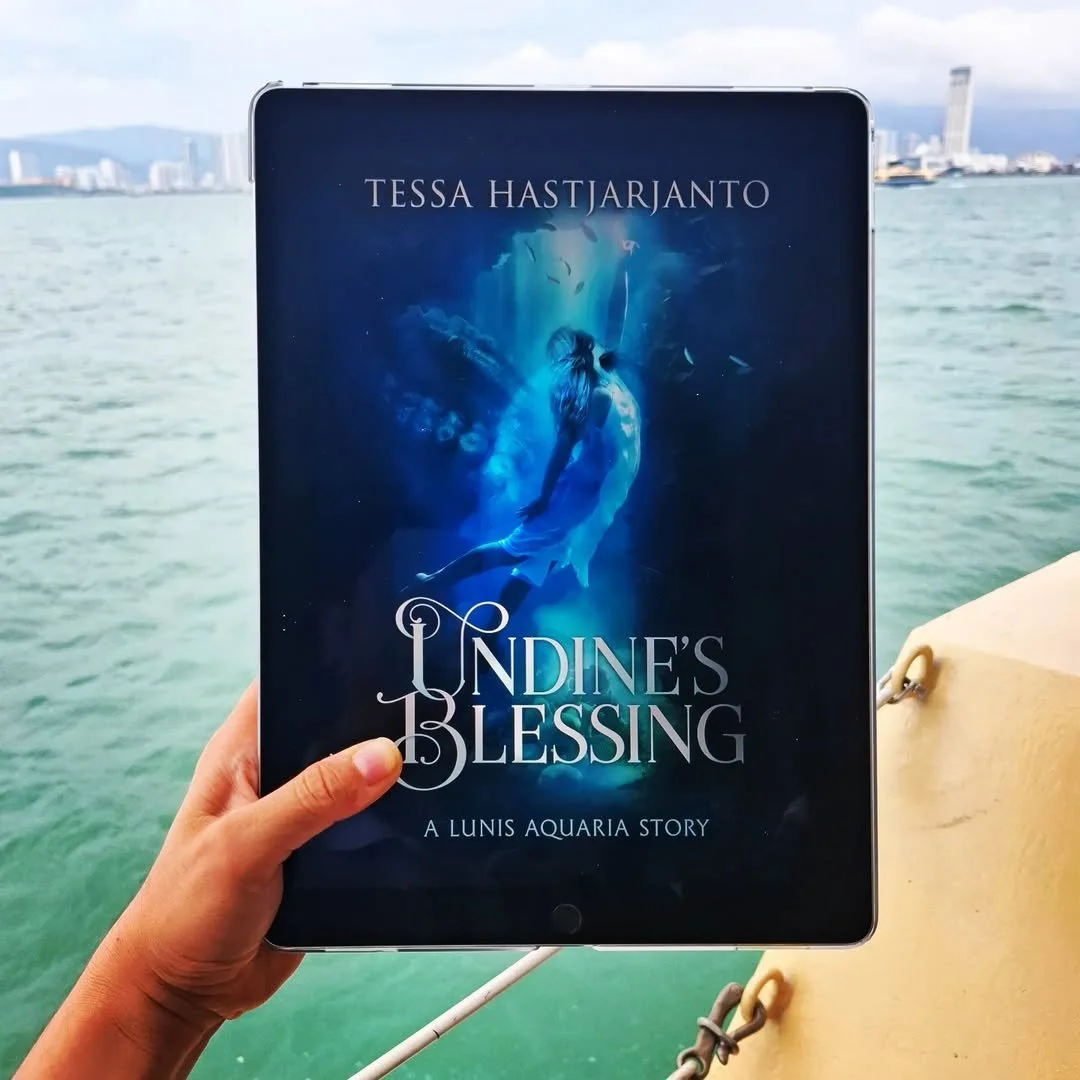
Undine’s Blessing, by Tessa Hastjarjanto
Narratess, 2024
OK, so this isn’t a superbly written fantasy novel—English isn't the author’s first language, after all—but it is very interesting re: the politics of cultural representation. You see, Hastjarjanto's a Dutchwoman of Indonesian descent, and her tale is grounded in European fairytale tropes: the opening, with Marella, a fisherman’s daughter, smoking her dad’s catch and worrying about how her mother’s illness is aggravated by the cold sea breeze, feels right out of Hans Christian Andersen.
But then her father Marcos returns from a voyage with brightly coloured, intensely delicious fruit—gemberries, he calls them—and she accompanies him on a sea voyage through a raging storm to a tropical island with a smoking volcano, where coconut palms sway and tiny winged beings teach her magic. It’s described as feeling like a homecoming, and it vividly echoes tales of diaspora kids visiting their motherlands. There’s even a whole backstory involving toxic past encounters with humans, an apparent parallel to the legacy of Dutch colonisation. Yet other than the coconuts and the heat, we don’t get any obvious signifiers of Indonesian culture—the residents of the island are called “nymphs” and divide their magic based on the four Western elements instead of anything recalling Southeast Asian lore. So I’m honestly puzzled over whether the diaspora reading is deliberate!
The final third of the book, however, has Marella going on a further adventure, getting lost in submarine caverns and interacting with strange tentacled creatures called decapods who help her to awaken her true magical potential. This is the most compelling bit of the book, and the most moving, as she first truly comes into her own powers—less impressed by how the whole story wraps up, though, as the quest she receives from the gods turns out to be hastily accomplished, and her role as human saviour of the nymphs recalls white saviour tropes.
Not a bad book, but by no means a must-read—honestly, it’s the kind of book that inspires you to write, cos it feels like there's a better book out there based on its premises!
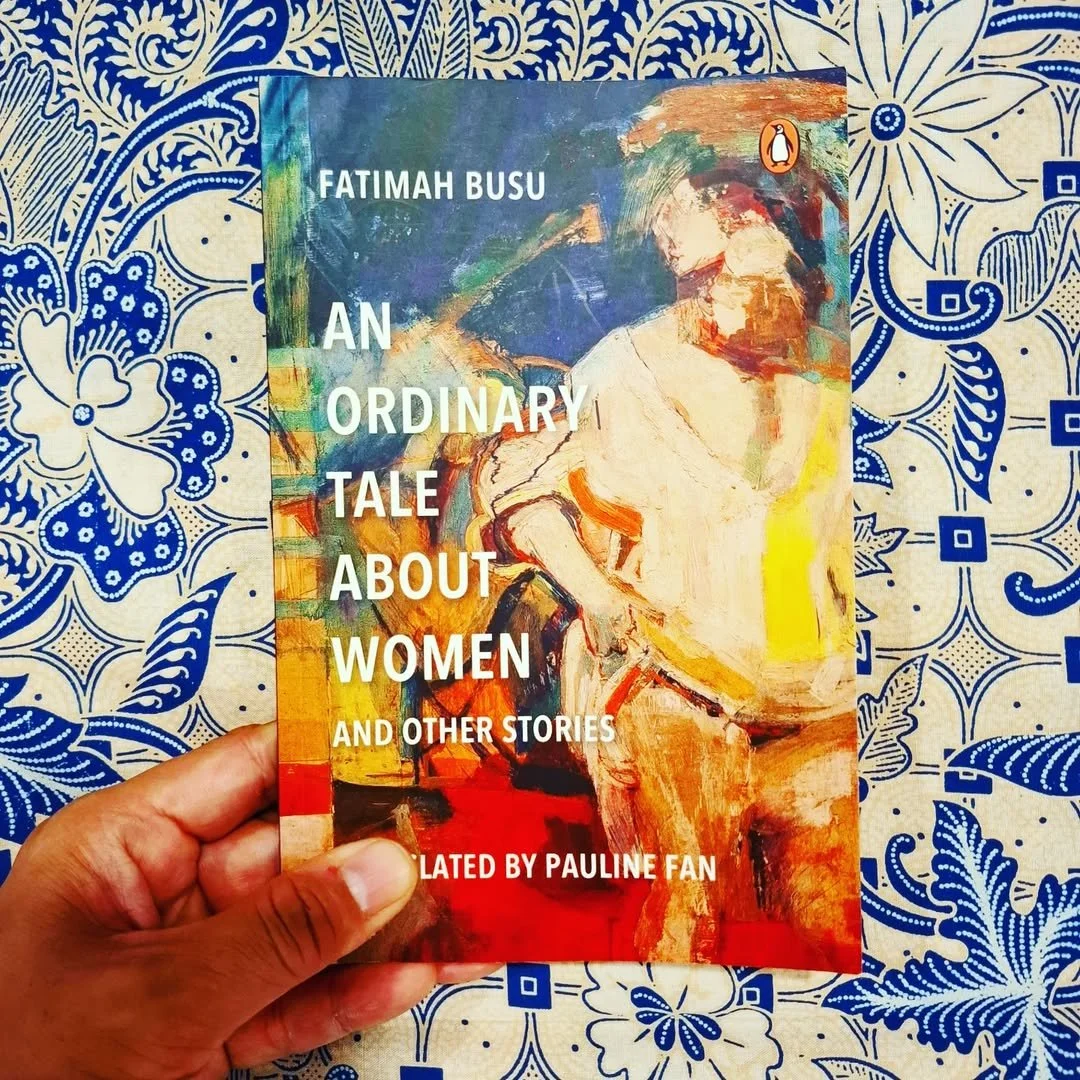
An Ordinary Tale About Women and Other Stories, by Fatimah Busu
Translated by Pauline Fan
Penguin Random House SEA, 2024
To conclude, let’s look at a collection I found genuinely jaw-dropping. It’s just ten stories, first published in Malay from 1960 to 1996, by a Malaysian author I’d never heard of before, but the contents are shockingly graphic, strident in their fury at the patriarchy, deeply religious yet channelling depths of horror and diabolical sexuality that I'm not sure I’ve read anywhere else.
Early stories here are social realist exposés of everyday cruelty and the suffering of the rural poor: “The Scrawny Cat”, “At the Edge of the River”, “Spilled Rice”—though the scene here of everyone vomiting blood from eating poisonous mushrooms is a harbinger of her later gore.
Then in the late 70s and 80s, the author starts doing weird shit: a shifting POV between the profane and the divine in “The Lovers of Muharram”; reports in “A Letter to Mother in Kampong Pasir Pekan” that the countryside is now infested with dajjals, tiny imps whose name literally means “deceivers”, biting and stealing from people, copulating in the open. She starts retelling bits of Sejarah Melayu: Raja Malik ul-Mansur talking to worms in “Narration of the Ninth Tale”, Puteri Gunung Ledang as a sexual demoness in “The Dowry of Desire”.
By the 90s she’s going on vision quests: “Watching the Rain” has a mother and child strapping on wings and entering the heavens to meet Hajar and Maryam; “Watching the Full Moon” has another mother and child witnessing the people on a beach start rutting and turning into monstrous beasts, nothing but rape and pornography and stillbirths under their feet as they try to flee. Then back to social realism with the title story, documenting the systemic pattern of male abuse and neglect that leads to countless girls leaving school, entering factories and killing their babies—ending with a fable-like scene of drongo birds laughing at human folly.
I know other Malaysian authors have straddled realism and the marvelous, e.g. A Samad Said and Faisal Tehrani. But I don’t think I’ve seen this done with such breadth in short fiction, and definitely never by a woman—makes me really appreciate the depths of the living literary heritage we’ve got in the region. Translator Pauline Fan also tells us that Fatimah rejected the SEA Write Award cos of Thai human rights abuses! What a bad-ass.[5]
Endnotes
[1] I haven’t read it yet, sorry! The Miles Franklin Award is one of Australia’s top literary prizes. Read more here: Nicola Heath. “Omar Musa wins 2026 Miles Franklin Literary Award for Heart of Darkness 'critique', Fierceland.” ABC News. 5 August 2026. https://www.abc.net.au/news/2026-08-05/omar-musa-fierceland-winner-2026-miles-franklin-literary-award/106975328
[2] Ng Yi-Sheng. “#YISHREADS September 2025”. Suspect. 26 September 2025. https://singaporeunbound.org/suspect-journal/2025/9/26/yishreads-september-2025
[3] “Female Muslim staff in public healthcare sector may wear the Tudung with their uniform.” Ministry of Health. 29 August 2021. https://www.moh.gov.sg/newsroom/female-muslim-staff-in-public-healthcare-sector-may-wear-the-tudung-with-their-uniform_29aug2021/
[4] Naman Ramachandran. “Kiran Abbavaram’s Mythological Action-Fantasy for India’s Zee Studios Reveals Title as ‘Indraputra’ (EXCLUSIVE).” Variety. 9 August 2026. https://variety.com/2026/film/news/kiran-abbavaram-indraputra-zee-studios-1236830533/
[5] For further background about this author, check out Pauline Fan. “Beyond Redemption: Fatimah Busu and the Reckoning of Malay Literature.” Positions Politics. 3 March 2025. https://positionspolitics.org/pauline-fan-beyond-redemption-fatimah-busu-and-the-reckoning-of-malay-literature/
Ng Yi-Sheng (he/him) is a Singaporean writer, researcher and LGBT+ activist. His books include the short story collection Lion City and the poetry collection last boy (both winners of the Singapore Literature Prize), the non-fiction work SQ21: Singapore Queers in the 21st Century, the spoken word collection Loud Poems for a Very Obliging Audience, and the performance lecture compilation Black Waters, Pink Sands. He recently edited A Mosque in the Jungle: Classic Ghost Stories by Othman Wok and EXHALE: an Anthology of Queer Singapore Voices. Check out his website at ngyisheng.com.
‘The truest, most vivid sketch of non-performative unconditional love’—Ashley Marilynne Wong reviews Susanna Kwan’s Awake in the Floating City (New York: Pantheon, 2025).